• Skip to primary navigation
  • Skip to main content
  • Skip to primary sidebar
  • Money Management
    • Debt Reduction
    • Credit
    • Mortgages
    • Mutual Funds
    • Tax Strategies
    • Loans
  • Budgets
    • Saving Money
    • Income
  • Banking
    • Checking Accounts
    • Check Writing
    • Fraud
    • History
  • Entrepreneurs
    • Entrepreneur Interviews
    • Money Making Ideas
    • 3D Printing
  • Resources
  • Retirement
  • About
    • Privacy Policy

Personal Finance Blog

Tips And Stories To Help You With Managing Money

  • Privacy Policy
  • Saving Money In 2018
You are here: Home / Archives for Finance / Personal Finance

Personal Finance

30 Personal Finance Tips To Use Now

October 29, 2012 By Sherry Tingley

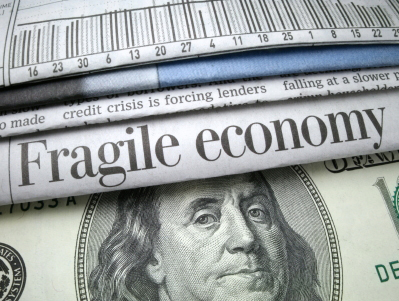
Protect Yourself In This Fragile Economy

Personal finance tips can come in handy when you are trying to improve your financial situation.  Economic struggles in the past several years have really turned some people’s lives upside down.

In September, 2012, there were 12.1 million unemployed people. That’s a lot of people struggling to make ends meet any way they can.

To help you through this tough economic time, make sure that you help yourself by doing some of these practical things.

Protect yourself

  • 1. Get a credit report every year so that you can make sure your credit is in good standing.
  • 2. Scan everything in your wallet. In case of theft, you’ll have all your account numbers and contact information available.
  • 3. Stop overdraft fees by going online and hooking up your checking account with a savings account.
  • 4. Sign up for an alert that warns you when your account reaches whatever amount you choose.
  • 5. Keep well organized financial documents for tax purposes
  • 6. Diversify your sources of income.

Setting Goals

  • 7. Decide what you want to do with your money.
  • 8. Cover the necessities first
  • 9. Use free websites for tracking goal setting
  • 10. Choose some new starting points to hope for the best but plan for the worst.

Savings Strategies

  • 11. Start saving at an early age.
  • 12. Save money on a weekly basis and leave it alone for a while.
  • 13. Order free information for your vacation planning.
  • 14. For older folks, estimate your retirement benefits online at www.ssa.gov where you can put in your social security number and estimate your retirement benefits.

Debt Management

  • 15. Use your tax refund to pay off high interest credit card debt.
  • 16. Go to the websites where you have credit card accounts and sign up for an alert to remind you 10 days prior to the due date.
  • 17. Request a reduction in your credit card interest rates.
  • 18. Be grateful that your debt is not as big as the country’s debt.

Daily Living

  • 19. Take an oath of financial honesty, with yourself and with others.
  • 20. Use your local library instead of purchasing books.
  • 21. Eat at home. Avoid restaurants to limit calories and cash expenses.
  • 22. Reassess your possessions and see what you can live without.
  • 23. Tell a friend what you are saving for and ask for emotional support.
  • 24. Practice self-monitoring. Track spending using software like quicken or see if your online banking has a budgeting feature and track it for free.
  • 25. Beware of advertising campaigns to entice you to spend more on house-hold goods. Proctor & Gamble, will increase advertising expenses by 20% in 2010.
  • 26. Shop at cheaper stores. You can get Egyptian cotton sheets at discount stores.
  • 27. Recognize buying mistakes and vow not to make them again.
  • 28. Give away things you don’t need to make room for your new life.
  • 29. If you are suffering from depression about your finances, discuss it with your doctor.
  • 30. Learn to live with less – do you really need everything you have stashed away?

Your net worth to the world is usually determined by what remains after your bad habits are subtracted from your good ones.


Filed Under: Personal Finance Tagged With: money management, Personal Finance

Should They Sell Their Home?

June 8, 2012 By Sherry Tingley

Personal Finance and Home BuyingPeople get into all kinds of financial problems when they are unable to assess accurately what their incomes will allow them to buy. Examples of this are plentiful when you read forums dealing with saving money and personal finance.

In a recent forum thread, a young woman asked for advice about whether she and her husband should sell their home because they felt they were in over their heads. They have been in their new home for seven months and it dawned on them that they were having a hard time making ends meet.They explained their situation, including the current income and their living expenses

She stated that she and her husband were both gainfully employed with a combined income of $130K. She said that they had a decent income, but they felt “poor.” Their net income was $7K per month with $4,200 going towards their mortgage payment. Besides their mortgage payments, their debt was about $55K in both student loans and repayment of the loan money they borrowed to get into their home. They weren’t going into the hole every month, but they had no breathing room. They also have two very young children for whom they have to pay childcare while she works. Adding in their other expenses, the total expenses for the family is $6,770.00 per month, leaving very little room for savings or emergencies.

The important thing here is that their mortgage payment is 60% of their net monthly income. That is the main issue. The lender loaned money to them when they shouldn’t have. Somehow, we as consumers think that if a lending institution is willing to loan us the money we need, then why not do it? Even after December 2007 through June 2009, the worst recession in American history since The Great Depression, banks apparently are still loaning money to people when it is not in anyone’s best interest but the banks.

To get back to the savings forum thread, people advised the couple to cut back on spending and basically sell the house. The penny pinching that could be done by the couple is probably not worth the time or effort.

So how did this couple miss so many important economic lessons? First, somehow they felt “rich” because of their incomes. They really were erroneous in thinking that and should have gone to a good financial planner well before they started thinking about moving to their new home.
They should have been able to predict their monthly expenses prior to moving. Had they done that, they may have decided to do something different with their money. The big red flag that they missed was knowing that they had to borrow money for their down payment. That alone should have put the brakes on this home purchase.

What makes one rich is creating a strategic long term plan and then following through with it. Getting good financial advice about any purchase that will impact your for over four years is a good idea. Financial education is a life-long process and luckily we can learn from our own mistakes and benefit from the wisdom of others. What do you think this couple should have done?

Filed Under: Mortgages, Personal Finance Tagged With: money management, Mortgages, Personal Finance

Personal Finance Software Reviews

February 10, 2012 By Guest

Managing money has always been an issue for individuals and businesses and today’s rapidly evolving economy makes individual planning even more complex. Two of the earliest and most popular software programs for managing personal finances are Microsoft Money and Quicken, but today there are literally hundreds from which to choose. Thus, selecting the “best” has never been more difficult.

Asking people to choose the “best” of anything, however, is a relative question, that is, the advantages and drawbacks are usually more a matter of individual preference. With that in mind, let us look first at the factors that make up the choice of “best.”

Price – It is just not possible to avoid a consideration of price. Consumers want the greatest value for their money. Sometimes price is based on added perks in the software and sometimes not. Wise or not, price often is the single greatest factor in a buying decision, so it must be considered.

Simplicity – The single biggest reason many do not like Quicken is because it is somewhat difficult to learn and use. The same argument was often heard regarding Microsoft Money. Many consumers want as simple a user interface as possible, whereas others may prefer…

More Choices – Some will sacrifice simplicity to obtain multiple applications for the handling of more obscure personal finance situations.

Flexibility – Similar to more choice, a flexible software package will allow a user more options for controlling the parameters of their personal finance situation

Reliability – One of the possible reasons for the demise of Microsoft money that has been offered by onlookers is reliability. Microsoft ceased selling Money on the claim that there was too little a demand for the program. Perhaps this is the reason. Consumers want solutions that can be relied upon to do what they want, when they want.

Choices?

With these five factors in mind, let us now look at some of the better software choices available today.

Budgetpulse

Free, simple, but internationally compatible, what this software lacks in complexity, it makes up for in ease of use, and of course, price.

Buxfer

What started as simple has grown rather complex; this software however, makes up for that by allowing the importation of data directly from finance accounts such as banks and credit card systems. In addition, it now has an iPhone app. Also free.

Mint

Many claim that mint has the largest number of online clients and this claim appears to have considerable basis in fact. The Alexa traffic rating for this site is around 2000, which places traffic in the millions daily. They must be doing something right. It too, is free.

Quicken

Still a favorite of millions, the price of this hard-line program for your personal computer remains a low $39.95. It continues to be easy-to-use, comprehensive, and secure.

AceMoney

Simple and comprehensive, this award-winning personal finance software is a favorite of millions. At only $39.95, this one gives Quicken stiff competition.

YNAB

Which means, You Need A Budget, is a small software company run by a husband wife team from Utah. The price tends to frighten some away ($60.00), but for a smaller, rather young software company, this one makes a pretty good product. Big plus? One platform is compatible with any operating system.

When choosing the “best” personal finance software for you, write down what you consider to be most important, flexibility versus complexity, price versus value, simplicity or complete? Once you know those factors it’ll be far easier to settle on which software is right for you.


Written By: Sam Mauz

Sam Mauz is a blogger who enjoys writing about personal finance. When not blogging about personal finance or working for Wonga.com, Sam can be found soaking up rays on the hiking trails of Arizona.

Filed Under: Personal Finance Tagged With: Personal Finance, software

Depreciating Assets Can Hurt Your Finances

November 30, 2011 By Sherry Tingley

Everyone has them— depreciating assets. What are they? Assets that lose value over time rather than gaining value. It isn’t possible, it seems, to avoid purchasing a car, major appliances and electronics. They are financial realities. However, the trick is to purchase what you need rather than what you want and to be aware up front what depreciation rates assets can have. There are some assets you probably could do without if you took into consideration how fast they depreciate. If you can’t do without them, take special care in acquiring them.

Common Depreciating Assets

Timeshares: Many people purchase them without realizing the money holes they can become. Unlike the majority of standard real estate, most timeshares lose 50 percent of their value immediately upon their purchase from a resort. Additional depreciation, up to 90 percent, occurs over the next few years.

Boats: There is a reason why boat owners often lament that the two happiest days of their lives were the day they bought their first boat and the day they sold that same piece of property. The dream of boat ownership is quickly absorbed in the reality of the expense such ownership entails. Boat rental may seem an expensive alternative, but it is usually far less expensive than to own your own. Your own boat is usually a depreciating asset you could do without.

Recreational vehicles: Just like cares and boats, RVs love a large percentage of their retail value the minute you depart from the dealer’s parking lot and they continue to lose value as they age. Few people use RVs as much as they expect to when they plunk down the purchase price. Add the costs of gas and the space rental many people have to pay for the RVs when they are not in use and ownership doesn’t make much sense.

Luxury cars: There is not much chance of avoiding a car purchase forever, but keep in mind that it is a depreciating asset. To get the most out of your purchase, focus on what you really need, not what suits your ego or what will keep you in the running with the Joneses. A used car in good condition has already seen much of the initial depreciation priced out. The corollary is someone who wants to have the benefit of gold’s stability and buys jewelry instead. You can’t have it both ways.

Electronic Gadgets: They not only depreciate, they do it quickly. Owning the latest and, purportedly the greatest in computers or electronic gadgets may be popular, but it also is the least cost-effective option. The latest models always come with a premium price. Last year’s model is usually just as effective for most people. And last year’s models will be heavily discounted as soon as the new model appears on the horizon. Make sure your purchase checks out with your wealth building plans.

The prospect of any large purchase should trigger the question: “Do I really need this?” If the answer is “Yes.” proceed wisely. Opt for the product that fulfills your actual needs at the best possible value. Depreciating assets eventually affect your finances, so avoid them when possible and consider devaluation as one of the factors to evaluate as you make your purchasing decisions.

Filed Under: Building Wealth, Personal Finance Tagged With: Building Wealth, depreciation, deprecitating assets, money management

The Pursuit of Happiness Through Difficult Financial Times

February 21, 2010 By Sherry Tingley

In the pursuit of happiness, many of us believe that having lots of money will make us happy. According to Jean Chatzky, the author of the book “The Difference,” this is not always true because once you have money, more money won’t buy more happiness. The happier you are, the more money will come in.

Some of us have been through bad financial situations. With bills piling up, creditors calling, and the household income barely enough, life still goes on.  You can make the best of it or just plain give up and lose hope. Financial problems can  be  very stressful  for anyone but there is always room to make a change in your attitude. In such difficult times, what are the critical factors that can make a difference in your life? Jean Chatzky tells us all about the main traits that you have to be successful.

Happiness and optimism are two of the keys in making more money because these two traits help you solve problems and come up with great ideas. Even if you fail the first time, being optimistic will help you try again, and again.

Having resilience means you can overcome anything and that includes financial problems. These people never denied that their finances were suffering. They were able to concentrate on how to take control of the things that they could change and let go of the things that they could not.

Having passion to lift yourself up from your financial struggles is another key element to financial success. Loving what you do is very important and when you love what you do for a job then you are on the road to financial stability.

Social capital is acquired by seeking out advice from people who can help you get to the next level of income. Value the relationships you have and reach out to people that you can help and those who can help you. Take time nurturing these relationships.

Wealthy people have the funds to spend lots of money but most of them are not foolish spenders at all. In fact, they save money on a regular basis. This is a fundamental goal for anyone wanting to improve their personal finances.

We usually have hunches about what might happen next. These intuitions will help you make decisions about spending and investing your money. Most wealthy people have developed  good intuition and this gives  them a big advantage. Learn to listen to your intuition when you are making financial decisions.

Taking calculated risks in the market is a good way to make money whether in good times or in bad. Those that lost thousands in their investments are slowly beginning to see those dollars come back. Let your money work hard for you.

Being grateful for your particular situation is key to being able to move on and learn from the past. People who get rich and stay rich, express their gratitude by contributing to organizations and communities that they care about.

Use these principals of gratitude, passion, resilience and optimism to change your attitudes, set realistic goals and return to your path of financial prosperity.

Success is not the key to happiness. Happiness is the key to success. If you love what you are doing, you will be successful. ~Albert Schweitzer

Filed Under: Personal Finance Tagged With: financial prosperity, Personal Finance

  • « Go to Previous Page
  • Page 1
  • Interim pages omitted …
  • Page 13
  • Page 14
  • Page 15
  • Page 16
  • Go to Next Page »

Primary Sidebar

Personal Finance Articles

  • Make Saving A Priority
  • Review Your Home-Insurance Risks
  • Lowest Air Fare? Try August 28
  • Hackers Targeting Bitcoins
  • Keep Your Emergency Fund Intact

Save At Walmart

Search

Personal Finance Education

Investing Education from Morningstar.

As Seen On Intuit

Intuit.com has ranked Coolchecks.net #4 out of 10 of the best blogs to help you save money. We hope to help you become more aware of your own financial situation and strive to improve it.

Featured On Mint.com – July 2014

Mint Interview

Categories

  • Banking
    • Check Writing
    • Checking Accounts
    • Credit Cards
    • EMV Cards
    • Fees
    • Fraud
    • History
    • Student Loans
  • Best Of The Web
  • Budgets
    • Emergency Fund
    • Grocery Shopping
    • Saving Money
    • Spending Habits
  • Business
    • 3D Printing
    • Bankruptcy
    • Business Advertising
    • Business Development
    • Business Plans
    • Corportate Lessons
    • Data Mining
    • Legal Issues
    • Merchants
    • SEC
    • Security
    • Small Business Startups
  • Consumer Alerts
  • Cryptocurrency
  • Cutting Costs
  • Employment
    • best places to work
    • Careers
    • Interviews
    • Job Search
    • Top CEOs
    • Wages
  • Entrepreneurs
    • Attitudes
    • Entrepreneur Interviews
  • Featured
  • Finance
    • Automobiles
    • Credit Ratings
    • Education
    • Financial Planners
    • Foreclosures
    • Homes
    • Insurance
    • Investing
    • Mortgages
    • Personal Finance
    • Renting
    • Term Deposits
    • Travel
    • Work
  • Fraud
  • Government
  • Holidays
    • Christmas
    • Halloween
  • Internet
    • Bitcoin
    • Blogging Tips
    • Blogs, RSS and Podcasting
    • Databases
    • Facebook
    • Influence
    • marketing
    • Twitter
    • Website Reviews
    • WordPress
      • Key Words
  • Investing Basics
    • Hedge Funds
    • Investing
    • Mutual Funds
  • Life
    • Aging
    • Just For Fun
      • Punahou Alumni Corner
    • Millennials
    • Personal Health
  • Money Making Ideas
    • Affiliate Programs
    • Craigslist
    • Ebay
  • Money Management
    • Bankruptcies
    • Building Wealth
    • Child Care Costs
    • Christmas Shopping
    • Credit
      • Free Credit Report
    • Debit Cards
    • Debt
    • Debt Reduction
    • Health Insurance
    • Income
    • Inheritance
    • Interest Rates
    • Loans
    • Mortgages
    • New Years Resolutions
    • Retirement
    • Shopping Tips
    • Tax Strategies
    • Your Stories
  • Retirement
  • Self Improvement
    • Time Management
    • Work Habits
  • Shopping
    • Coupons
    • Online Shopping
  • Social Security
  • Tax Tips
  • Taxes
  • Technology
  • Trade
  • Uncategorized
  • Wealth

Best of Personal Finance Blogs

Best of BuyerZone Business Finance Blog Recipient

Personal Finance Sites We Recommend

Get personal finance advice from the people behind the top money blogs, including Wise Bread, The Simple Dollar, Mint and Nerd Wallet.

Copyright © 2026 ·Metro Pro · Genesis Framework by StudioPress · WordPress · Log in