• Skip to primary navigation
  • Skip to main content
  • Skip to primary sidebar
  • Money Management
    • Debt Reduction
    • Credit
    • Mortgages
    • Mutual Funds
    • Tax Strategies
    • Loans
  • Budgets
    • Saving Money
    • Income
  • Banking
    • Checking Accounts
    • Check Writing
    • Fraud
    • History
  • Entrepreneurs
    • Entrepreneur Interviews
    • Money Making Ideas
    • 3D Printing
  • Resources
  • Retirement
  • About
    • Privacy Policy

Personal Finance Blog

Tips And Stories To Help You With Managing Money

  • Privacy Policy
  • Saving Money In 2018
You are here: Home / Archives for Money Management

Money Management

Retirement Coming? Be Sure You’re Ready

May 19, 2015 By Twila Van Leer

retirement-savings-1For many workers, retirement seems an ethereal, distant eventuality that doesn’t require much thought. Don’t you believe it. It comes and it comes sooner than most Americans are ready for it.

According to a USA Today article, about a third of Americans have less than $1,000 in savings and investments to fund their retirement, aside from a home and defined benefit plans such as pensions. Fifty-seven percent say they have less then $25,000 set aside for retirement, a survey taken by the Employee Benefit Research Institute and Greenwald and Associations noted. Their research results match those generated by other researchers.

Many pin their hopes for a financially secure retirement on working beyond the usual retirement age. But, again, the research shows that isn’t realistic. Some 50 percent of workers leave the workplace before retirement age, 60 percent of that number because of health problems and 27 percent because the nature of their work conditions has changed. Their company has downsized or closed entirely in many instances. Only 23 percent of retirees actually report having continued to work for pay.

Things don’t always work out. It’s better to save now than to rely on nebulous chances to work longer later, the experts advise. How many years you are eligible for a retirement plan through your work is one of the best indictors of how well you will fare financially after retirement.

In the EBRI survey, only 14 percent of those questioned said they felt secure about retirement. They had retirement plans. Conversely, 44 percent who had no retirement plans were concerned about the ability to adequately prepare for retirement.

Many workers simply fail to think about retirement at all. Fewer than half of those surveyed said they and/or their spouses had tried to calculate how much money they would have at retirement. The greatest excuses for failing to save is the cost of living and day-to-day expenses. Debt also is a factor, with 51 percent indicating they had a problem with the level of debt they had incurred. Almost 70 percent of those surveyed said they thought they could save an additional $25 per week more than they currently are doing, but they would have to sacrifice something, such as meals out, to do it. They were advised that the additional savings would amount to some $1,300 a year. But you can’t wait until retirement is imminent to do it.

Bottom line, the experts advise, is living within your means and starting to save early. Ignoring the potential problems until it’s too late serves no purpose. Many financial institutions offer help in calculating what your saving should be to assure a comfortable retirement. The alternative is to plan on spending much less than you earned on the job, live largely on Social Security and seeing savings dwindle quickly after you retire.


Related articles across the web

  • Creating a Monthly Budget with Retirement in Mind
  • How to Feel More Confident About Retirement
  • Would you retire early if you could?
  • 1 in 5 Elderly Americans Dies Broke, Survey Shows
  • Lots of us have almost nothing saved for retirement

    Filed Under: Retirement

    Handling Tax Audits Successfully

    April 27, 2015 By Sherry Tingley

    Don't ignore tax audit notifications. Be prepared to face an audit.
    Don’t ignore tax audit notifications. Be prepared to face an audit.

    Tax Audit? Don’t Panic

    Well, the annual tax mania is over once again. Now you can sit back and relax. Unless, of course, you are one of those that the IRS singles out for an audit. Less than 1 percent of the tax-paying public gets that experience, but it can be unnerving.

    Audits are what have given the tax agency its ogre-ish reputation and generated visions of torture and merciless browbeating by suit-clad agents.

    Here’s how to address an audit if it happens:

    To begin with, an innocent looking letter from the IRS, arriving by U.S. mail, should be taken seriously. Don’t ignore it. Failure to respond almost always triggers escalating pressure from the taxing agency. Better to have your tax accountant respond, if possible. Experts in such matters suggest you never try to deal with an audit on your own. Not many run-of-the-mill taxpayers have the expertise to deal with the figures and the myriad laws that surround them.

    Often, the experienced tax experts can spot the difficulty in a return at a glance and resolve it without a hassle. Simply determining which office within the IRS has initiated the audit will reveal the problem.

    The experts advise that you never speak to the IRS representatives yourself.

    Be prepared to provide whatever substantiating information is necessary to resolve issues. Keeping detailed records throughout the year is the starting point. Small businesses, in particular, need to be certain that personal and business finances are not intertwined.

    The statute of limitations on an audit is three years, although the IRS can request an audit up to six years if there is reason to believe there have been substantial misrepresentations on the return. That means you must keep the relevant materials for at least that long. Receipts, pay stubs and other items used in preparing your return should be safely filed away until there is no longer reason to believe you might be audited. Most experts suggest a seven-year period before you toss the information.

    The information you provide in response to an audit is filed via Form 4564. It can be delivered to a tax agency in person or mailed. Ask for a face-to-face meeting between your representative and an agent if you feel it is necessary to explain particular items in your return. Mail audits can be time-consuming.

    How long an audit takes depends on the complexity of your tax situation – and how many other taxpayers the auditor is dealing with. Generally, a taxpayer has 30 days in which to respond after receipt of an audit notice, and the process then proceeds depending on the particulars. If the conclusion is that you did not pay enough taxes, payment plans can be set up, if necessary. If you don’t feel satisfied with the result of your audit, you can ask for a review.

    And there is always the possibility that the audit will find that the government has overcharged you. A little sweetening of the return is ample payment for the consternation you may feel when the word “audit” pops up.

    Filed Under: Tax Strategies Tagged With: taxes

    Retirement Planning Should Begin When You Are Young

    April 25, 2015 By Twila Van Leer

    Begin thinking about retirement plans when you first start earning money.
    Begin thinking about retirement plans when you first start earning money.
    Waiting until retirement is around the corner to get serious about preparing for it is a serious mistake. The ideal time to start thinking about post-employment issues is when you are still in your 20s or 30s.

    Consistently setting aside money and then monitoring it to see that it is earning the best possible returns is your best bet for being financially secure when the front porch swing beckons., according to financial planners.

    In fact, the Wells Fargo Institutional Retirement and Trust, which tracks trends, has reported that a growing number of workers aged 18 to 39 are participating in employer-sponsored programs aimed at retirement. The percentage taking advantage of their company 401(k) opportunities has risen from 43.9 percent three years ago to 50.4 percent, the trust reported.

    Part of that increase can be related to a rise in the use of automatic enrollment in such plans in recent years. However, although the number of participants is increasing, the rate of average deferrals has dipped slightly, from 5.2 percent three years ago to 5.1 percent now. Some employers automatically enroll their workers initially at low deferral rates, such as 3 percent.

    Merrill Lynch analysts say that savings trends are encouraging. In the first half of 2014, the number of first-time contributors rose 37 percent. In the so-called millennial generation, the figure went up to 55 percent. That age group makes up 20 percent more of the total working force then it did in mid-2013, the analyst said.

    Some forward-thinking people just entering the workforce are making retirement part of their thinking. College students are increasingly asking for advice before they being their careers. Today’s “beginners” are more savvy about financial matters and more apt to be aware of how much they must save now to enjoy retirement later. They are willing to sacrifice a little over the term of their working lives for the sake of a worry-free retirement. Those who are familiar with the data assure younger workers that they don’t have to give up all of life’s pleasures for the sake of retirement security. There is room for both careful, consistent savings and the occasional splurge, they say.

    Some younger workers are taking more careful note of how their parents are faring as they leave the job market. They are listening to the nagging concerns that Social Security may not be able to cover all the Americans who will be eligible in the upcoming years.

    Consulting with a financial planner at the outset of a career is a smart move. In general, the advice is to invest in safe, tax-deferred plans such as 401(k)s or investment portfolios heavy on stocks.

    Including retirement issues in your financial planning may have an effect on your lifestyle, the experts say. Some young people are not including home ownership in their plans. Frugal living through the work years may mean a comfortable future, with more gold in the golden years.

    Filed Under: Retirement Tagged With: Retirement

    How To Get A Good Credit Score

    March 10, 2015 By Twila Van Leer

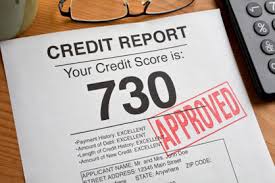
    improving-your-credit-scoreWant to be the kind of consumer the creditors want? The kind that they bend over backwards to accommodate? The sort that breezes through a loan process with nary a wrinkle? It can be done.

    At the crux of it all is your credit report. That’s the elusive data collected by credit reporting agencies that only surfaces when your finances are being discussed, usually with large ticket purchases in mind –things such as houses and cars.

    The reporting agencies use a system known as FICO to create an individual credit profile, an acronym derived from the name of the California company that developed the method. Scores range from 300 (Don’t even ask for credit) to 800 (You’re a shoe-in.) Though there are critics who say the factors used to create a credit report are not the only ones that should be considered, the reports are a fact of credit life today. Thirty-five percent of the rating is based on payment history; 30 percent on amounts owed; 15 percent on the length of credit history; 10 percent on new credit and 10 percent on types of credit.

    Things you can do to improve your credit rating:

    1. Make payments on time. If you begin making payments late or, worse, missing them, the resultant penalties and fees will be factored into your credit report.

    2. Don’t use a credit card that charges an annual fee. Shop around until you find a card that doesn’t charge fees and still offers rewards. That general rule might be set aside if you find a card with a fee that is counterbalanced with low interest, generous benefits and other features that cancel the effect of the fee. A word of caution: constantly shopping for a “better” credit card may build a perception that you are having trouble managing debt. It all goes into the record. Sticking with a particular card for a long time shows financial stability.

    3. Never max out your credit availability. Using less than 30 percent of the credit for which you qualify is good practice. Utilizing several lines of credit, such as mortgage, car payments, etc., as well as credit cards, also helps the score, as long as you conform to the agreed-upon terms.

    4. Monitor your credit rating. Credit reporting services are required to furnish a report to you annually. Some banks now are providing this service to customers, overturning earlier practices that made procuring the information difficult. If you find questionable information in your report, act immediately to correct it.

    Critics of the current method of creating credit reports argue that it overlooks some very important factors. For instance, it does not make allowances for people who simply don’t use credit. That means it discriminates against the potentially best customers, the so-called “credit invisibles.”

    Regardless of the perceived flaws, it is the system now in use, and if you are credit-wise you can do things to improve your rating, whether or not you are a big user of credit.

    Filed Under: Credit Tagged With: credit score

    Be Aware Of Changes In Tax Laws For 2015

    March 6, 2015 By Twila Van Leer

    Standard deductions  have risen to $6,300 for individuals and $12,600 for married taxpayers filing jointly.
    Standard deductions have risen to $6,300 for individuals and $12,600 for married taxpayers filing jointly.
    Hundreds of thousands of Americans are well into the annual tax frenzy, though the deadline is a month away. There are some changes in tax law for 2014 and 2015 that you need to consider as you prepare a return.

    Health Insurance

    You may be subject to a penalty if you have not conformed to the mandates imposed by the Affordable Health Care Act. In 2014, the penalty is 1 percent of your household income or $95 per person if you have not obtained health insurance as required by the act. The penalty will rise to 2 percent of income or $325 per person in 2015. Get health insurance quickly to avoid this penalty.

    Contributions

    The limit an employee can contribute to a 401(k) will increase to $18,000, up $500 from last year’s cap. You needed to contact your payroll department at the first of this year to take advantage of the higher allowable. The “catch-up” allowance for those over 50 also has been increase, allowing for an additional $6,000 in contributions, $500 more than was allowed a year ago. The flexible spending cap for qualified health expenditures now is $2,500, $50 increase over the previous year.

    Standard Deductions

    Standard deductions also have risen, to $6,300 for individuals and $12,600 for married taxpayers filing jointly. Those figures are up $100 and $200 respectively. The standard deduction is important especially if you cannot itemize.

    Changes In Tax Rates

    For the tax year beginning in January, income tax thresholds have again been adjusted for inflation. The highest tax rate of 39.6 percent will apply now to single filers who earn over $413,200 and to married couples whose earnings are $464,k850 or above. The increase is about 1.6 percent over tax year 2014.

    IRA Rollovers

    IRA rollovers starting in 2015 are limited to a single event in a 12-month period. But you can still make as many “trustee to trustee” transfers as you like, moving your money from one provider to another. The new IRA rule is aimed at preventing the practice of withdrawing all the funds and then re-depositing them in a new account, a tactic some were using to create, in effect, a short-term, interest-free loan. Limit all rollovers to direct transfers in 2015 if you plan on moving money more than once.

    Alternative Minimum Tax

    The Alternative Minimum Tax exemption for 2015 is increased by 1.5 percent from 2014. Caps now are $53,600 for individuals or $83,400 for joint filers.

    Filed Under: Tax Strategies Tagged With: taxes

    • « Go to Previous Page
    • Page 1
    • Interim pages omitted …
    • Page 19
    • Page 20
    • Page 21
    • Page 22
    • Page 23
    • Interim pages omitted …
    • Page 43
    • Go to Next Page »

    Primary Sidebar

    Personal Finance Articles

    • Make Saving A Priority
    • Review Your Home-Insurance Risks
    • Lowest Air Fare? Try August 28
    • Hackers Targeting Bitcoins
    • Keep Your Emergency Fund Intact

    Save At Walmart

    Search

    Personal Finance Education

    Investing Education from Morningstar.

    As Seen On Intuit

    Intuit.com has ranked Coolchecks.net #4 out of 10 of the best blogs to help you save money. We hope to help you become more aware of your own financial situation and strive to improve it.

    Featured On Mint.com – July 2014

    Mint Interview

    Categories

    • Banking
      • Check Writing
      • Checking Accounts
      • Credit Cards
      • EMV Cards
      • Fees
      • Fraud
      • History
      • Student Loans
    • Best Of The Web
    • Budgets
      • Emergency Fund
      • Grocery Shopping
      • Saving Money
      • Spending Habits
    • Business
      • 3D Printing
      • Bankruptcy
      • Business Advertising
      • Business Development
      • Business Plans
      • Corportate Lessons
      • Data Mining
      • Legal Issues
      • Merchants
      • SEC
      • Security
      • Small Business Startups
    • Consumer Alerts
    • Cryptocurrency
    • Cutting Costs
    • Employment
      • best places to work
      • Careers
      • Interviews
      • Job Search
      • Top CEOs
      • Wages
    • Entrepreneurs
      • Attitudes
      • Entrepreneur Interviews
    • Featured
    • Finance
      • Automobiles
      • Credit Ratings
      • Education
      • Financial Planners
      • Foreclosures
      • Homes
      • Insurance
      • Investing
      • Mortgages
      • Personal Finance
      • Renting
      • Term Deposits
      • Travel
      • Work
    • Fraud
    • Government
    • Holidays
      • Christmas
      • Halloween
    • Internet
      • Bitcoin
      • Blogging Tips
      • Blogs, RSS and Podcasting
      • Databases
      • Facebook
      • Influence
      • marketing
      • Twitter
      • Website Reviews
      • WordPress
        • Key Words
    • Investing Basics
      • Hedge Funds
      • Investing
      • Mutual Funds
    • Life
      • Aging
      • Just For Fun
        • Punahou Alumni Corner
      • Millennials
      • Personal Health
    • Money Making Ideas
      • Affiliate Programs
      • Craigslist
      • Ebay
    • Money Management
      • Bankruptcies
      • Building Wealth
      • Child Care Costs
      • Christmas Shopping
      • Credit
        • Free Credit Report
      • Debit Cards
      • Debt
      • Debt Reduction
      • Health Insurance
      • Income
      • Inheritance
      • Interest Rates
      • Loans
      • Mortgages
      • New Years Resolutions
      • Retirement
      • Shopping Tips
      • Tax Strategies
      • Your Stories
    • Retirement
    • Self Improvement
      • Time Management
      • Work Habits
    • Shopping
      • Coupons
      • Online Shopping
    • Social Security
    • Tax Tips
    • Taxes
    • Technology
    • Trade
    • Uncategorized
    • Wealth

    Best of Personal Finance Blogs

    Best of BuyerZone Business Finance Blog Recipient

    Personal Finance Sites We Recommend

    Get personal finance advice from the people behind the top money blogs, including Wise Bread, The Simple Dollar, Mint and Nerd Wallet.

    Copyright © 2026 ·Metro Pro · Genesis Framework by StudioPress · WordPress · Log in