• Skip to primary navigation
  • Skip to main content
  • Skip to primary sidebar
  • Money Management
    • Debt Reduction
    • Credit
    • Mortgages
    • Mutual Funds
    • Tax Strategies
    • Loans
  • Budgets
    • Saving Money
    • Income
  • Banking
    • Checking Accounts
    • Check Writing
    • Fraud
    • History
  • Entrepreneurs
    • Entrepreneur Interviews
    • Money Making Ideas
    • 3D Printing
  • Resources
  • Retirement
  • About
    • Privacy Policy

Personal Finance Blog

Tips And Stories To Help You With Managing Money

  • Privacy Policy
  • Saving Money In 2018
You are here: Home / Archives for Money Management

Money Management

What Would $40 Do For You?

February 26, 2015 By Twila Van Leer

A $40 increase in income means a lot.
If Congress doesn’t extend the payroll tax cut, it will mean a typical family earning $50,000 annually will lose about $40 per pay period to Uncle Sam. In this day and age, is $40 even worth quibbling about?

A White House open survey of American households indicates that $40 can, in fact, mean a lot in some households. Responders to the White House site offered these perspectives on what the loss would mean to them:

To an individual in Oregon, “Forty dollars means the difference to me in buying gas or paying my electric bill. I am disabled and so I am on a very extremely tight monthly income.”

“The $40 means that my kinds can continue to wear decent clothes and I can afford to give them opportunity to participate in school programs that are not funded through the state and federal funding,” said a Minnesota parent.

A Massachusetts response indicated that the individual would be unable to help a brother in serious need. “The $40 I would lose is money I send to help my brother. He has had a myriad of health problems over the past two years and has only been able to work intermittently. He recently was diagnosed with inoperable cancer and has no health insurance. Some say it isn’t a lot of money, but my brother wouldn’t have food in his refrigerator without it.”

”Forty dollars less per pay check means I will have to pick between my insulin and the water bill. It means never being able to see my doctor, even though I have insurance,” wrote a New Mexico resident.

From Texas came a similar response: “Forty dollars per paycheck allows me to continue to pay co-pays to doctors for necessary medical treatment needed to control debilitating disease.”

For her family of five, the $40 means a home-cooked meal or new clothing for two of her children, explained a writer from Alaska.

The amount is HUGE, according to a California resident. “I am supporting my adult daughter and her four children.”

“This is nearly what a typical electric bill costs me each month,” wrote a Floridian. “Mine usually runs $40-$50, even though I can’t afford heat or air.

The forty dollars per paycheck is what “allows my son to have hot lunches at school,” said a responder in Hawaii.

For many many Americans just a small amount makes a difference to the quality of their lives.
Filed Under: Money Management Tagged With: budget, taxes

Liability Shift In Credit Card Fraud

February 25, 2015 By Twila Van Leer

Smart-card-based credit card payment systems improve security.
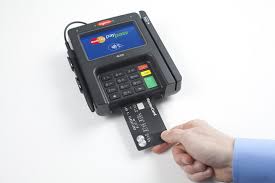
About half the world’s credit card fraud happens in America. This new processing terminal uses technology that reads the latest EMV chip embedded credit card.

Due to massive losses that have occurred through large-scale credit card data breaches, there will be a change in credit card liability. Beginning on October 1, 2015, a shift in liability places the responsibility for fraudulent credit card charges on the merchant and/or banks that don’t use new technology to accommodate chip-based credit cards. The changes, the first major alterations in decades, will make credit card fraud more difficult.

The traditional magnetic strip credit cards now in wide use will be replaced with cards that have embedded chips and PINS. Fraudsters will find themselves stymied as more users turn to these cards, dubbed EMV cards, an abbreviated form of Europay, MasterCard and Visa.

The Losers

The losers will be the merchants who are not EMV ready and banks who don’t issue cards with the new technology. Historically, card issuers have eaten the loss due to counterfeit cards. Now the responsibility will shift to the merchant who processed the card without the new technology or the bank that issued the card without EMV technology. Magnetic card swipes are easily counterfeited, and now account for billions of dollars in fraud losses every year – an estimated 7 billion in the United States alone.

Start Dates

On Oct.1, when the rules change, merchants who have not installed EMV terminals will be burdened with the costs of fraudulent transactions, but those who offer EMV protected services will be off the hook. When the new technology was developed, the card networks decided that improving point of sale devices and the design of the credit card itself would be the best way to go.

It will take time for the new technology to settle in. Experts estimate that by the Oct. 1 start date about 35 percent of merchants will have the technology to process EMV sales. And only 15 percent to 25 percent of cards issued will have the chips to facilitate the secure purchases. By the end of the year, the expectations are that 70 percent of credit cards, 41 percent of debit cards and 59 percent of terminals will be ready for the new technology.

Big Retailers Comply

Predictably, the largest merchants are gearing up to lead the parade. They and others are trying to stay ahead of the curve in being prepared for the change. Widely publicized security breaches such as the devastating Target fiasco are impetus for the merchants to make themselves – and their customers – more secure. The cost of installing the new equipment is about $200 per terminal.

New Industry Created By EMV Needs

Those who produce and install the equipment are being hard-pressed to meet demand. Small merchants are at the tail-end of the parade toward EMV technology, and the demand is so great there are many competitors ahead of them.

What Banks Issue EMV Credit Cards?

Among the card issuers, large banks also are better poised to make the change, with regional banks less ready to distribute EMV-enabled cards to customers. There is no huge supply of EMV chips, and these institutions may see a lag in catching up with the technology, so they may face greater fraud losses. American Express, Bank of America, Chase, Citi and Wells Fargo banks all issue cards with the new chip technology.

Europe is ahead of the United States in implementation of EMV-protected card transactions, with experience going back to 2005. Since then, online sales have increased significantly. The experts expect the same jump in the U.S.

Looking Forwards

The shift in liability will open new doors for mobile payment processing in 2015. New technologies that process payments through mobile phones may lead to some steep learning curves by consumers, retailers and banks, but chances are the learning will be worth it in the long run.

Read More At Wall Street Journal

Filed Under: Credit, Credit Cards Tagged With: credit cards

Tax Breaks For the Self-Employed

February 17, 2015 By Twila Van Leer

Make sure you take all the deductions allowed when you are self employed.
The segue from holidays to tax time is fast. If you are self-employed or if you freelance to supplement your income, you can make the move smooth by being prepared in advance to take advantage of the tax breaks offered to those in this category.

If you work at home, the government might subsidize what are considered personal expenses. If you regularly use part of your home or apartment for business matters, part of your utility and insurance costs may be deductible. You can write off part of the rent or the depreciation if you own your own home.

To help those who might have failed to claim this deductible because of the scary bookkeeping, the IRS has simplified the process. You may deduct $5 for every square foot of space that qualifies. On a 3,000-square-foot home, for instance, the deduction is $1,500.

Health insurance premiums and expenses also are eligible for deduction, but you must itemize. And the deduction is only to the extent that your medical expenses exceed 10 percent of your adjusted gross income (7.5 percent for those age 65 and older.)

If you are still running your business after you become eligible for Medicare, you can deduct the premiums for Medicare Part B and Part D as well as the cost of supplemental (medigap) policies. You don’t have to itemize to claim these deductions and don’t have to factor in the 7.5 percent of AGI tests that apply to itemized medical expenses for those 65 and older.

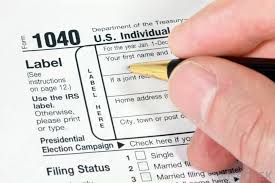
Employees can’t deduct the 7.6 percent of pay that goes into Social Security and Medicare. But if you are self-employed and have to pay the full 15.3 percent tax yourself, you may write off half of what you pay. The deduction is on the Form1040, so you needn’t itemize.

When you work for yourself, options for tax-sheltered retirement plans are available to you. You may choose to contribute pre-tax money to a Simplified Employee Pension (SEP) or a solo 401(k), either one of which has a higher annual limit than regular individual retirement accounts. You may opt for a regular IRA account. Each of the plans has its own set of tax requirements that you must be aware of.

Buying equipment for your business also provides a tax benefit. You may depreciate the cost over the number of years the IRS has established as the “life” of the particular item. A computer, for instance, has a life of five years, so the tax break can be broken down into that time period. But it isn’t as simple as deducting 20 percent for each of five years. The schedule calls for 20 percent the first year, 32 percent in the second, 19.2 percent in the third, 11.52 percent in year five and 5.76 percent in year six.

Or you may choose the Section 179 deduction that lets you deduct 100 percent of the purchase in one year. Many small business owners find this the least irksome choice. For the 2014 return, up to $500,000 in equipment is eligible for the immediate write-off.

Being aware of these deductions for your personal business could save you money when you prepare your 2014 return.

Filed Under: Tax Strategies Tagged With: taxes

Credit Cards Help Build Your Credit

February 12, 2015 By Twila Van Leer

Younger people need to understand how having a few credit cards can serve them well.
More people are opting not to have a credit card. Studies show that 63 percent of those is the Millennial group (ages 18-29) don’t have a card. Thirty-five percent of those over 30 ditto, according to Bankrate.com.

Lacking plastic can, in fact, simplify your finances, but it also can cause complications in your financial dealings. Such things as renting cars or checking into hotels these days are based on credit cards. One leading hotel chain has put a $700 hold on a customer’s debit card if he can’t produce a credit card.

While it’s possible to build credit without one, it’s easier with one. Especially young people who don’t yet have mortgages and car loans can find it tough to build credit. That can make it difficult when it comes time to secure a loan. If the only thing on your credit history is a student loan, you may find slow sailing.

Credit scores are based on five categories: payment history (35 percent); amounts owed (30 percent); mix of accounts (10 percent); new credit (10 percent); and length of credit history (15 percent.) A credit card can impact the first three of these categories, affecting 75 percent of your overall score. At least one active account that has been reported for six months or more is necessary to generate a report at all.

A credit card does not inevitably mean interest payments. And you needn’t pay hefty fees. A secured credit card allows you to put down a deposit, which will be returned when the account is closed. Transactions of these cards are reported to the credit bureaus the same as with standard cards.

Paying off a card each month or in the “grace period for purchases” avoids interest and fees. The credit card companies make their money on those who carry balances, especially very large balances.

Capitol One, Wells Fargo and Bank of America are among those institutions that offer secure cards. Inquire at your own bank or credit union to see if you can take advantage of that option.

If you dislike the idea of any amount of debt, use your credit card for a minimal purchase, such as lunch, just once a month. Then pay it off and you reap the benefit of a good credit rating. If you use the card to purchase an item for which you could have paid cash, the same benefit applies. But you’ll notice the difference when it comes time to make a major purchase.

Filed Under: Credit Tagged With: credit cards

Retirement Planning For Women

January 18, 2015 By Twila Van Leer

Plan carefully for your retirement.
Women, Money & Prosperity: A Sister’s Perspective On How To Retire Well, Written By Donna Phelan
Concerns about having enough savings to finance a worry-free retirement plague many women. According to Donna Phelan, 62, who has guided many women through the process as she has worked with several large Wall Street investment firms. She has even written a book on the topic, “Women, Money & Prosperity: A Sister’s Perspective On How To Retire Well.”

Women tend to earn less than their male counterparts. They save less toward retirement. Many of them take a break from work to rear children and they spend more time taking care of the elderly. All these factors have an effect, Phelan says.

Her response has an acronym, Stackable Income Streams to Empower Retirement Security – SISTERS. The objective is to “stack” as many sources of retirement income as possible. For instance, if a woman has five sources of income, each paying just $12,000 per year, the total for a year is $60,000. Possible sources for this income are Social Security, investments and savings, retirement plans such as 401ks or IRAs, part-time work, inheritance, annuities, home-based or small business, rental property, life insurance and home equity.

She suggests that women get together and pool their information. In some cases, there will be opportunity for collaboration that would improve the retirement outlook for more than one of the parties.

Her tips for building a healthy retirement:

Research your own circumstances. Consider how much in resources you will reasonably have, what kind of lifestyle you would like, whether there are potential sources of income you have overlooked.

Delay retirement as long as reasonably possible. Talk with a professional finance planner and look at alternatives. It may well be necessary to continue generating income past usual retirement age. Working part-time actually can be a good alternative. It keeps you active and healthy. It gives you more time to prepare mentally for retirement.

Pool assets with like-minded women to create a small business. Varied work experiences, say marketing, artistic talent and accounting, might add up to a viable business. Make it home-based if that seems reasonable. Crafts and hobbies can be made into money-making undertakings.

Consider renting out rooms if your home has become larger than you need. Get a roommate or downsize to a less expensive home. Phelan points to the experience of a woman who rented rooms to local art students, using the money to invest in ways that generated more income.

Become financially literate. A professional financial planner may seem a heady step for many women, but the advice can be well worth moving a little out of your comfort zone.

Understand Social Security issues. The longer you delay retirement, the more money you will receive each month. Each year you wait increases your benefit by 8 percent, up to age 70.

Pay off debt as quickly as possible, particularly credit card debt, and create a realistic budget that avoids any further debt.

In a word, become responsible for your own retirement planning. The sooner you begin, the fewer problems you are likely to encounter when the time comes.

Filed Under: Retirement

  • « Go to Previous Page
  • Page 1
  • Interim pages omitted …
  • Page 20
  • Page 21
  • Page 22
  • Page 23
  • Page 24
  • Interim pages omitted …
  • Page 43
  • Go to Next Page »

Primary Sidebar

Personal Finance Articles

  • Make Saving A Priority
  • Review Your Home-Insurance Risks
  • Lowest Air Fare? Try August 28
  • Hackers Targeting Bitcoins
  • Keep Your Emergency Fund Intact

Save At Walmart

Search

Personal Finance Education

Investing Education from Morningstar.

As Seen On Intuit

Intuit.com has ranked Coolchecks.net #4 out of 10 of the best blogs to help you save money. We hope to help you become more aware of your own financial situation and strive to improve it.

Featured On Mint.com – July 2014

Mint Interview

Categories

  • Banking
    • Check Writing
    • Checking Accounts
    • Credit Cards
    • EMV Cards
    • Fees
    • Fraud
    • History
    • Student Loans
  • Best Of The Web
  • Budgets
    • Emergency Fund
    • Grocery Shopping
    • Saving Money
    • Spending Habits
  • Business
    • 3D Printing
    • Bankruptcy
    • Business Advertising
    • Business Development
    • Business Plans
    • Corportate Lessons
    • Data Mining
    • Legal Issues
    • Merchants
    • SEC
    • Security
    • Small Business Startups
  • Consumer Alerts
  • Cryptocurrency
  • Cutting Costs
  • Employment
    • best places to work
    • Careers
    • Interviews
    • Job Search
    • Top CEOs
    • Wages
  • Entrepreneurs
    • Attitudes
    • Entrepreneur Interviews
  • Featured
  • Finance
    • Automobiles
    • Credit Ratings
    • Education
    • Financial Planners
    • Foreclosures
    • Homes
    • Insurance
    • Investing
    • Mortgages
    • Personal Finance
    • Renting
    • Term Deposits
    • Travel
    • Work
  • Fraud
  • Government
  • Holidays
    • Christmas
    • Halloween
  • Internet
    • Bitcoin
    • Blogging Tips
    • Blogs, RSS and Podcasting
    • Databases
    • Facebook
    • Influence
    • marketing
    • Twitter
    • Website Reviews
    • WordPress
      • Key Words
  • Investing Basics
    • Hedge Funds
    • Investing
    • Mutual Funds
  • Life
    • Aging
    • Just For Fun
      • Punahou Alumni Corner
    • Millennials
    • Personal Health
  • Money Making Ideas
    • Affiliate Programs
    • Craigslist
    • Ebay
  • Money Management
    • Bankruptcies
    • Building Wealth
    • Child Care Costs
    • Christmas Shopping
    • Credit
      • Free Credit Report
    • Debit Cards
    • Debt
    • Debt Reduction
    • Health Insurance
    • Income
    • Inheritance
    • Interest Rates
    • Loans
    • Mortgages
    • New Years Resolutions
    • Retirement
    • Shopping Tips
    • Tax Strategies
    • Your Stories
  • Retirement
  • Self Improvement
    • Time Management
    • Work Habits
  • Shopping
    • Coupons
    • Online Shopping
  • Social Security
  • Tax Tips
  • Taxes
  • Technology
  • Trade
  • Uncategorized
  • Wealth

Best of Personal Finance Blogs

Best of BuyerZone Business Finance Blog Recipient

Personal Finance Sites We Recommend

Get personal finance advice from the people behind the top money blogs, including Wise Bread, The Simple Dollar, Mint and Nerd Wallet.

Copyright © 2026 ·Metro Pro · Genesis Framework by StudioPress · WordPress · Log in