• Skip to primary navigation
  • Skip to main content
  • Skip to primary sidebar
  • Money Management
    • Debt Reduction
    • Credit
    • Mortgages
    • Mutual Funds
    • Tax Strategies
    • Loans
  • Budgets
    • Saving Money
    • Income
  • Banking
    • Checking Accounts
    • Check Writing
    • Fraud
    • History
  • Entrepreneurs
    • Entrepreneur Interviews
    • Money Making Ideas
    • 3D Printing
  • Resources
  • Retirement
  • About
    • Privacy Policy

Personal Finance Blog

Tips And Stories To Help You With Managing Money

  • Privacy Policy
  • Saving Money In 2018
You are here: Home / Archives for Money Management / Tax Strategies

Tax Strategies

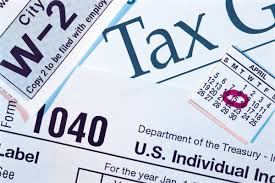
Be Aware Of Changes In Tax Laws For 2015

March 6, 2015 By Twila Van Leer

Standard deductions  have risen to $6,300 for individuals and $12,600 for married taxpayers filing jointly.
Standard deductions have risen to $6,300 for individuals and $12,600 for married taxpayers filing jointly.
Hundreds of thousands of Americans are well into the annual tax frenzy, though the deadline is a month away. There are some changes in tax law for 2014 and 2015 that you need to consider as you prepare a return.

Health Insurance

You may be subject to a penalty if you have not conformed to the mandates imposed by the Affordable Health Care Act. In 2014, the penalty is 1 percent of your household income or $95 per person if you have not obtained health insurance as required by the act. The penalty will rise to 2 percent of income or $325 per person in 2015. Get health insurance quickly to avoid this penalty.

Contributions

The limit an employee can contribute to a 401(k) will increase to $18,000, up $500 from last year’s cap. You needed to contact your payroll department at the first of this year to take advantage of the higher allowable. The “catch-up” allowance for those over 50 also has been increase, allowing for an additional $6,000 in contributions, $500 more than was allowed a year ago. The flexible spending cap for qualified health expenditures now is $2,500, $50 increase over the previous year.

Standard Deductions

Standard deductions also have risen, to $6,300 for individuals and $12,600 for married taxpayers filing jointly. Those figures are up $100 and $200 respectively. The standard deduction is important especially if you cannot itemize.

Changes In Tax Rates

For the tax year beginning in January, income tax thresholds have again been adjusted for inflation. The highest tax rate of 39.6 percent will apply now to single filers who earn over $413,200 and to married couples whose earnings are $464,k850 or above. The increase is about 1.6 percent over tax year 2014.

IRA Rollovers

IRA rollovers starting in 2015 are limited to a single event in a 12-month period. But you can still make as many “trustee to trustee” transfers as you like, moving your money from one provider to another. The new IRA rule is aimed at preventing the practice of withdrawing all the funds and then re-depositing them in a new account, a tactic some were using to create, in effect, a short-term, interest-free loan. Limit all rollovers to direct transfers in 2015 if you plan on moving money more than once.

Alternative Minimum Tax

The Alternative Minimum Tax exemption for 2015 is increased by 1.5 percent from 2014. Caps now are $53,600 for individuals or $83,400 for joint filers.


Filed Under: Tax Strategies Tagged With: taxes

Tax Breaks For the Self-Employed

February 17, 2015 By Twila Van Leer

Make sure you take all the deductions allowed when you are self employed.
The segue from holidays to tax time is fast. If you are self-employed or if you freelance to supplement your income, you can make the move smooth by being prepared in advance to take advantage of the tax breaks offered to those in this category.

If you work at home, the government might subsidize what are considered personal expenses. If you regularly use part of your home or apartment for business matters, part of your utility and insurance costs may be deductible. You can write off part of the rent or the depreciation if you own your own home.

To help those who might have failed to claim this deductible because of the scary bookkeeping, the IRS has simplified the process. You may deduct $5 for every square foot of space that qualifies. On a 3,000-square-foot home, for instance, the deduction is $1,500.

Health insurance premiums and expenses also are eligible for deduction, but you must itemize. And the deduction is only to the extent that your medical expenses exceed 10 percent of your adjusted gross income (7.5 percent for those age 65 and older.)

If you are still running your business after you become eligible for Medicare, you can deduct the premiums for Medicare Part B and Part D as well as the cost of supplemental (medigap) policies. You don’t have to itemize to claim these deductions and don’t have to factor in the 7.5 percent of AGI tests that apply to itemized medical expenses for those 65 and older.

Employees can’t deduct the 7.6 percent of pay that goes into Social Security and Medicare. But if you are self-employed and have to pay the full 15.3 percent tax yourself, you may write off half of what you pay. The deduction is on the Form1040, so you needn’t itemize.

When you work for yourself, options for tax-sheltered retirement plans are available to you. You may choose to contribute pre-tax money to a Simplified Employee Pension (SEP) or a solo 401(k), either one of which has a higher annual limit than regular individual retirement accounts. You may opt for a regular IRA account. Each of the plans has its own set of tax requirements that you must be aware of.

Buying equipment for your business also provides a tax benefit. You may depreciate the cost over the number of years the IRS has established as the “life” of the particular item. A computer, for instance, has a life of five years, so the tax break can be broken down into that time period. But it isn’t as simple as deducting 20 percent for each of five years. The schedule calls for 20 percent the first year, 32 percent in the second, 19.2 percent in the third, 11.52 percent in year five and 5.76 percent in year six.

Or you may choose the Section 179 deduction that lets you deduct 100 percent of the purchase in one year. Many small business owners find this the least irksome choice. For the 2014 return, up to $500,000 in equipment is eligible for the immediate write-off.

Being aware of these deductions for your personal business could save you money when you prepare your 2014 return.

Filed Under: Tax Strategies Tagged With: taxes

Tax-Wise Moves To Prepare For 2015

December 12, 2014 By Sherry Tingley

prepare-for-taxes-2014If the year end comes, can taxes be far behind? December is typically a time to assess your life and set goals. And that means taking a close look at personal finances. Scrutinize investments and budgets and go into the New Year armed with a plan for the next 365 days.

Tax season may be several months in the future, but don’t allow yourself to be lulled into inaction. There are things you can do before Baby New Year puts in his appearance both to ease this year’s tax load and to streamline for the coming year.

It goes without saying that you update your tax software and gather your documentation well ahead of the deadline. Start off the year as financially fit and tax-ready as possible.

Consider putting more money into a pre-tax retirement account such as a 401(k) or IRA, Keep in mind the 2014 contribution limits: $5,500 for an IRA if you are under 50, $6,500 for those 50 and up. The 401(k) limit is $17,500 or $24,000 if you’re 50 or over.

Donating to charities will lower your tax able income, and there are many opportunities in December. Your tax consultant can tell you how much you can claim in donations, depending on your income. And while you are talking with the experts, discuss how you can optimize your retirement and savings options.

Take a financial inventory so you will have a clear view of how you should approach investments to gain the best tax position for 2015. Learn how much your investment plans will require in taxes now and how much will be delayed until retirement. The experts can help you determine the best plan of action to maximize savings now and when you retire.

It’s possible that you can know your tax bracket but be unaware of your effective tax rate. That’s the percentage of your total income that you are taxed on. If you earn $90,000 and file as a single, you are in the 25 percent bracket. But if deductions lower the total to $80,000, you drop into the 22 percent bracket. Knowing these figures can help you make decisions about your investment accounts.

If you are looking into the future, think about whether you have more retirement funds in pre-tax categories. Might it be worthwhile to do some Roth conversions (which must be done by Dec. 31) so that you can put more funds into a category that will require taxes now. This could prove beneficial over the long term, especially if you expect your tax rate might increase as you age.

Look ahead if you have any suspicions that your tax load next year could be higher. Use your tax professional or good software to assess the figures. Make an adjustment in your withholding if necessary. On the other hand, if the pre-assessment suggests you can expect a refund, lower your withholding amounts.

If you have suffered any losses in investments, particularly in retail stocks, you may want to consider selling those investments, taking the loss this year. You can then write them off as you file in April. The market has generally been good this year, but if you don’t expect an improvement in sluggish investments, unload them. You can write off up to $3,000 per year in investment losses. Study your own situation and see what makes sense.

If you have used a Flexible Spending Account to lower taxable income, check on how much money is left in the account. If you don’t spend the balance before Dec. 31, you will lose it. A Health Savings Account also lowers your taxable income, but the balance can be rolled over from year to year. Try to use up your FSA balance by making necessary doctor appointments, updating immunizations and taking care of other health-related matters before the end of the year.

Everyone’s tax picture looks different, but a proactive approach at the year’s end will help avoid any problems that might have taken you unpleasantly by surprise when April 15 rolls around.

Filed Under: Tax Strategies Tagged With: taxes

Be Prepared for 2015 Tax Time

October 19, 2014 By Twila Van Leer

Start organizing your finances now for tax season.
The annual tax frenzy is months away, but there are things you can do in the interim to prepare for tax season, including possible ways to cut your bill.

The obvious place to begin is with a recap of last year’s return. After analyzing the figures, begin to determine where you might make changes for next year. If you expect to make more money this year, for instance, start now to put more into a 401(k) account, contribute to a charity to increase your deduction, or buy tax-deductible items, such as business equipment, before the end of December.

Look back on recent events. If you had a major life change, it is likely to alter your tax status (think marriage or the acquisition of a small business.) You may be wise to consider some professional advice before the deadline looms. Many CPAs find themselves with more time on their hands after the Oct. 15 deadline for this year’s quarterly tax business. Seek help in analyzing your situation.

Experts say too many small business owners wait too long to get advice. Don’t try to find a professional tax advisor after the first of the year. They advise that when your income tops $75,000 annually, you’re ready for a tax expert in your particular field.

In an article by Teresa Mears, the following steps are suggested:

If you pay estimated quarterly tax, be sure you are current with payments to avoid possible penalties if your estimates are short. The sooner you send the money, the smaller the penalty will be.

Decide before the fact who is going to claim children as deductions if you and an ex-spouse have shared custody. Or if you share responsibility for the support of another relative, decide in advance who can claim the benefit. Consider the Earned Income Credit to determine what makes the best sense for your situation.

If you did not purchase health insurance this year, as required, you could face a penalty. See if you meet the criteria for any of several tax exemptions and file for a number, which you can obtain from the Health Insurance Marketplace.

At the same time, check the Affordable Care Act to see if you are eligible for a subsidy. If you received too much subsidy this year, you may have to pay it back. On the other hand, if your income did not reach expectations, you may receive a subsidy through your tax return. But the time to make changes with the Health Insurance Marketplace is now.

Spend the extra money in your flexible spending account if it exceeds $500. You can carry that amount into 2015, but you should not leave an excess in your account. Re-examine your company’s plan. Evaluate this year’s expenses and compare with what you expect in the coming year and consider adjusting your withholding if necessary.

Some taxpayers may choose to accelerate or reduce income to create the best tax stance. Prepaying mortgage and real estate taxes and undertaking optional business expenses before this year is out rather than waiting for next year may make sense for you.

If you sold stocks at a profit, you can offset the tax expense by selling other stocks at a loss.

Increasing contributions to your 401(k) or IRA if you haven’t reach the maximum will improve your tax picture. Donating cash or goods to charitable causes is a nice way to raise your deductions. You need to provide a written proof of donations worth more than $250 and an appraisal for anything over $5,000.

When you are thinking taxes, don’t forget to consider state and local tax levies. States sometimes change their tax formulas and you don’t want to be caught unawares.

Don’t be lax with your business. Treat it as such and don’t ignore quarterly tax payments. If you have been accustomed to doing your own taxes via a software application, it may be time to consult with an accountant to avoid surprises.

Filed Under: Tax Strategies Tagged With: taxes

Tax Strategies For The Self-Employed

March 30, 2012 By Sherry Tingley

Are you prepared for tax season? Have you thought of using a (SEP-IRA) Self Employed Pension plan to help you reduce your tax liability and prepare for retirement?

In the past five years, job losses in the United States have given people incentives to start their own businesses. These self employed people have become successful financially and have never really been forced to think about how they are going to manage paying their own taxes. With additional money coming in, they need a tax strategy to help them plan for retirement.

The formula they might use in saving for taxes needs to benefit them the most in the long run. You could use the strategy of saving 25%-35% and just leaving the money in a savings account. This will earn you very little interest over the course of a year.

One very good tax strategy is to set up an account that is established as Self Employed Pension or SEP-IRA. These accounts will provide you a reduction in your net earnings and allow your money to grow through investments.

So what is a SEP-IRA? A SEP-IRA is an account set up at banks, insurance companies or financial institutions. You are allowed to make cash contributions up to a set limit per year. You need to check with your tax specialist about the amount limits for your situation. For 2011, the contributions cannot go over $49,000.

When you lower your net earnings from your business, you lower your tax liability. The net earnings from your business is your gross income minus allowable business deductions. This determines your taxable income. Contributions to SEP plans are an allowable deduction.

Setting up this type of account helps you in two ways. You reduce your net earnings and you are able to start contributing to your own retirement plan. Both of these benefits can save you thousands of dollars in the long run and with a good investment strategy for your cash contributions, you stand to earn money on your investments over time.

If you are new to being self-employed and want a good strategy to help you build your assets, consider using an SEP-IRA. You can set these up and contribute to them up until the date your taxes are due. Discuss this tax strategy with your tax preparer and determine if this would help your personal tax situation.

This article is meant as a guide for your education. Please counsel with your tax preparer before taking any action. For the government description of SEP-IRAs, please visit: http://www.irs.gov/pub/irs-pdf/p560.pdf


Order Tax Forms Cheaply

Filed Under: Retirement, Tax Strategies Tagged With: money management, Personal Finance, Retirement, tax strategies, taxes

  • « Go to Previous Page
  • Page 1
  • Page 2

Primary Sidebar

Personal Finance Articles

  • Make Saving A Priority
  • Review Your Home-Insurance Risks
  • Lowest Air Fare? Try August 28
  • Hackers Targeting Bitcoins
  • Keep Your Emergency Fund Intact

Save At Walmart

Search

Personal Finance Education

Investing Education from Morningstar.

As Seen On Intuit

Intuit.com has ranked Coolchecks.net #4 out of 10 of the best blogs to help you save money. We hope to help you become more aware of your own financial situation and strive to improve it.

Featured On Mint.com – July 2014

Mint Interview

Categories

  • Banking
    • Check Writing
    • Checking Accounts
    • Credit Cards
    • EMV Cards
    • Fees
    • Fraud
    • History
    • Student Loans
  • Best Of The Web
  • Budgets
    • Emergency Fund
    • Grocery Shopping
    • Saving Money
    • Spending Habits
  • Business
    • 3D Printing
    • Bankruptcy
    • Business Advertising
    • Business Development
    • Business Plans
    • Corportate Lessons
    • Data Mining
    • Legal Issues
    • Merchants
    • SEC
    • Security
    • Small Business Startups
  • Consumer Alerts
  • Cryptocurrency
  • Cutting Costs
  • Employment
    • best places to work
    • Careers
    • Interviews
    • Job Search
    • Top CEOs
    • Wages
  • Entrepreneurs
    • Attitudes
    • Entrepreneur Interviews
  • Featured
  • Finance
    • Automobiles
    • Credit Ratings
    • Education
    • Financial Planners
    • Foreclosures
    • Homes
    • Insurance
    • Investing
    • Mortgages
    • Personal Finance
    • Renting
    • Term Deposits
    • Travel
    • Work
  • Fraud
  • Government
  • Holidays
    • Christmas
    • Halloween
  • Internet
    • Bitcoin
    • Blogging Tips
    • Blogs, RSS and Podcasting
    • Databases
    • Facebook
    • Influence
    • marketing
    • Twitter
    • Website Reviews
    • WordPress
      • Key Words
  • Investing Basics
    • Hedge Funds
    • Investing
    • Mutual Funds
  • Life
    • Aging
    • Just For Fun
      • Punahou Alumni Corner
    • Millennials
    • Personal Health
  • Money Making Ideas
    • Affiliate Programs
    • Craigslist
    • Ebay
  • Money Management
    • Bankruptcies
    • Building Wealth
    • Child Care Costs
    • Christmas Shopping
    • Credit
      • Free Credit Report
    • Debit Cards
    • Debt
    • Debt Reduction
    • Health Insurance
    • Income
    • Inheritance
    • Interest Rates
    • Loans
    • Mortgages
    • New Years Resolutions
    • Retirement
    • Shopping Tips
    • Tax Strategies
    • Your Stories
  • Retirement
  • Self Improvement
    • Time Management
    • Work Habits
  • Shopping
    • Coupons
    • Online Shopping
  • Social Security
  • Tax Tips
  • Taxes
  • Technology
  • Trade
  • Uncategorized
  • Wealth

Best of Personal Finance Blogs

Best of BuyerZone Business Finance Blog Recipient

Personal Finance Sites We Recommend

Get personal finance advice from the people behind the top money blogs, including Wise Bread, The Simple Dollar, Mint and Nerd Wallet.

Copyright © 2026 ·Metro Pro · Genesis Framework by StudioPress · WordPress · Log in