Will Mortgage Interest Deduction Be Targeted?
December 4, 2011 by Twila VanLeer
Filed under Mortgages
Hold onto your wallets, folks. The failure of the congressional “Super Committee” to specify ways the United States can reduce spending in the next ten years means that everything having to do with taxes is likely to be scrutinized in the effort to shore up national solvency.
Some say that the mortgage interest deduction —the biggest break available to many American taxpayers— is sacrosanct and not likely to be scrubbed. But there is the lingering memory of the time when interest on all debts, not just a home, could be deducted when tax preparation time came around. Interest on credit card debt, car loans, student loans and other large-ticket purchases could be taken out of the final tax tally. In the mid-1980s when they were eliminated, then-President Reagan pled for retention of the mortgage interest deduction or it may have met the same fate. Reagan defended the mortgage interest deduction as a factor in promoting home ownership, one of the prime elements, he claimed, of the “American dream.” The fact that those other interest benefits were axed is enough to make taxpayers wary as the debate heats up again.
The Joint Congressional Committee, in its widespread look at all the possibilities, noted that the mortgage interest deduction cost the country’s tax coffers some $90 billion in 2010. According to IRS figures, 51.1 percent of all homeowners in the United States claimed the deduction, while 31.6 percent did not have a mortgage and 17.3 percent didn’t claim the deduction. The loss of the deduction would be highly unpopular with a large portion of the population and it certainly would be a hard-fought battle.
Although American homeowners have come to expect this tax break, few comparable countries—Australia, Canada and Great Britain among them—do not provide their taxpayers this advantage. They might wonder what behavior the U.S. would be trying to encourage by removing the benefit. Rentals as a preference over home ownership?
Appearing before the U.S. Senate Committee on Finance recently, Robert Dietz, an economist and vice president of the National Association of Home Builders said removal of the home interest benefit would increase the disparity in economic income and cause further shrinkage in the middle class.
However, the deduction overwhelmingly favors the rich. The limits are quite high—up to $1 million on a mortgage’s value and an additional $100,000 for home equity loans. The amount that can be deducted does not fall as people’s incomes rise. Someone with two or three homes falling under the $1 million limit significantly benefits. It hasn’t become an open issue yet among the people who support movements such as the Occupy Wall Street line of thought, but it could if the tension between the haves and have- nots intensifies.
Most experts agree that in the current housing market, elimination of the mortgage interest break could exacerbate conditions that already are problematic. The effects of the deduction are not the same everywhere in the country, but the many factors that will enter into any debate on the matter tend to be emotional, especially among those who teeter on the edges of being able to afford a home.
Experts say there would be some trade-offs. A spokesperson for Moody’s Analytics noted that the tax deduction is written into the cost of a home. Its elimination would have a negative impact initially, especially in higher-end housing. On average, its demise would cost a taxpayer no longer able to claim the deduction about $2,400 a year in additional taxes.
No one knows where the current rancorous stalemate in Washington will lead. But it seems inevitable that the debate over finances portends study of every element of the current tax system. And the conversation in today’s financial atmosphere is likely to focus more on federal revenues than on what the mortgage interest deduction is supposed to accomplish in behalf of home ownership.
Save up to 50% off when ordering personal checks at Coolchecks.net.
Free Mortgage Calculator Widget
November 20, 2011 by Sherry Tingley
Filed under Mortgages
If you have a personal finance blog or your site is about helping people improve their financial situation, then you might enjoy using this finance widget on your web site. Buying a new home and getting a mortgage can be a daunting process. Some people are scared that they won’t be able to afford the monthly payments. This calculator will show you what your payments would be on a loan based on the interest rate and the length of time of the loan.
Instructions for installing this widget are easy. Just click the get free calculator and then copy and paste the text onto your web site. If you run a WordPress site, just simply add the code to a widget text block.
Please leave any comments or suggestions for improvements and we will try to implement them. Enjoy this free mortgage calculator for your blog or web site.
Changes in Refinancing Fannie Mae, Freddie Mac Loans
October 29, 2011 by Twila VanLeer
Filed under Mortgages
A recently announced (Oct. 24, 2011) new federal refinance program may offer a solution for as many as 1 million distressed home owners. Changes to the Home Affordable Refinance Program (HARP) were made in an effort to attract more eligible borrowers who can benefit from refinancing their home mortgage. The new, more lenient requirements will be available to homeowners who are current on their payments, regardless of how much their property values have dropped. Those who have failed to maintain a good payment record will not be eligible.
Eligibility Requirements
- The mortgage must be owned or guaranteed by Freddie Mac or Fannie Mae.
- The mortgage must have been sold to Fannie Mae or Freddie Mac on or before May 31, 2009.
- The mortgage cannot have been refinanced under HARP previously unless it is a Fannie Mae loan that was refinanced under HARP from March-May, 2009.
- The current loan-to-value (LTV) ratio must be greater than 80%.
- The borrower must be current on the mortgage at the time of the refinance, with no late payment in the past six months and no more than one late payment in the past 12 months.
Being “underwater” keeps millions of Americans from benefiting from record-low mortgage interest rates. The term refers to homeowners who owe more than their homes are worth, often because of falling values that are beyond their control. One in four homeowners with a mortgage falls into the “underwater” category. That’s more than 11 million people and their frustrations add to the current drag on the housing market in particular and the broader economy in general.
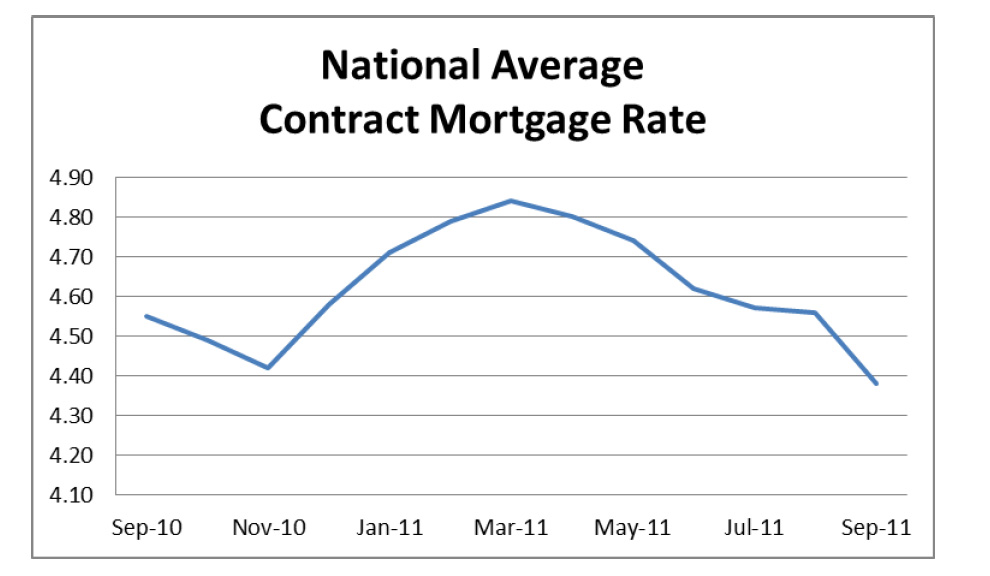
On average, underwater mortgage payers are stuck with a 5.7 percent rate on a 30-year fixed mortgage, according to CoreLogic and the Associated Press. A drop to today’s average rate of 4.11 percent on the same mortgage would save the purchaser of a $250,000 home more than $200 per month. That could put tens of billions of dollars into consumer spending, economists say, a worthwhile kick for the lagging economy.
For many Americans, a few hundred dollars per month is the difference between paying their mortgages and walking away from the property.
The new government plan, with full details still to be announced, would reduce refinancing fees and provide guarantees calculated to put lenders more at ease when issuing loans. It would encourage shorter-term mortgages and apply to borrowers who are only slightly above water.
While by no means the sole answer to the nation’s economic woes, this partial relief for many underwater homeowners is a positive step in the right direction.
30-Year Fixed-Rate Mortgage Falls
July 8, 2010 by Sherry Tingley
Filed under Mortgages
Mortgage rates have fallen again to a near record low. You would think that people would be rushing out to refinance their mortgages and to some extent they have been. Applications for refinancing grew by 9.2 percent last week.
The dilemma is that people who would benefit by these lower rates are not the ones that are getting the new loans. With record unemployment rates, people have gotten into the situation where they now don’t qualify for these loans. Even if they have managed somehow to keep current on all payments due to lenders and credit card companies, their employment history knocks them out of the game.
If you have changed professions, which many people have been forced to do, you need a two year record of proven income to be considered for refinancing. Even with record-low mortgage rates, there just aren’t a lot of qualified borrowers.
In California, one homeowner has not made a mortgage payment for seven months and has not been subject to foreclosure yet. “We have 19 million vacant housing units in the United States, and I’m afraid it’s going to put some more of them on the market,” says Ted C. Jones, chief economist for Houston-based Stewart Title.
Financial analysts predict that mortgage rates will rise soon over the next week. Mostly because they feel it really can’t go much lower.
How to Qualify for a Home Loan
November 14, 2009 by Sherry Tingley
Filed under Loans, Mortgages
Owning a home has been considered a logical investment, as it gives a sense of security. It is asset than can be passed on to the next generation. With the recent turn in the economy, buying a home is becoming more enticing as property prices are going down. Although this is true, purchasing a home can still be expensive. Obtaining a home loan can help in being able to purchase property.
To apply for a home loan, banks normally check the applicant’s background, whether they have a good, steady job or some other stable source of income. Credit line is also checked, whether the applicant has been responsibly paying his/her debts well. An applicant must also have collateral as financial back up, as an assurance that the applicant will be paying back the loan in full.
Do some research on how much you can ask from lenders. This will give a general idea in figures of how much you can borrow, how much of your income is needed for the down payment as well as for the succeeding payments. Evaluate how much you can afford to spend for the house loan, in consideration with other existing monthly payments. It is recommended that less than a third of the applicant’s monthly income be spent on the payments for the loan and property.
Start saving money for the purchasing of the house before attempting to apply for a home loan. Possible ways of saving for the home loan and property purchase include taking a second job or reducing unnecessary expenses. This initial investment is a good demonstration to the lender of the applicant’s good intent in purchasing a house. There are also other options to be considered in obtaining financial support when purchasing a house such as the Veteran’s Administration loan for veterans. Consult with your real estate agent regarding other financial support options.
As a result of the recent development in the economy, banks are becoming more stringent in assessing applications. However, there are ways of improving chances when applying for a home loan. In order to prepare for qualifying for a home loan, it is recommended that the applicant obtain a copy of their credit report from a qualified agency. There are services which can send a report annually or directly contact the agencies for an immediate copy. Take note of outstanding or unpaid credit, as this is an important aspect that banks check for. Pay back all debts. If this is not completely possible, then make it as low as possible. This is important as it sends a note to the lender of the applicant’s reliability in paying back the loan.
Banks normally ask for collateral as an assurance that the applicant will pay back his/her loan. Other properties in real estate or investments in the stock market are possible sources of collateral.
There are no definite rules that can assure the applicant will obtain the home loan. Loans are approved on a case to case basis. However, following these tips increases the chances of getting the home loan. Do not despair if you are denied a home loan but see it as a sign that there may be areas in your application that need improving.
Mortgage Calculators
October 12, 2009 by Sherry Tingley
Filed under Mortgages
Many of us don’t have the talent to make complicated computations to figure out what your mortgage is actually going to cost you and what your monthly payments will be. A mortgage calculator is an automated tool to aid you in doing this before negotiating a mortgage transaction. This tool gives you an overview of your financial responsibility if you choose to get a mortgage on your real estate investment.
When you are shopping for a house you want to own or rent, you first want to think about all aspects regarding the house and the cost before making a decision. Using a mortgage calculator in the privacy of your home is more convenient than doing so in the presence of a mortgage lender.
If you are just starting to have a family and you are not yet earning much, renting is a good option for now. Furthermore, whether you are a first time buyer or an experienced buyer, a mortgage calculator is always the best thing to use for estimating the mortgage costs.
Your income, loans, debts, and available interest rates will determine how much you are allowed to borrow. Although most people know their monthly expenses, their idea of how to compute the monthly mortgage payment is another story. The mortgage calculator is the answer to know what you can afford by comparing the interest rates, loan terms, and down payment.
It estimates your monthly payments. It is a relief to have this type of calculator in determining the mortgage that is most beneficial to you from the different options available. The calculator is a handy tool to use before asking your lender for advice and making a new purchase. It will keep you on the right track. Take time with the numbers to see what you can afford and your financial situation can improve. Putting the information in a spreadsheet is another tool you can use that will help in discussions with the your lender.
Calculating mortgage payments is such a complicated task. Instead of acquiring the services of an agent to make you understand the figures, why not use a cost-free mortgage calculator which has been tested and proven to be authentic. Mortgage calculators are blessings to homeowners interested in real estate. Before these calculators, buyers had to use interest rate tables to compute the variables of the mortgage. It is common knowledge that complex mathematical computations are very hard to comprehend.
Bankrate.com has an online calculator that you can use for free. You will only have to type in all the information asked such as your monthly income and additional earnings, housing expenses, loans and insurances plus the amount to be converted. After this, the calculator will give you the amount and monthly payments that meet your requirements. It can also show you how many years you can shorten your mortgage payment time based on whatever additional payments you think you may be able to make. Using a mortgage payment calculator can be crucial to helping you make one of the most important buying decisions of your lifetime.
Why Our Housing Market Failed and Why a Bailout is Necessary
September 27, 2008 by Sherry Tingley
Filed under Mortgages
Why did the housing market FAIL? GREED, CORRUPTION and IGNORANCE!
In 2003, I was taking some Mortgage Banking courses to obtain my Mortgage Banking Certification. One of the courses was introducing, what they termed new instruments for financing mortgages. The new instruments were not available in the state of Texas at that time due to the state Homestead Laws.However, later that year they would become effective because the laws would be relaxed allowing homeowners to decide if they wanted the protection of the current laws or wanted to take advantage of one of the new financial mortgage instruments to get more house than current laws allowed them to have with their present income.
I was not new to the mortgage industry. I had been in the mortgage business for 20 years. I also recognized that these instruments were not new either. They were just redesigns of the products used by Savings and Loans during the 1980s for the most part.
I voiced an unpopular opinion at that time. I said to all who would listen, This is NOT good! There are to many greedy and uninformed people for this to work. We will see the S&L crisis happen all over again, only worse this time because of the increased practice of securitizing pools of mortgages and marketing them to investors as MBS (Mortgage Backed Securities) investment pools.
I watched as the parent company of the company I worked for went from buying and selling pools of loans in the $100,000 to $1,000,000 range to $1,000,000 to $1,000,000,000 range in a matter of 6 months to a year.
New residential construction sprang up on every vacant lot. Older homes were bought out, torn down and huge new houses took their place. Everyone who could identify a hammer from a nail was now home builder.
Older residences were selling on the market for 3, 4, 5 times the actual replacement cost, let alone the actual value. Everyone was trading up from the home the owned before to one 3 or 4 times bigger, newer and of course better. Greedy lenders convinced greedy and gullible buyers that by the time the ARM (Adjustable Rate Mortgage) they were purchasing to buy the house actually went up, their salary would have increased to equal the adjustment. Anyone and everyone could own a home now. It didn’t matter that the end payment was many times more that their income warranted they would be able to sell or refinance when the time came to pay more.
Why should we pay to bail out the housing market? WHY BAIL OUT GREED, CORRUPTION and IGNORANCE? I don’t know, no one has convinced me yet.
But, I don’t want to see the Economy collapse.
I personally do NOT believe in bailing out companies or homeowners because they made a bad judgment call, and certainly not greedy or uninformed people. I saw too much to even pretend that I imagine that the majority of those involved don’t deserve exactly what has happened, including the investors.
However, (and this need a lot more research, as to bail out terms and conditions) we are dealing with a different age and economic mix than prevailed in the 1980s. Many of our investors are foreign entities. The soundness of our dollar on the worldwide marketplace and our economic standing in the world depend on our ability to stabilize the market and regain the trust of the entire world. We have no choice but to underwrite the investments that are held by so many foreign investors.
This being acknowledged, a very strict oversight committee must oversee this bail out. Not by backbiting, corrupt politicians, but an honest, trustworthy, independent committee. Our main problem here, of course, is finding honest, trustworthy, independent and (let me add) incorruptible people that are experts in the mortgage industry.
This article was written by Virginia Ritchie.