• Skip to primary navigation
  • Skip to main content
  • Skip to primary sidebar
  • Money Management
    • Debt Reduction
    • Credit
    • Mortgages
    • Mutual Funds
    • Tax Strategies
    • Loans
  • Budgets
    • Saving Money
    • Income
  • Banking
    • Checking Accounts
    • Check Writing
    • Fraud
    • History
  • Entrepreneurs
    • Entrepreneur Interviews
    • Money Making Ideas
    • 3D Printing
  • Resources
  • Retirement
  • About
    • Privacy Policy

Personal Finance Blog

Tips And Stories To Help You With Managing Money

  • Privacy Policy
  • Saving Money In 2018
You are here: Home / 2010 / Archives for April 2010

Archives for April 2010

Free Personal Finance Tools Create Smart Data

April 26, 2010 By Sherry Tingley

Gathering data and making meaningful use of it has made 30 year-old Aaron Patzer, a rich man. Aaron Patzer is the founder of the website, Mint.com which is a free personal finance site that has over 1.5 million users. It allows people to track bank transactions, credit card transactions, investments, and loan transactions online.

The site helps you find better prices on things you buy, guides you to the best credit card rewards and minimizes finance charges. It has helped people find $300 million in savings, managed $50 billion in assets and helped track $200 billion in purchases.

Security for this type of financial analysis is of utmost importance to  Mint.com. They have bank level security. They also have a “read-only” connection to financial institutions so no money can be moved and no one can drain your accounts. They have low-balance and spending alerts to help you manage your accounts and prevent identity theft or fraud.

What inspired him to create this type of site?

He found that he was spending most of his time working and had little time to track his own finances. Frustrated with how Quicken, Intuit’s financial software, worked, he decided to create his own program. He designed a way to make tracking his finances easier, quicker, and more automated. He created a business model that allowed people free use of the money management tools. From the data aggregated, they could offer suggestions on ways to save money, lower interest rates on credit cards and make better financial decisions

How did he fund the website?

Aaron had to raise venture capital money to fund the project and it was not always easy. He experienced highs and lows. Sometimes he thought his idea was the greatest thing since sliced bread and other times he questioned himself with his attempt at tackling such a big project and competing with Intuit, a $10B company. For comfort in the low phases, he often thought of a quote “Our doubts are traitors, and make us lose the good we might oft win, by fearing to attempt.” Shakespeare

How does the software work?

Aaron Patzer received a license from the company, Yodlee, to use the technology that powers 85% to 90% of all the online consumer finance sites. The communication between you and your bank uses this technology.

Then, he did what he is good at. He began to work on algorithms that would take the financial data and make it useful. One algorithm was patented and contains 105 steps to have transactions labeled with appropriate categories. Other algorithms helped to make recommendations on ways that the user could save money. He now holds 11 patents on algorithms.

How did the site become so popular and successful?

When the site was first launched it won awards from The Motley Fool for the best money management tool. TechCrunch40 awarded them the hottest start up company of the year and they really began to take off. Over the next few years they received 47 awards from well know companies like, CNNmoney.com, Time.com, PC magazine, Kiplinger, the World Economic Fund, LifeHacker.com and Business Week.

What does Intuit think of Mint.com?

Intuit’s executives watched Mint.com for over a year. They became so impressed with the features of the site that the CEO of Intuit, Brad Smith approached Aaron and offered to buy the company. On November 2, 2009, Intuit purchased Mint.com for $140 million, offering Aaron the chance to be in charge of Mint.com and all Quicken online, desktop and mobile offerings, which he agreed to do.

Aaron Patzer, earned his bachelor’s degree in computer engineering, and computer science, and electrical engineering, at Duke University as well as a master’s degree in electrical engineering and algorithms from Princeton University. Some of his first work after graduation was working on a cell microprocessor, used in the PlayStation 3 and it uses three of his patents.

What is Aaron Patzer’s advice to entrepreneurs?

His best advice to other entrepreneurs is to “observe the world around you – everything you do, and especially everything you hate to do – solve a real problem and the world is yours.”
Filed Under: Entrepreneurs, Internet Tagged With: entrepreneur, free, making money, money management, Personal Finance

Is There A Future For The Check Printing Business?

April 19, 2010 By Sherry Tingley

The check printing business has gone through hundreds of years of refining.  In the 1600’s, England began using checks as a way to eliminate the problem of carrying sacks of money. Checks did not become a popular way of conducting money transactions until the early 1900’s. By 1913, checks were widely used in the United States and by 1915, W.R. Hotchkiss had created Deluxe Check Printers, a leader in the check printing business  now called Deluxe Corporation.

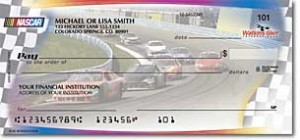
Check printing business
Hundreds of Popular Check Designs

As personal checks  became more and more popular, an overwhelming problem  developed.  The process by which the checks were sorted to the correct account number was painstakingly slow and expensive.

By 1952, there were approximately  8 billion checks a year that needed to be processed. On one day alone, there could be 69 million checks requiring sorting.

Dr. Kenneth R. Eldredge of the Stanford Research Institute to the American Banking Association, came up with a solution to the problem. His solution is well known today as MICR technology, which he patented in 1961. The patent number 3,000,000 was given to him. The patent office held this number for someone who would create a significant invention and they felt that this invention was significant.

MICR stands for magnetic ink character recognition.  Dr. Eldredge used a special type of ink toner that had iron oxide in it. When the check  was passed through a magnetic machine, the iron oxide particles  became magnetized. These created patterns which were then recognizable by the magnetic reader. This allowed for matching checks to checking account numbers.

A special font was selected to use with this technology. That font can be seen in the bottom left hand corner of any bank check. The first font was called “E-13B.”  The font has ten numbers and four symbols. This has been revised five times so the letter E was used to represent that. The 13 was  used to represent .013-inch which was the design of the font. The B represents the second revision to the system.

By 1963, a standard had been set by the banking industry. The American National Standard Institute (ANSI) recognized the MICR technology and the chosen font as the one to be used on all printed checks.

Many revisions have been made over the years, but this original technology paved the way for the check business.

In the 1980’s the check business was predicted to be on the decline because of the use of electronic fund transfers. Thirty years later, the check business is still hanging in there.

Hundreds of Dog and Puppy Checks

Deluxe Corporation, recently acquired Custom Direct checks for $98 million.  Deluxe reported sales of $1.34 billion dollars in the past 12 months. They are anticipating the new purchase of Custom Direct will  increase their revenues by $60 million. They have successfully positioned their company as a leader in checks sold directly to consumers and not through financial institutions.

Although technology makes electronic funds cheaper than processing printed checks, the check printing business is still thriving in 2010. With fierce competition between VistaPrint, Walmart, Checks In The Mail, Carousel Checks and Harland Clark, it seems that Deluxe Corporation is currently the leader in this industry.

Filed Under: Money Making Ideas Tagged With: Checking Accounts, making money

The Value of Scarcity and Uniqueness in Business

April 14, 2010 By Sherry Tingley

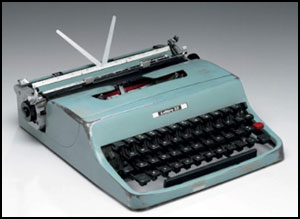
Auctions can bring hefty prices for unique, rare items. Recently, a manual typewriter fetched the amount of $254,000.

Why the astronomical price? You may wonder about this because living in the digital age, who needs a typewriter?

Possibly similar to the sale of one of Michael Jackson’s glove, this memorabilia belonged to Cormac McCarthy, American fiction writer. From this humble looking typewriter, McCarthy typed more than 5 million words over a period of 50 years.

The Lettera 32 Olivetti Typewriter

Cormac McCarthy, born in 1933, is an American novelist and playwright sometimes compared to Faulkner. Six of his novels were made into films. Well known for his 2007, Pulitzer prize winning, work of fiction called, “The Road.”

In 2008, McCarthy was awarded the Pen/Saul Bellow Award for Achievement in American Fiction. His work was recognized for qualities of excellence, ambition and scale of achievement during his writing career. This places him in the highest ranks of American literature.

People predicted his typewriter may go for $18K or so. Those predictions were far below the price it received. The large sum of money was donated to a scientific research organization, the Santa Fe Institute.

The qualities of uniqueness combined with scarcity can drive up the value of an item exponentially. With many competing businesses in similar niches popping up all over the web, thousands will collapse and a few will prosper. It seems to be a natural cycle of business.

If you want your Internet business to prosper, ask yourself if you have something to offer people that is both unique and scarce. The more you can meet this criteria, the better your business will do. What can you bring to the table that is different from every other company? Opportunities to create new, unique products are endless.

The entrepreneur in us sees opportunities everywhere we look, but many people see only problems everywhere they look. The entrepreneur in us is more concerned with discriminating between opportunities than he or she is with failing to see the opportunities. ~Michael Gerber

Filed Under: Business Development Tagged With: business, cormac mccarthy, entrepreneur, Money Making Ideas, typewriter auction

How To Use Flickr Photos On Your Blog

April 8, 2010 By Sherry Tingley

Using photos from flickr.com on your blog can make your writing come to life and provide your readers an exceptional experience. The photo above taken from the seat of a motorcycle, heading for the Eifel Tower, is just an outstanding photo. It makes you wish you were there. The old adage that a picture is worth a thousand words really is true.

To get started, you’ll need to go to flickr.com and sign up for a free account. There are paid accounts with a small yearly fee of $24.95 which will allow you to upload your pictures for distribution.

Once you have signed up with flickr, you will find that there are over 139,726,734 photographs available for your use in the area called the Creative Commons.

These photographs have been given the CreativeCommons.org license which gives you permission to use these photos with a few restrictions. You receive worldwide, royalty free, permission to use the photographs indefinitely.

There are restrictions to the way you can use the photos that are reasonable and that you must agree to.

Here are the rules you must follow:

1. You must attribute the photograph to the owner in the manner that the owner sets on the photograph. You can find that information on the bottom right hand side of the page that the individual photo is on. Basically you use their name and title of the photo.

2. You can’t use the photos for monetary gain. For example, you can’t download the photos and make calendars out of them to sell.

3. You may not collect any royalties on the photos.

4. You may not distort the photo in anyway. So Photoshop editing is not allowed.

5. You must include the URI for the license with every copy of the work you distribute. This is the copy of the license so that you can read the license in it’s entirety: Creative Commons License.

In your search for the right photograph for your story, you can see the most popular image topics that people have been posting in the past 24 hours, 7 days and since the beginning of flickr.

There is also a service called “Blog This” where you can find a photo and just click on blog this. Type your story directly on the same page that the photo is and push a button and it will post it to your blog. You’ll need to register your blog with them so that logging in to your site and posting can be done quickly and easily. The photo will be inserted into your post like the photo in this story was inserted.

Make your blogging more interesting by adding photographs from all over the world. You’ll learn what type of camera took each photograph and you’ll be adding a little BAZINGA to your story.

Filed Under: Blogging Tips Tagged With: blogging, flickr, photographs

Behavioral Finance Experts Share Tips

April 5, 2010 By Sherry Tingley

Are you one of the 50% of Americans that don’t expect your personal finances to improve in the next six months? According to a recent Harris Poll 30% of Americans feel that their finances will worsen. Fear of losing your job or losing money influences us tremendously.

Emotional Financial Decisions

There have been studies done by behavioral finance experts that say by nature we seem to look at our own situations as worse than they actually are. Is that true for you? One solution to this problem is to figure out how to conquer the emotions that stop you from making the best financial decisions you can.

What are you risking?

Psychologists often use the phrase, “The emotional tail wags the rational dog.” The same is true for us in managing our personal finances. So what can you do to help yourself?

The first thing to do is to save money and save money early. A gentleman was discharged from the Army in 1958 with a check for $3,500. He got some advice from the head of research at Smith Barney about what to do with his money. He was advised to save it and invest it. He ended up investing the entire amount in IBM stock because he was familiar with the company. That stock is now worth over a quarter of a million dollars.

Why Is It Hard  To Save Money?

Richard Thaler, author of the bestselling book,”Nudge,” and professor at the University of Chicago, School of Business, says that the biggest problem Americans have is just not saving enough money. It is recommended that you save ten percent of your income, but many people fall far short of that. He says that people are not perfect. We all make mistakes. Figuring out how your emotions are getting in your way of saving will go a long ways in helping you get your finances back on track.

David Laibson, an economics professor at Harvard reports that the reason that people don’t save is primarily due to procrastination. They don’t want to fill out the paperwork that would make automatic payments into a savings plan. They decide that they’ll do it next week. It’s very similar to putting off a diet. It’s much easier to start on Monday. Do something about putting a savings plan in place. Use a strategy like saving ten percent of your income and put it on auto pilot.

Can you imagine how it would feel to have done this consistently throughout your life time? Warren Buffet, the third richest person in the world, worth $47 billion dollars, keeps $20 billion dollars in cash on hand. It helps him sleep at night.

Steps You Can Take Now

Your area of focus should be on building an emergency fund that will carry you through three to six months of unemployment. Try to eliminate big money expenses that may be unnecessary. Start networking with others before you lose your job. Find organizations to join where you can network at least once a week. Seventy-three percent of six-figure earners landed their current positions through personal contacts.

Get your finances back on track by saving on a regular basis, making good financial decisions without undue emotional factors and do yourself a favor by networking with others like-minded business people on a regular basis.

Filed Under: Saving Money Tagged With: Personal Finance, save money, Saving Money

Primary Sidebar

Personal Finance Articles

  • Make Saving A Priority
  • Review Your Home-Insurance Risks
  • Lowest Air Fare? Try August 28
  • Hackers Targeting Bitcoins
  • Keep Your Emergency Fund Intact

Save At Walmart

Search

Personal Finance Education

Investing Education from Morningstar.

As Seen On Intuit

Intuit.com has ranked Coolchecks.net #4 out of 10 of the best blogs to help you save money. We hope to help you become more aware of your own financial situation and strive to improve it.

Featured On Mint.com – July 2014

Mint Interview

Categories

  • Banking
    • Check Writing
    • Checking Accounts
    • Credit Cards
    • EMV Cards
    • Fees
    • Fraud
    • History
    • Student Loans
  • Best Of The Web
  • Budgets
    • Emergency Fund
    • Grocery Shopping
    • Saving Money
    • Spending Habits
  • Business
    • 3D Printing
    • Bankruptcy
    • Business Advertising
    • Business Development
    • Business Plans
    • Corportate Lessons
    • Data Mining
    • Legal Issues
    • Merchants
    • SEC
    • Security
    • Small Business Startups
  • Consumer Alerts
  • Cryptocurrency
  • Cutting Costs
  • Employment
    • best places to work
    • Careers
    • Interviews
    • Job Search
    • Top CEOs
    • Wages
  • Entrepreneurs
    • Attitudes
    • Entrepreneur Interviews
  • Featured
  • Finance
    • Automobiles
    • Credit Ratings
    • Education
    • Financial Planners
    • Foreclosures
    • Homes
    • Insurance
    • Investing
    • Mortgages
    • Personal Finance
    • Renting
    • Term Deposits
    • Travel
    • Work
  • Fraud
  • Government
  • Holidays
    • Christmas
    • Halloween
  • Internet
    • Bitcoin
    • Blogging Tips
    • Blogs, RSS and Podcasting
    • Databases
    • Facebook
    • Influence
    • marketing
    • Twitter
    • Website Reviews
    • WordPress
      • Key Words
  • Investing Basics
    • Hedge Funds
    • Investing
    • Mutual Funds
  • Life
    • Aging
    • Just For Fun
      • Punahou Alumni Corner
    • Millennials
    • Personal Health
  • Money Making Ideas
    • Affiliate Programs
    • Craigslist
    • Ebay
  • Money Management
    • Bankruptcies
    • Building Wealth
    • Child Care Costs
    • Christmas Shopping
    • Credit
      • Free Credit Report
    • Debit Cards
    • Debt
    • Debt Reduction
    • Health Insurance
    • Income
    • Inheritance
    • Interest Rates
    • Loans
    • Mortgages
    • New Years Resolutions
    • Retirement
    • Shopping Tips
    • Tax Strategies
    • Your Stories
  • Retirement
  • Self Improvement
    • Time Management
    • Work Habits
  • Shopping
    • Coupons
    • Online Shopping
  • Social Security
  • Tax Tips
  • Taxes
  • Technology
  • Trade
  • Uncategorized
  • Wealth

Best of Personal Finance Blogs

Best of BuyerZone Business Finance Blog Recipient

Personal Finance Sites We Recommend

Get personal finance advice from the people behind the top money blogs, including Wise Bread, The Simple Dollar, Mint and Nerd Wallet.

Copyright © 2026 ·Metro Pro · Genesis Framework by StudioPress · WordPress · Log in