• Skip to primary navigation
  • Skip to main content
  • Skip to primary sidebar
  • Money Management
    • Debt Reduction
    • Credit
    • Mortgages
    • Mutual Funds
    • Tax Strategies
    • Loans
  • Budgets
    • Saving Money
    • Income
  • Banking
    • Checking Accounts
    • Check Writing
    • Fraud
    • History
  • Entrepreneurs
    • Entrepreneur Interviews
    • Money Making Ideas
    • 3D Printing
  • Resources
  • Retirement
  • About
    • Privacy Policy

Personal Finance Blog

Tips And Stories To Help You With Managing Money

  • Privacy Policy
  • Saving Money In 2018
You are here: Home / Archives for Money Management / Retirement

Retirement

Retirement Plans Are Not Always Available

June 22, 2016 By Twila Van Leer

Many employees don't have access to a company retirement plan.
Many employees don’t have access to a company retirement plan.

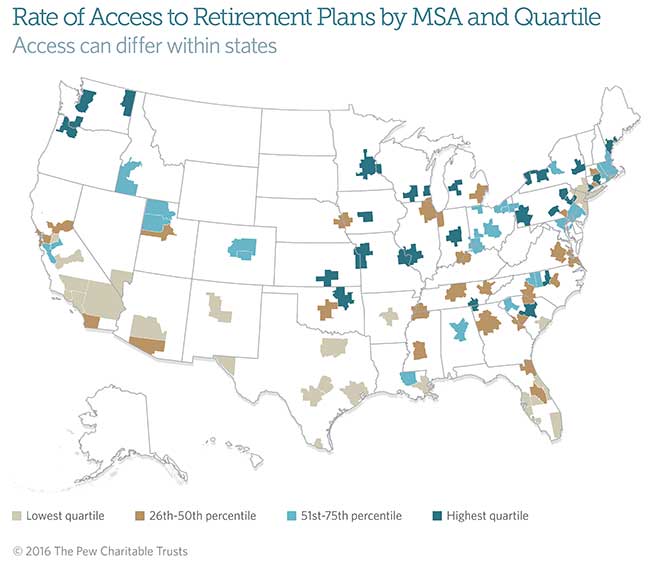
Retirement systems in America are not always available to people. The The Pew Charitable Trusts is an organization that helps states and cities to design
retirement systems that are affordable. They have conducted a study that identified areas of the country that have the most access to retirement plans. The results revealed that access varies more among the nation’s metropolitan areas than across states as a whole.

For instance, workers in Grand Rapids, Mich. had the greatest rates of access, at 71 percent and those in McAllen, Tex., the lowest at 23 percent, the Pew study showed in a comparison of 104 metropolitan areas. Overall, the nationwide percentage of workers who had access to a plan was 58.

Fewer Employers Offer Retirement Pensions

With fewer companies offering standard retirement pensions, the importance of a workplace retirement plan is increasingly important to those looking at retirement. Workers are looking more to a 401(k) or other option to help them supplement their anticipated Social Security.
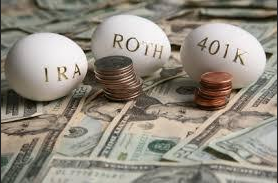
Retirement savings plans offered by employees give people the ability to save  for retirement.
Retirement savings plans offered by employees give people the ability to save for retirement.

Even so, 40 percent of full-time private sector employees say they don’t have access to an employer-supported plan. Local governments look at the reality and are concerned that helping retirees to survive financially may come home to roost with them. Policy questions are on local agendas and state agendas as officials look at the possibility of stresses on such programs as Medicaid, food assistance and other support systems.

State-run Savings Plan

Illinois has enacted a state-run retirement savings plan for some workers who have no workplace access. The plan will go into operation in 2017.

Federal Government Concerns

The federal government has concerns as well, particularly as the long-range health of Social Security is in question. Several policies to encourage savings have been instituted, including the Pension Protection Act of 2006, which enabled prospective retirees to make automatic contributions to a 401(k) plan.

myRA

President Obama created myRA, to assist people who don’t have access to a company retirement plan so they can save individually. myRAs will be invested solely in government bonds and will be backed by the U.S. government.

Pew found that the Northeast, Upper Midwest and Pacific Northwest regions of the country have the highest rates of worker access to retirement savings plans, while the areas with the lowest rates are in the South and parts of the West.

Filed Under: Retirement, Social Security Tagged With: Retirement, social security

When To Begin Social Security

June 9, 2016 By Twila Van Leer

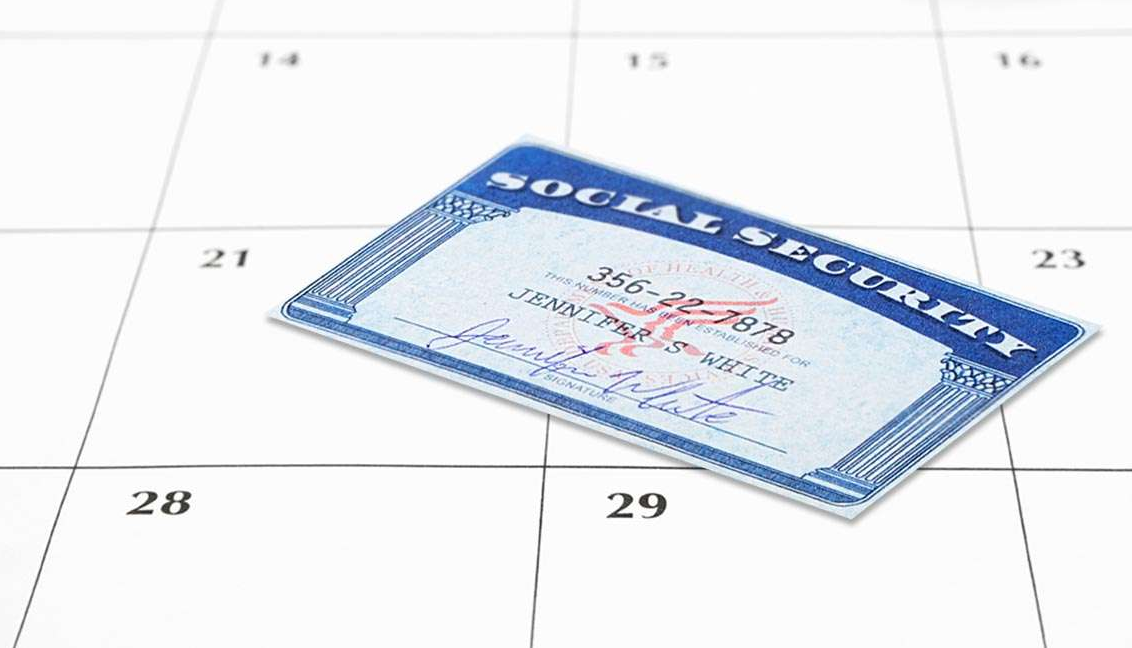
Social security main source of income for retirees.
A growing number of Americans are starting to withdraw Social Security benefits before reaching full retirement age, according to a research poll conducted by Associated Press and the NORC Center for Public Affairs and reported by the AP.

Forty-four percent of those polled said they will look to Social Security for their main means of financial support after retirement and they will start collecting before they reach 65 or 66, the benchmark for receiving full benefits.

Benefits Reduced If Collect Early

Social Security regulations allow retirees who were born in the period from 1943 and 1954 to begin collecting as early as 62 years of age, but the benefit is reduced by up to 30 percent. That can have a significant effect on the long-term benefit.

Retirees who wait until they over 66 years of age see considerable increases in their monthly benefit, according to experts at the AARP Public Policy Institute. For each additional year past 66, the amount of retirement pay rises by 8 percent. The benefits top out at age 70, at which time the retiree is receiving the maximum amount.

Individual Circumstances Affect Retirement Decisions

But many Americans can’t or don’t want to wait that long to begin collecting, depending on their individual circumstances. Health and other considerations may weigh heavily in decisions to retire. Some people who lose their employment while approaching retirement are not able to get another job and early withdrawal of Social Security funds is a necessary option.

Social Security Main Source Of Income

Social Security is becoming more and more the main source of anticipated income for the retirement crowd. Fewer companies are offering standard retirement plans, opting to offer employees 401(k) and other plans to provide for their old age years. Only 43 percent of those polled said they are expecting a traditional pension.

Supplementing Social Security

Some workers, about 50 percent, reported that they also have other padding, such as a regular savings or IRA account, but some Social Security is by far the most commonly anticipated source, the survey found. Some 86 percent of those polled said they expect Social Security to contribute to their retirement income.

Retirement Age Rising

The average retirement age has been rising, as more Americans, particularly women, see the necessity for working longer to make retirement affordable. The average age for males is 64, and 62 for females. Compared with other countries, the American retirement ages still are relatively young.

Many factors enter into the retirement decision, including life expectancy data that show there are differences between rich and poor and among ethnic groups.

Questions about the solvency of the country’s most–drawn on retirement finance source have been a troubling aspect of the issue for some time. Since 1984, the program’s trust fund has run a surplus, but that is expected to end by around 2020 when the Baby Boomer generation hits the retirement ranks. The Social Security Administration believes interest income from the fund should be able to handle the increase until 2034, but at that point, the possibility of shrinkage in benefits could become a reality unless the issues are addressed. The matter is part of the current presidential debates taking place before the November elections. Democratic front-runner Hillary Clinton sees a need for expansion of the program, while likely Republican candidate Donald Trump has declared it should not be changed.

Filed Under: Retirement, Saving Money, Social Security Tagged With: Retirement, Saving Money, social security

Retirement Planning With Bridge Jobs

April 20, 2016 By Twila Van Leer

Many elderly are turning to bridge jogs in their retirement.
Many elderly people are turning to bridge jobs in their retirement.
For many Americans, the jump from employment to retirement means getting a bridge job. A bridge job is a bridge between full-time work and retirement for workers who are approaching full retirement but are not quite ready to totally leave the workforce. For some, that interim step can last for years. Retirement is no longer an event, but a process.

Lifestyle Choice

Many workers actively plan for an “old-age” job for many reasons. About 60 percent of aging workers take the bridge job route, according to a University of Minnesota study. And it isn’t just those at the low end of the financial totem pole. Many who look at today’s longevity stats and their relatively better physical condition choose to work awhile longer as a lifestyle choice. A fair number even “come out” of retirement and seek a bridge job. They could get by on their retirement savings, but find life without work doesn’t mean as much. They enjoy the extra income, but view the time filled with useful activity as an even greater bonus.

Erosion Of Retirement Savings

It is now so common that some financial experts look at it as just another job in a lifetime career. Most of those in the workforce now see multiple jobs as part of the standard scenario. The erosion of retirement savings is a factor, as well. Defined-benefit retirement packages are becoming rare and programs such as a company-sponsored 401(k) are taking their places. The move to a 67-year-old retirement target, rather than 60 or 65 amounts to a reduction in benefits, experts point out.

Lower Paying But Flexible

Bridge jobs tend to be lower-paying than the careers the elderly are leaving behind, are less likely to add anything substantial to retirement cushions and may be less strenuous. But the advantages may include more time flexibility, including part-time work.

Rewarding

Some seniors find this as an opportunity to look for jobs in a sector in which they have had an interest, but bypassed during the usual career period in favor of things that paid better. One woman, for instance, went into an education job that was very rewarding to her personally, though it paid much less than her career job. Such teaching or tutoring jobs are very attractive to those whose professional work enhanced their value in an education setting.

Working well beyond what was once considered time to retire is a necessity for some, a welcome change for others. As long as health allows and mental capacities hold up, some opt to keep on keeping on. As one women well into her 90s remarked, “By the time I’m 100, my finances may be in better shape and I can consider retirement by then.”

Filed Under: Aging, Retirement Tagged With: Employment, health, Personal Finance, Retirement

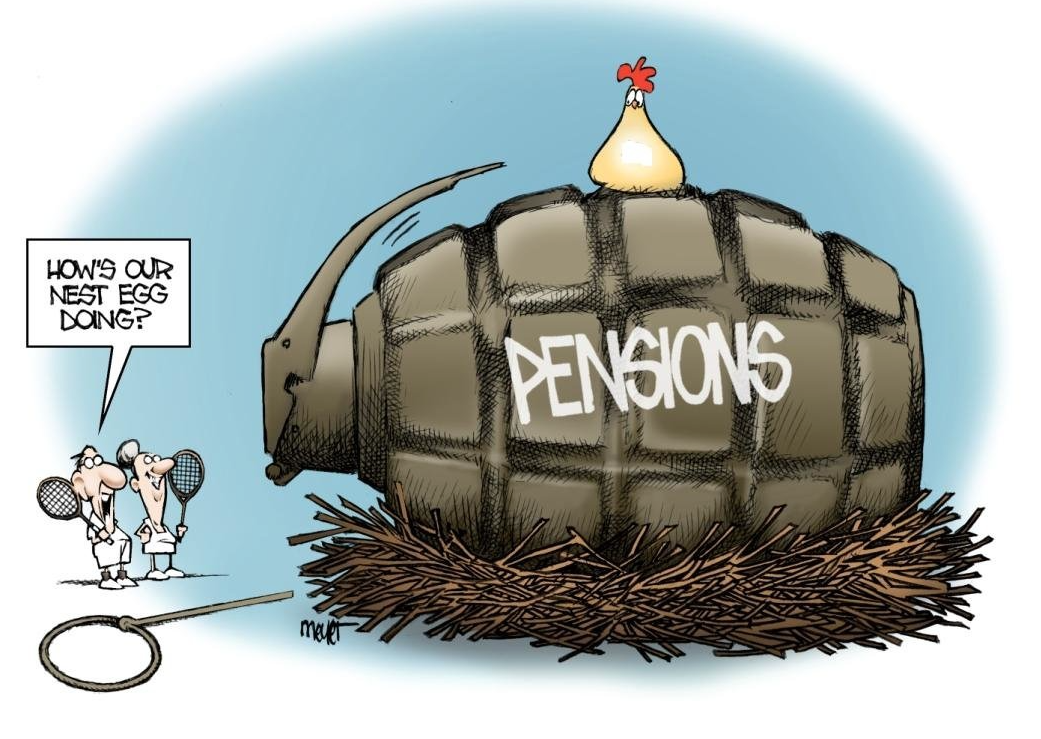
How Safe Is Your Pension?

April 8, 2016 By Twila Van Leer

How to know if your pension is safe.
How to know if your pension is safe. Is your pension safe?
For years, you worked hard on the assumption that when you were ready for retirement, a company pension would finance the final years of your life. It was a comforting cushion.

Now imagine that the cushion has disappeared. Your employer regrets to inform you that there has been a mistake and the amount of your pension is being drastically cut. It has happened frequently enough lately that it isn’t possible to ignore.

For instance, one Hawaiian man was informed by his former employer that he had been overpaid by $97,000 over a period of twenty years. The company wanted $66,000 back, please. The 65-year-old found his pension reduced from $1,300 per month to $800.

Changes in pension policy

The example is not without precedent. Huge changes in pension policy have left thousands of retirees blindsided and wondering what to do next, according to an AARP magazine article. Bankrupt cities such as Detroit are targeting pension plans in an effort to stay afloat. Private companies are selling off obligations in the form of annuities, freezing or under funding their pension plans or shifting their employees to 401(k)s, Traditional pension plans now go to only 16 percent of the country’s workers. That’s about half of the 35 percent in the early 1900s who put their faith in pensions to finance their retirement.

Recent federal legislation that allows some financially beset companies to cut benefits to former employees under age 80 has exacerbated the situation. A growing number of retirees find themselves with less to live on as their pensions are trimmed.

Some financial experts predict the demise of the traditional pension program in the United States. The congressional edict shifts the burden from the employers to those least able to afford it – retirees or their surviving spouses, according to the Pension Rights Center, which fought the legislation.

Multi-employer plans, which were created to provide a pool for pension plans for companies, primarily those dealing with unionized workers, are feeling the changes. Reduced union membership and market declines have created problems for at least 150 to 200 of those plans. Some are expected to run out of money within 20 years. A complex process for modifying benefits will protect workers for some time, but cuts are likely over time.

The legislation could leave millions of Americans with their retirement plans in shambles. The Hawaiian resident, who worked as a sheet metal worker in Chicago, found himself the unwitting victim of his company’s sloppy handling of its pension program. Over a thirty-year period, the company overpaid retirees (he was one of 588 affected) more than $5.2 million. Even a decade after the whopping error was discovered, steps hadn’t been taken to rectify the problem, hence the shock of learning that he was expected to help repay the over payments, with 7.25 percent interest tacked on.

An even more painful cut occurred when a South Carolina retiree’s monthly pension check dropped from $1,414 to just $5. His former employer’s reasoning: it had overpaid him by more than $263,000. They argued that disability payments the man had received should have offset much of the retirement payment. As an employee of the New York transit system, he had suffered serious injuries, including a bullet in the head and stab wounds in the chest, in encounters with thugs while working.

How retirees can protect themselves

These examples are not the only ones being reported in the country. In both the private and public sectors, pension problems are manifold. Attempting to recoup disputed pensions is now one of the leading tasks of some legal agencies. Local laws related to pension errors are not consistent, so recovery is unpredictable.

Retirees are advised to protect themselves by asking to see the calculations that figured the amount of their pension. If you are unclear on your situation or feel you need help in understanding your rights, contact the Labor Department at dol.gov or call, toll-free, 866-444-3272, If you are still working, file relevant materials such as W-2 forms and pay stubs. Also keep documents related to pension plans, including a plan description, benefit statements and notices you are sent.

Filed Under: Aging, Retirement Tagged With: pensions, Retirement

How Secure Is Social Security?

August 13, 2015 By Twila Van Leer

social-security-futureSocial Security is 80 years old and many Americans are fearful that the old age benefit might die of old age. Surveys show that fewer than half of Americans feel confident that the program will stay equal to or become better than it is today, according to the Employee Benefit Research Institute.

But the institute’s experts assure that SS will be around to remain the retirement mainstay of those now in the work force an their children and grandchildren. If nothing else, the great majority of those now serving in Congress see it as a necessary element of the country’s personal finances, and they’re the ones who control the purse strings. And they are aware of the very strong popular support for the program.

Over the eighty years Social Security has been in effect, it has become very embedded in the retirement plans of millions of Americans. Private sources of retirement income, such as work-related pensions, have been declining in recent years, making it even more important. From the mid-1980s to 2013, the number of pension plans dropped from more than 112,000 to about 23,000.

Retirement-related saving schemes, such as 401(k)s are helpful, but do not sufficiently offset the loss in pensions. Only about half the workforce has access to a 401(k) or other retirement savings plan through their employer. And few workers are able to save sufficient amounts to cushion their retirement years. One recent survey showed that four in 10 older workers had less than $25,000 in retirement savings.

Women have relied more heavily on Social Security. They usually have less income overall than their male counterparts and they live longer. They are more likely to be single and singles often have greater financial needs than do couples. One research effort found that unmarried boomers were five times more likely to be in “poor” categories than those who were married. The numbers of single adults is increasing with each succeeding “generation,” with more Millennials in the unmarried ranks than either the boomers or Gen Xers.

All of these social statistics point to a greater need for Social Security than ever.

Concerns that SS won’t be able to handle the load are based on the assumption that the financial challenges the programs faces, with fewer workers to support larger retirement numbers, can’t be resolved.

The 2014 trustees report showed a $2.8 trillion surplus that could pay projected benefits for another 18 years. Even if Congress did not take steps to shore up the account, the anticipated revenue from payroll taxes would enable the program to pay beneficiaries 77 percent of their promised benefits.

The experts are looking for ways to ensure that the federal program continues to be active well into the future. The remedies may require increased contributions or modified benefits or a combination of these approaches. One suggestion would raise the cap at which workers no longer pay payroll taxes from the current $118,500 to $255,000, which the number crunchers say would solve one-fourth of the problem without serious harm to most workers. Other options would trim benefits for the wealthy or raise the payroll tax by 1 percent per year over several years. Raising the retirement age is another debated option, but the experts advise caution, since the gains in life expectancy have mostly benefited the segment of the population that is educated and more affluent.

The 2016 elections almost certainly will include Social Security as one of the main points of debate, with both parties hoping to prove leadership on the issue. Tough questions and the potential for trade-offs is very predictable, but those who see SS as a mainstay of America’s retirement population, the advice is that the sooner actions are taken, the more moderate the changes are likely to be.

Filed Under: Retirement, Social Security Tagged With: social security

  • « Go to Previous Page
  • Page 1
  • Page 2
  • Page 3
  • Page 4
  • Page 5
  • Page 6
  • Go to Next Page »

Primary Sidebar

Personal Finance Articles

  • Make Saving A Priority
  • Review Your Home-Insurance Risks
  • Lowest Air Fare? Try August 28
  • Hackers Targeting Bitcoins
  • Keep Your Emergency Fund Intact

Save At Walmart

Search

Personal Finance Education

Investing Education from Morningstar.

As Seen On Intuit

Intuit.com has ranked Coolchecks.net #4 out of 10 of the best blogs to help you save money. We hope to help you become more aware of your own financial situation and strive to improve it.

Featured On Mint.com – July 2014

Mint Interview

Categories

  • Banking
    • Check Writing
    • Checking Accounts
    • Credit Cards
    • EMV Cards
    • Fees
    • Fraud
    • History
    • Student Loans
  • Best Of The Web
  • Budgets
    • Emergency Fund
    • Grocery Shopping
    • Saving Money
    • Spending Habits
  • Business
    • 3D Printing
    • Bankruptcy
    • Business Advertising
    • Business Development
    • Business Plans
    • Corportate Lessons
    • Data Mining
    • Legal Issues
    • Merchants
    • SEC
    • Security
    • Small Business Startups
  • Consumer Alerts
  • Cryptocurrency
  • Cutting Costs
  • Employment
    • best places to work
    • Careers
    • Interviews
    • Job Search
    • Top CEOs
    • Wages
  • Entrepreneurs
    • Attitudes
    • Entrepreneur Interviews
  • Featured
  • Finance
    • Automobiles
    • Credit Ratings
    • Education
    • Financial Planners
    • Foreclosures
    • Homes
    • Insurance
    • Investing
    • Mortgages
    • Personal Finance
    • Renting
    • Term Deposits
    • Travel
    • Work
  • Fraud
  • Government
  • Holidays
    • Christmas
    • Halloween
  • Internet
    • Bitcoin
    • Blogging Tips
    • Blogs, RSS and Podcasting
    • Databases
    • Facebook
    • Influence
    • marketing
    • Twitter
    • Website Reviews
    • WordPress
      • Key Words
  • Investing Basics
    • Hedge Funds
    • Investing
    • Mutual Funds
  • Life
    • Aging
    • Just For Fun
      • Punahou Alumni Corner
    • Millennials
    • Personal Health
  • Money Making Ideas
    • Affiliate Programs
    • Craigslist
    • Ebay
  • Money Management
    • Bankruptcies
    • Building Wealth
    • Child Care Costs
    • Christmas Shopping
    • Credit
      • Free Credit Report
    • Debit Cards
    • Debt
    • Debt Reduction
    • Health Insurance
    • Income
    • Inheritance
    • Interest Rates
    • Loans
    • Mortgages
    • New Years Resolutions
    • Retirement
    • Shopping Tips
    • Tax Strategies
    • Your Stories
  • Retirement
  • Self Improvement
    • Time Management
    • Work Habits
  • Shopping
    • Coupons
    • Online Shopping
  • Social Security
  • Tax Tips
  • Taxes
  • Technology
  • Trade
  • Uncategorized
  • Wealth

Best of Personal Finance Blogs

Best of BuyerZone Business Finance Blog Recipient

Personal Finance Sites We Recommend

Get personal finance advice from the people behind the top money blogs, including Wise Bread, The Simple Dollar, Mint and Nerd Wallet.

Copyright © 2026 ·Metro Pro · Genesis Framework by StudioPress · WordPress · Log in