• Skip to primary navigation
  • Skip to main content
  • Skip to primary sidebar
  • Money Management
    • Debt Reduction
    • Credit
    • Mortgages
    • Mutual Funds
    • Tax Strategies
    • Loans
  • Budgets
    • Saving Money
    • Income
  • Banking
    • Checking Accounts
    • Check Writing
    • Fraud
    • History
  • Entrepreneurs
    • Entrepreneur Interviews
    • Money Making Ideas
    • 3D Printing
  • Resources
  • Retirement
  • About
    • Privacy Policy

Personal Finance Blog

Tips And Stories To Help You With Managing Money

  • Privacy Policy
  • Saving Money In 2018
You are here: Home / Archives for Money Management

Money Management

Debt consolidation

December 1, 2009 By Sherry Tingley

Having debt is nothing to be ashamed of. There are not many in the world that do not have some kind of debt in one form or another. You may have debt from your credit cards, your home loans, auto loans or student loans. Debt actually is now an uncomfortable part of life, whether we like it or not. Having too much debt and not having the money to pay for it is where the people get into trouble. In these trying times of the economy and rising interest rates, you need a solution that will get you out of debt or simply help you make your payments. The answer to this is debt consolidation.

Debt consolidation is a choice preferred by many not only to relieve the financial pressure but also to manage the debt more accurately by paying just one monthly payment. It is financially helpful and convenient as well.

How do you consolidate your debts and where will you ask for assistance? Let us take a look at the second concern first. There are lending institutions who are willing to consolidate your debt for your. The trick is finding the one that has the lowest interest rate. If you consolidate with a bank that has high interest rates, it would be impractical and foolish for because you would have to pay more. If you go to a lending firm that has the same interest rate as you have now, then the only help you get is convenience when it is the financial assistance you are really going after.

After finding the right lending institution for you, you may need to first pay off your smaller debts. You would not like that to mix with your debt consolidation.

Probably the cheapest way to go about consolidating your debt is to access the capital from the equity in your home loan. This is an essential advantage for the interest rates will definitely be lower than the rate of your credit card agreements.
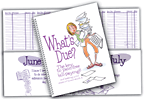
humorous ways to organize your finances

Now, how about those who do not have enough equity available in their mortgage? There is still hope for you if this is the case. You could just refinance your property. This way, you will have in hand extra capital to be able to pay off your other debts having much lower interest rates. If you still feel like you need sometime before you get your finances back into shape, you can request a longer repayment term. The more years or months you add to your term, the less monthly payment you will get, but the more interest you will have to pay.

Secured loans are popular among property owners. This is because it is the property is considered the security of the loan lender. Secured loans usually offer long repayment terms, low interest rate and large loan amount.

The next time you are in debt, you know now some feasible options for you. There are a lot of lending institutions willing to consolidate your loan for you. Plus, banks appreciate it when people take the initiative to pay off their debt. They are more than willing to serve.

Filed Under: Debt, Money Management Tagged With: Debt Consolidation, Personal Finance

How to Qualify for a Home Loan

November 14, 2009 By Sherry Tingley

Owning a home has been considered a logical investment, as it gives a sense of security. It is asset than can be passed on to the next generation. With the recent turn in the economy, buying a home is becoming more enticing as property prices are going down. Although this is true, purchasing a home can still be expensive. Obtaining a home loan can help in being able to purchase property.

To apply for a home loan, banks normally check the applicant’s background, whether they have a good, steady job or some other stable source of income. Credit line is also checked, whether the applicant has been responsibly paying his/her debts well. An applicant must also have collateral as financial back up, as an assurance that the applicant will be paying back the loan in full.

Do some research on how much you can ask from lenders.  This will give a general idea in figures of how much you can borrow, how much of your income is needed for the down payment as well as for the succeeding payments. Evaluate how much you can afford to spend for the house loan, in consideration with other existing monthly payments. It is recommended that less than a third of the applicant’s monthly income be spent on the payments for the loan and property.

Start saving money for the purchasing of the house before attempting to apply for a home loan. Possible ways of saving for the home loan and property purchase include taking a second job or reducing unnecessary expenses. This initial investment is a good demonstration to the lender of the applicant’s good intent in purchasing a house. There are also other options to be considered in obtaining financial support when purchasing a house such as the Veteran’s Administration loan for veterans. Consult with your real estate agent regarding other financial support options.

As a result of the recent development in the economy, banks are becoming more stringent in assessing applications. However, there are ways of improving chances when applying for a home loan. In order to prepare for qualifying for a home loan, it is recommended that the applicant obtain a copy of their credit report from a qualified agency. There are services which can send a report annually or directly contact the agencies for an immediate copy. Take note of outstanding or unpaid credit, as this is an important aspect that banks check for. Pay back all debts. If this is not completely possible, then make it as low as possible. This is important as it sends a note to the lender of the applicant’s reliability in paying back the loan.

Banks normally ask for collateral as an assurance that the applicant will pay back his/her loan. Other properties in real estate or investments in the stock market are possible sources of collateral.

There are no definite rules that can assure the applicant will obtain the home loan. Loans are approved on a case to case basis. However, following these tips increases the chances of getting the home loan. Do not despair if you are denied a home loan but see it as a sign that there may be areas in your application that need improving.

Filed Under: Loans, Mortgages Tagged With: home loan, Loans, mortgage loans

All About Debit Cards

November 12, 2009 By Sherry Tingley

Everything seems to be advanced by new developments in technology, even banking and payments.  Now, you can shop cashless, thanks to debit cards. In the US, almost everyone has a debit card.  Debit cards are of great use and help.  If people can learn how to manage or control their use of debit cards, then they are a great resource.

One of the very obvious advantages of using debit cards is that eliminates the need to write checks.  For people on the go (those who value greatly every seconds), debit cards are their next best friends.  In times when we are in a hurry, we can just swipe our debit cards and payments are done. Another advantage of debit cards is that payments are made easy and hassle-free.

Debit cards, or also known as electronic checks, can be used to pay for products purchased online.  Debit cards make online shopping very convenient.  So the next time you shop online, worry no more for your payments, debit cards are always beside you. Now, you can also receive instant alerts and confirmation for your payments made through your debit cards.  You will receive a text message once payments are made.  This new feature of debit cards is very a helpful one.

Having a debit card of your own is simple.  Debit cards are issued to bank clients with checking or savings accounts.  Most of the time, banks can issue the debit cards as soon as you open a checking or savings account or they can just send you your debit card through mail.  All transactions and payments made using your debit card will be credited to your checking account.  Once you obtain your debit card, the next thing to do is activate it using an ATM, or by visiting the bank website.

Most, if not all, banks in the US issue debit cards. The very first bank to do this is the First National Bank in Seattle.  Debit cards have been of existence since 1978 when the First National Bank of Seattle issued debit cards to their clients, mostly business executives, with large savings account.  Since then, US banks such as HSBC, Bank of America, Citigroup, Wells Fargo, Citizens Bank and many more have been issuing debit cards.

It is also because of technology that there have been a growing number of fraudulent activities or uses of debit cards.  The best thing to do is never share your PIN with anyone.  It is better to be safe than sorry in the end.  There might also be people who contact you by email or phone and ask for your debit card PIN and other details.  Do not ever give your debit card PIN to these people.  There have been a growing number of phishing scams, so beware. Another tip to avoid fraudulent use of debit cards is don’t write down your debit card PIN on your debit card. There are people who do this (those who can’t remember their PINs). Do not be one of them.

With the fast advancement of technology, who knows how debit cards will be used in a year or so. Surely, debit cards are very useful and advantageous. Once you fully understand how these magic debit cards work and what their uses are, you will surely want to own one. For your convenience, you can keep your debit card in a debit card wallet.

Filed Under: Debit Cards, Money Management Tagged With: debit, debit cards, Personal Finance

How to improve your credit rating

November 3, 2009 By Sherry Tingley

Keeping your credit rating in good standing is essential especially if you have a business or you want to buy big ticket purchases such as a car or a house for example. Bank loans are easy to acquire if you have a good credit rating to show. This is one of their main criteria in order to accept or reject your loan or to give you high or low interest rates. If you are in a bad period and you need your credit rating to improve, here are some sure ways you can do.

From this time forward, you have to instill in your mind that you can never put off a credit payment ever again. Paying on time will certainly increase your credit rating. Make this a long term agreement to yourself. Now in order to do this, you should only purchase items that are essential and that you know you can pay off at the end of the month. This means living within your means.

Another thing you can do is to get a copy of your credit rating from multiple credit agencies. Check for discrepancies that need immediate correction. It is a good idea to keep all your receipts from your past purchases so this process will be easier. Identity theft is a big problem today so report all incorrect data that you may find in your credit report.

Look into your credit card debt. Look into each item and find a way to reduce these items each month. The lower your debt, the less you have to pay during the end of the month. Here is a good tip, if you have a lot of credit cards, make sure that you don’t use more than fifty percent of your credit limit. This will help your credit score remain high.

Start paying off your credit cards. From your list of debts, take a look at the ones that have the highest interest rates and then pay them off first. You would like to get the high interest rates out of the way first to save yourself some money.

If you have extra money to spare, try to make extra payments on your credit cards and your other loans such as student loans and auto loans for this will make a big impact in your credit rating in the end. This shows that you are willing to lessen your debt and you are capable of paying off more than the minimum required amount.

For your credit cards with high interest rate, talk to a bank representative and ask them if they can lower it. Some will be reluctant to do so but others are willing enough to give you a break. With the proper discipline and state of mind, you can improve your credit rating in a span of six short months.

Some of the best things you can show creditors is stability in your living conditions such as where you live and where you work as well as how long you have worked at your job. Keeping your credit score high isn’t difficult, it just requires paying attention to making your payments on time and honoring your committments.

Filed Under: Credit, Money Management Tagged With: credit ratings, good credit, Personal Finance

Debit Cards

October 29, 2009 By Sherry Tingley

[ad#250×250]Debit cards are gaining popularity these days, primarily due to the recession. People are trying to make wiser choices on spending as there is a constant worry on losing existing jobs. The changing interest rates of credit cards have also pushed more people into using debit cards instead. With debit cards, cash is drawn out from the card holder’s account as compared to credit cards where money is borrowed and repaid with large interest rates. Using credit cards is compared to spending money that you do not really have.

The first debit card was first issued in the late 1970s by the First National Bank. These were primarily given to loyal account holders with good credit and acted similar to a guarantee card. Several years later, the initial debit system was implemented, utilizing the existing credit card and ATM systems. With the emergence of newer advancements in technology, debit card expenses were directly subtracted from a checking account. Symbols such as the Plus, Visa or Mastercard were seen on these cards. Over time, debit cards have outnumbered the use of checks and are frequently used to pay for food and other smaller transactions. It has been predicted that the use of debit cards is a step towards a cashless system.

Debit cards offer several advantages over other modes of payment. In comparison to cash and checks, debit cards are safer to carry when traveling. As a limited amount of cash is deposited into the account, it helps the cardholders control their spending. Similar to credit cards, debit cards can be used to pay for purchases and bills online but do not carry the same high interest rates. In contrast to credit cards, people can easily apply for a credit card even if they have bad credit.

There are number of options available in applying for a debit card, the most common of which is applying for a checking account which also offers a debit card. Some banks give the debit card on site or it can be mailed to the account holder’s address. Upon getting the debit card, it must first be activated through the ATM or through the bank’s online site. Prepaid debit cards are reloadable versions of the debit card can be applied for through PayPal or purchasing through Western Union. Transaction fees may be charged. A third option is having a portion of your salary deposited to a debit card. An initial fee is commonly charged upon the mailing of the card and can also carry a number of usage fees.

In comparison to credit cards, debit cards are known to have less security. When a debit card is stolen, it must be reported immediately and the card must not have been used in order to avoid charges. If reported within 48 hours of being stolen, a charge of up to $50 may be incurred. For notifications of beyond two days but less than 60 can incur larger fees. Beyond the 60 day limit, larger fees may be charged.

Any suspicious items on your financial statement must also be reported immediately. It is also advised to keep all receipts made with the use of a debit card. The account holder’s information can be easily obtained through looking at a receipt which may in turn be used to illegally purchase services or goods.

If the debit card comes with a PIN, it is best to memorize it. Avoid using birthdays as your PIN. Always keep track of your purchases and the amount remaining in your account. Some debit cards allow the account holder to use money reserved for other uses, such as clearing other debits.

Filed Under: Debit Cards Tagged With: debit card, debit cards, Personal Finance

  • « Go to Previous Page
  • Page 1
  • Interim pages omitted …
  • Page 37
  • Page 38
  • Page 39
  • Page 40
  • Page 41
  • Interim pages omitted …
  • Page 43
  • Go to Next Page »

Primary Sidebar

Personal Finance Articles

  • Make Saving A Priority
  • Review Your Home-Insurance Risks
  • Lowest Air Fare? Try August 28
  • Hackers Targeting Bitcoins
  • Keep Your Emergency Fund Intact

Save At Walmart

Search

Personal Finance Education

Investing Education from Morningstar.

As Seen On Intuit

Intuit.com has ranked Coolchecks.net #4 out of 10 of the best blogs to help you save money. We hope to help you become more aware of your own financial situation and strive to improve it.

Featured On Mint.com – July 2014

Mint Interview

Categories

  • Banking
    • Check Writing
    • Checking Accounts
    • Credit Cards
    • EMV Cards
    • Fees
    • Fraud
    • History
    • Student Loans
  • Best Of The Web
  • Budgets
    • Emergency Fund
    • Grocery Shopping
    • Saving Money
    • Spending Habits
  • Business
    • 3D Printing
    • Bankruptcy
    • Business Advertising
    • Business Development
    • Business Plans
    • Corportate Lessons
    • Data Mining
    • Legal Issues
    • Merchants
    • SEC
    • Security
    • Small Business Startups
  • Consumer Alerts
  • Cryptocurrency
  • Cutting Costs
  • Employment
    • best places to work
    • Careers
    • Interviews
    • Job Search
    • Top CEOs
    • Wages
  • Entrepreneurs
    • Attitudes
    • Entrepreneur Interviews
  • Featured
  • Finance
    • Automobiles
    • Credit Ratings
    • Education
    • Financial Planners
    • Foreclosures
    • Homes
    • Insurance
    • Investing
    • Mortgages
    • Personal Finance
    • Renting
    • Term Deposits
    • Travel
    • Work
  • Fraud
  • Government
  • Holidays
    • Christmas
    • Halloween
  • Internet
    • Bitcoin
    • Blogging Tips
    • Blogs, RSS and Podcasting
    • Databases
    • Facebook
    • Influence
    • marketing
    • Twitter
    • Website Reviews
    • WordPress
      • Key Words
  • Investing Basics
    • Hedge Funds
    • Investing
    • Mutual Funds
  • Life
    • Aging
    • Just For Fun
      • Punahou Alumni Corner
    • Millennials
    • Personal Health
  • Money Making Ideas
    • Affiliate Programs
    • Craigslist
    • Ebay
  • Money Management
    • Bankruptcies
    • Building Wealth
    • Child Care Costs
    • Christmas Shopping
    • Credit
      • Free Credit Report
    • Debit Cards
    • Debt
    • Debt Reduction
    • Health Insurance
    • Income
    • Inheritance
    • Interest Rates
    • Loans
    • Mortgages
    • New Years Resolutions
    • Retirement
    • Shopping Tips
    • Tax Strategies
    • Your Stories
  • Retirement
  • Self Improvement
    • Time Management
    • Work Habits
  • Shopping
    • Coupons
    • Online Shopping
  • Social Security
  • Tax Tips
  • Taxes
  • Technology
  • Trade
  • Uncategorized
  • Wealth

Best of Personal Finance Blogs

Best of BuyerZone Business Finance Blog Recipient

Personal Finance Sites We Recommend

Get personal finance advice from the people behind the top money blogs, including Wise Bread, The Simple Dollar, Mint and Nerd Wallet.

Copyright © 2026 ·Metro Pro · Genesis Framework by StudioPress · WordPress · Log in