• Skip to primary navigation
  • Skip to main content
  • Skip to primary sidebar
  • Money Management
    • Debt Reduction
    • Credit
    • Mortgages
    • Mutual Funds
    • Tax Strategies
    • Loans
  • Budgets
    • Saving Money
    • Income
  • Banking
    • Checking Accounts
    • Check Writing
    • Fraud
    • History
  • Entrepreneurs
    • Entrepreneur Interviews
    • Money Making Ideas
    • 3D Printing
  • Resources
  • Retirement
  • About
    • Privacy Policy

Personal Finance Blog

Tips And Stories To Help You With Managing Money

  • Privacy Policy
  • Saving Money In 2018
You are here: Home / Archives for Life

Life

Medicare Benefits That May Help

June 28, 2016 By Twila Van Leer

Medicare benefits that are helpful.
Find eight ways Medicare benefits can benefit you.

Medicare Benefits

Learning about the benefits of medicare can be a daunting process. In the words of Jaryn Laengrich, chief service officer at Cariloop, a Medicare service to help people caring for elderly persons, it is a “sprawling, complicated piece of law” that can be baffling. She notes these little known medicare services that the eligible may find useful.

Medicare Annual Wellness Screening

Medicare benefits allow you an annul wellness screening by a primary care physician. The objective is to prevent illness where possible. It includes an extensive appointment with a thorough review of the patient’s medical history. An Alzheimer’s screening is part of the exam if the physicians thinks it necessary. The wellness screening is offered through Part B.

Alcoholism Screening

Screening and counseling for alcohol misuse. Widowers over the age of 75 have the biggest problem with alcoholism, according to the National Council on Alcoholism and Drug Dependence. More of those in this demographic are hospitalized with alcohol-related problems than for heart attacks. Annual screening is allowed by Medicare, if performed by a primary care physician. Four counseling sessions will be compensated, as well.

Balance Screening

Falls are a serious problem among the elderly. Medicare B will pay for 80 percent of a thorough screening to determine if balance is a problem and what might be the cause.

Obesity Counseling

Those enrolled in Medicare Part B. who have a body mass index score of 30 or higher may receive counseling in a primary care setting. The program also will pickup a major part of the cost of bariatric surgery aimed at reducing obesity. The amount depends on a patient’s Medigap supplement plan.

Shingles Vaccination

Shingles is a painful and distressing disease that can strike anyone who had chicken pox as a child. The coverage is included in Medicare Part D, which provides for medications.

Diabetes Self-Management Training

Medicare pays 80 percent of the cost of 10 training sessions, including one one-on-one visit with a specialist. The remainder are small-group sessions. The intent is to improve diabetes management. The disease can be debilitating and cause severe effects.

Hearing Tests

Although Medicare won’t pay for hearing aids, it will cover examinations to determine hearing loss. Efforts to get hearing aid coverage have failed to pass muster in Congress because of the scope of the problem. An estimated 37 million Americans suffer some hearing loss, but only 30 percent need hearing aids.

Hospice Care

Many Medicare recipients are not aware that they are eligible for end-of-life care. It is focused on palliative treatment, and is available only to those who are believed to be within six months of death. The patient must agree to forego treatment aimed at curing. Care usually is provided in the patient’s home and involves a team that includes a physician, nurse, social worker, chaplain and volunteer. The objective is to provide as much comfort care as necessary for the patient in his or her final days.

Filed Under: Health Insurance, Personal Health, Retirement Tagged With: health, health insurance, medicare, Retirement

Retirement Planning With Bridge Jobs

April 20, 2016 By Twila Van Leer

Many elderly are turning to bridge jogs in their retirement.
Many elderly people are turning to bridge jobs in their retirement.
For many Americans, the jump from employment to retirement means getting a bridge job. A bridge job is a bridge between full-time work and retirement for workers who are approaching full retirement but are not quite ready to totally leave the workforce. For some, that interim step can last for years. Retirement is no longer an event, but a process.

Lifestyle Choice

Many workers actively plan for an “old-age” job for many reasons. About 60 percent of aging workers take the bridge job route, according to a University of Minnesota study. And it isn’t just those at the low end of the financial totem pole. Many who look at today’s longevity stats and their relatively better physical condition choose to work awhile longer as a lifestyle choice. A fair number even “come out” of retirement and seek a bridge job. They could get by on their retirement savings, but find life without work doesn’t mean as much. They enjoy the extra income, but view the time filled with useful activity as an even greater bonus.

Erosion Of Retirement Savings

It is now so common that some financial experts look at it as just another job in a lifetime career. Most of those in the workforce now see multiple jobs as part of the standard scenario. The erosion of retirement savings is a factor, as well. Defined-benefit retirement packages are becoming rare and programs such as a company-sponsored 401(k) are taking their places. The move to a 67-year-old retirement target, rather than 60 or 65 amounts to a reduction in benefits, experts point out.

Lower Paying But Flexible

Bridge jobs tend to be lower-paying than the careers the elderly are leaving behind, are less likely to add anything substantial to retirement cushions and may be less strenuous. But the advantages may include more time flexibility, including part-time work.

Rewarding

Some seniors find this as an opportunity to look for jobs in a sector in which they have had an interest, but bypassed during the usual career period in favor of things that paid better. One woman, for instance, went into an education job that was very rewarding to her personally, though it paid much less than her career job. Such teaching or tutoring jobs are very attractive to those whose professional work enhanced their value in an education setting.

Working well beyond what was once considered time to retire is a necessity for some, a welcome change for others. As long as health allows and mental capacities hold up, some opt to keep on keeping on. As one women well into her 90s remarked, “By the time I’m 100, my finances may be in better shape and I can consider retirement by then.”

Filed Under: Aging, Retirement Tagged With: Employment, health, Personal Finance, Retirement

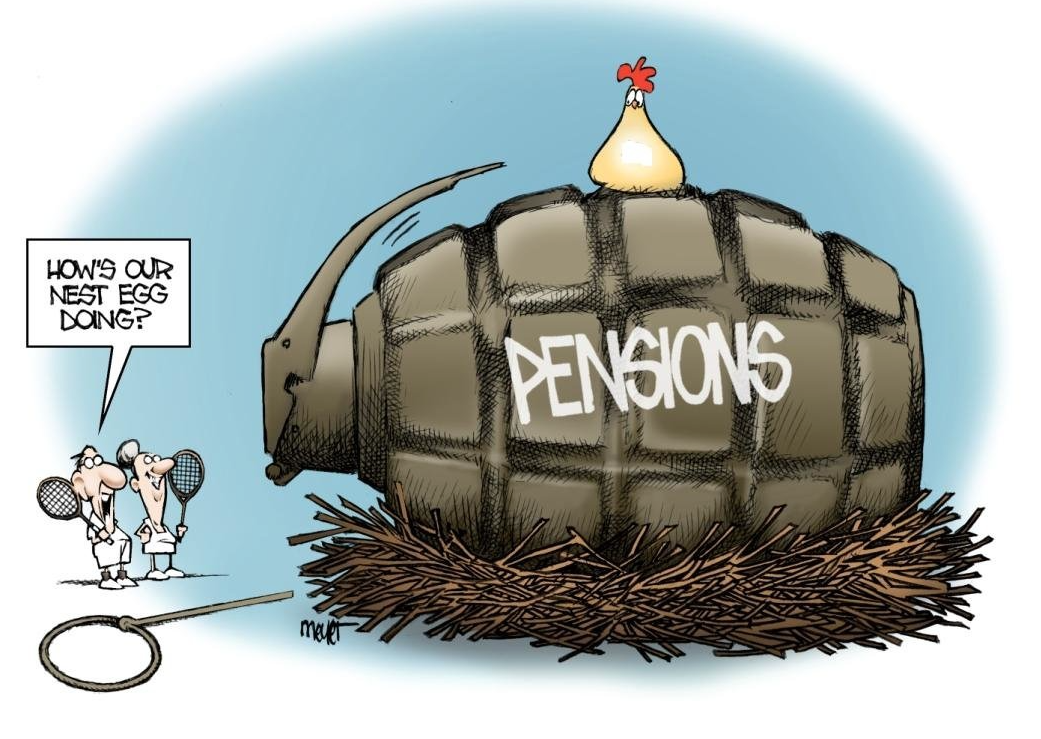
How Safe Is Your Pension?

April 8, 2016 By Twila Van Leer

How to know if your pension is safe.
How to know if your pension is safe. Is your pension safe?
For years, you worked hard on the assumption that when you were ready for retirement, a company pension would finance the final years of your life. It was a comforting cushion.

Now imagine that the cushion has disappeared. Your employer regrets to inform you that there has been a mistake and the amount of your pension is being drastically cut. It has happened frequently enough lately that it isn’t possible to ignore.

For instance, one Hawaiian man was informed by his former employer that he had been overpaid by $97,000 over a period of twenty years. The company wanted $66,000 back, please. The 65-year-old found his pension reduced from $1,300 per month to $800.

Changes in pension policy

The example is not without precedent. Huge changes in pension policy have left thousands of retirees blindsided and wondering what to do next, according to an AARP magazine article. Bankrupt cities such as Detroit are targeting pension plans in an effort to stay afloat. Private companies are selling off obligations in the form of annuities, freezing or under funding their pension plans or shifting their employees to 401(k)s, Traditional pension plans now go to only 16 percent of the country’s workers. That’s about half of the 35 percent in the early 1900s who put their faith in pensions to finance their retirement.

Recent federal legislation that allows some financially beset companies to cut benefits to former employees under age 80 has exacerbated the situation. A growing number of retirees find themselves with less to live on as their pensions are trimmed.

Some financial experts predict the demise of the traditional pension program in the United States. The congressional edict shifts the burden from the employers to those least able to afford it – retirees or their surviving spouses, according to the Pension Rights Center, which fought the legislation.

Multi-employer plans, which were created to provide a pool for pension plans for companies, primarily those dealing with unionized workers, are feeling the changes. Reduced union membership and market declines have created problems for at least 150 to 200 of those plans. Some are expected to run out of money within 20 years. A complex process for modifying benefits will protect workers for some time, but cuts are likely over time.

The legislation could leave millions of Americans with their retirement plans in shambles. The Hawaiian resident, who worked as a sheet metal worker in Chicago, found himself the unwitting victim of his company’s sloppy handling of its pension program. Over a thirty-year period, the company overpaid retirees (he was one of 588 affected) more than $5.2 million. Even a decade after the whopping error was discovered, steps hadn’t been taken to rectify the problem, hence the shock of learning that he was expected to help repay the over payments, with 7.25 percent interest tacked on.

An even more painful cut occurred when a South Carolina retiree’s monthly pension check dropped from $1,414 to just $5. His former employer’s reasoning: it had overpaid him by more than $263,000. They argued that disability payments the man had received should have offset much of the retirement payment. As an employee of the New York transit system, he had suffered serious injuries, including a bullet in the head and stab wounds in the chest, in encounters with thugs while working.

How retirees can protect themselves

These examples are not the only ones being reported in the country. In both the private and public sectors, pension problems are manifold. Attempting to recoup disputed pensions is now one of the leading tasks of some legal agencies. Local laws related to pension errors are not consistent, so recovery is unpredictable.

Retirees are advised to protect themselves by asking to see the calculations that figured the amount of their pension. If you are unclear on your situation or feel you need help in understanding your rights, contact the Labor Department at dol.gov or call, toll-free, 866-444-3272, If you are still working, file relevant materials such as W-2 forms and pay stubs. Also keep documents related to pension plans, including a plan description, benefit statements and notices you are sent.

Filed Under: Aging, Retirement Tagged With: pensions, Retirement

Beefing Up Steaks, Hamburgers

October 31, 2015 By Twila Van Leer

omega-3-beefCould a little infusion of omega-3 fatty acids into your next helping of steak or hamburger make the meal more healthful? It’s the same thing that salmon naturally consume with their algae and it’s what walnuts contain in abundance, health experts say.

Some ranchers are experimenting with feeding their cattle flaxseed and marine algae to enhance the products they send to market. And researchers at Kansas State University are testing the products to see if they actually retain any health benefits from the added fats in their diets.

Texas food stores that sells the omega-3-enhanced meats reported that sales quadrupled over a seven-month period. And a national study suggests that consumers would be willing to pay $1.85 more per pound for enriched steaks and 79 cents more per pound of enhanced hamburger.

The movement runs counter to current wisdom that advises less beef in the diet. But in a country that consumes mountains of fast foods, many of them containing beef, maybe the health angle carries more weight. Nutrition experts say that people should consume at least 250 mg per day of the fatty acids eicosapentaenoic and docosahexaenoic acids of the type that are contained in algae. Adding them to beef might encourage that level of consumption.

Adding algae and/or flaxseed to the diets of meat cattle increases the omega-3 content in their meat to at lest 200 mg per 5-ounce serving, compared with 20- to 30-mg in the meat of grass-fed cattle.

Salmon remains the best source of omega-3, providing 10 times the amount contained in enriched beef products – at least 2,000 mg in a 5-ounce serving.

Cost becomes a factor with omega-3 enhanced beef. Commercial sources of algae are not readily available. However, the costs of feeding cattle flaxseed to increase omega-3 content is offset because the animals tend to be healthier and need fewer antibiotics, those experimenting with the enhanced meat products say. And test sales in some markets suggest that consumers like the additional marbling, tenderness and flavors in the meat. They come back for more, preferring them over the grass-fed products that may be a little cheaper.

Other omega-3-rich products such as eggs, salmon and walnuts, also are attracting more consumers, particularly among the health-conscious. That may encourage sales for the enhanced beef products. Time will prove if there is a place in the popular market and whether the enhanced meats will find a permanent niche in the American diet.

Related articles across the web

  • Omega-3’s are vital for a healthy ocean
  • Fruit and vegetables protect mind as well as body
  • Inuit Study Adds Twist to Omega-3 Fatty Acids’ Health Story
  • The (Fake) Meat Revolution

    Filed Under: Personal Health

    Stuck In The New Sandwich Generation

    October 27, 2015 By Twila Van Leer

    aging-parentsIf you are part of the so-called “Sandwich Generation,” finding yourself the filling between your own children and your aging parents, you’ll understand how the peanut butter in your PBJ feels.

    An increasing number of Americans find themselves in this position, and are learning firsthand how the pressure from both sides affects their personal finances. The dueling responsibilities can create financial uncertainties that working couples didn’t foresee.

    The Pew Research Center reports that in 2005, some 45 percent of Americans had a parent 65 or older and were still supporting a child. By 2012, the figure was up two percentage points to 47 percent. For those actually contributing to the support of parents, the financial stresses were showing up in the quality of their economic situations.

    As the life expectancy in America climbs, experts suggest that one in seven adults in the working years will be proving for both children and one or two parents. When the elderly develop health problems that go beyond the ability of families to cope at home, the expenses can skyrocket. The average cost of a semiprivate nursing home room is $80,300 per year. That scenario can be devastating to a family still involved in child-rearing.

    Planning ahead helps, although the variables make such planning imprecise. Trying how to anticipate costs associated with an aging parent at the same college bills are building on the other end is a challenge, but it is better to make a stab at planning than to be caught unawares. Consider such factors as the current health status of the parent or parents, how much they have in assets, whether they still own a home or other financial resources and how they have managed their finances in the past as you try to plan.

    Sacrificing the needs of your own family to make provision for parents may be shortsighted. Dipping into your retirement assets to care for them may lead to long-term problems in the future. If you have grown children thrown into the mix and they want to come home to live temporarily – a scenario that is more and more common – be certain they understand they have to make a contribution to the finances. On the other hand, carefully assess the real needs of parents before crippling yourself financially to see them through. Your own retirement should remain Goal No. 1. Weighing the relative needs of children who are still gaining education and getting established in jobs with the needs of the elderly can be very tricky, but it sometimes has to be done. Look for help from government social services, your church, siblings, veterans’ organizations and other sources before dipping too far into your own pockets.

    One useful resource for information on long-term care is longtermcare.gov. Eldercare.gov will access the National Association for Area Agencies on Aging. It provides for information on local resources such as transportation, in-home services and housing for the elderly.

    If you have a parent living in your home for at least six months, you may be able to claim a dependent-care credit on your income taxes.

    Expect an emotional journey and keep in mind that some day you’ll cease to be the peanut butter and take your place as the end piece of bread.

    Related articles across the web


    • The baby boomers are not selfish
    • How to balance caring for elderly parents with caring for yourself
    • Caring for caregivers
    • Seniors Rally to Support Family Caregiver Bill

    Filed Under: Aging Tagged With: Aging, Caring For Parents

    • « Go to Previous Page
    • Page 1
    • Interim pages omitted …
    • Page 3
    • Page 4
    • Page 5
    • Page 6
    • Page 7
    • Interim pages omitted …
    • Page 9
    • Go to Next Page »

    Primary Sidebar

    Personal Finance Articles

    • Make Saving A Priority
    • Review Your Home-Insurance Risks
    • Lowest Air Fare? Try August 28
    • Hackers Targeting Bitcoins
    • Keep Your Emergency Fund Intact

    Save At Walmart

    Search

    Personal Finance Education

    Investing Education from Morningstar.

    As Seen On Intuit

    Intuit.com has ranked Coolchecks.net #4 out of 10 of the best blogs to help you save money. We hope to help you become more aware of your own financial situation and strive to improve it.

    Featured On Mint.com – July 2014

    Mint Interview

    Categories

    • Banking
      • Check Writing
      • Checking Accounts
      • Credit Cards
      • EMV Cards
      • Fees
      • Fraud
      • History
      • Student Loans
    • Best Of The Web
    • Budgets
      • Emergency Fund
      • Grocery Shopping
      • Saving Money
      • Spending Habits
    • Business
      • 3D Printing
      • Bankruptcy
      • Business Advertising
      • Business Development
      • Business Plans
      • Corportate Lessons
      • Data Mining
      • Legal Issues
      • Merchants
      • SEC
      • Security
      • Small Business Startups
    • Consumer Alerts
    • Cryptocurrency
    • Cutting Costs
    • Employment
      • best places to work
      • Careers
      • Interviews
      • Job Search
      • Top CEOs
      • Wages
    • Entrepreneurs
      • Attitudes
      • Entrepreneur Interviews
    • Featured
    • Finance
      • Automobiles
      • Credit Ratings
      • Education
      • Financial Planners
      • Foreclosures
      • Homes
      • Insurance
      • Investing
      • Mortgages
      • Personal Finance
      • Renting
      • Term Deposits
      • Travel
      • Work
    • Fraud
    • Government
    • Holidays
      • Christmas
      • Halloween
    • Internet
      • Bitcoin
      • Blogging Tips
      • Blogs, RSS and Podcasting
      • Databases
      • Facebook
      • Influence
      • marketing
      • Twitter
      • Website Reviews
      • WordPress
        • Key Words
    • Investing Basics
      • Hedge Funds
      • Investing
      • Mutual Funds
    • Life
      • Aging
      • Just For Fun
        • Punahou Alumni Corner
      • Millennials
      • Personal Health
    • Money Making Ideas
      • Affiliate Programs
      • Craigslist
      • Ebay
    • Money Management
      • Bankruptcies
      • Building Wealth
      • Child Care Costs
      • Christmas Shopping
      • Credit
        • Free Credit Report
      • Debit Cards
      • Debt
      • Debt Reduction
      • Health Insurance
      • Income
      • Inheritance
      • Interest Rates
      • Loans
      • Mortgages
      • New Years Resolutions
      • Retirement
      • Shopping Tips
      • Tax Strategies
      • Your Stories
    • Retirement
    • Self Improvement
      • Time Management
      • Work Habits
    • Shopping
      • Coupons
      • Online Shopping
    • Social Security
    • Tax Tips
    • Taxes
    • Technology
    • Trade
    • Uncategorized
    • Wealth

    Best of Personal Finance Blogs

    Best of BuyerZone Business Finance Blog Recipient

    Personal Finance Sites We Recommend

    Get personal finance advice from the people behind the top money blogs, including Wise Bread, The Simple Dollar, Mint and Nerd Wallet.

    Copyright © 2026 ·Metro Pro · Genesis Framework by StudioPress · WordPress · Log in