
• Skip to primary navigation
  • Skip to main content
  • Skip to primary sidebar
  • Money Management
    • Debt Reduction
    • Credit
    • Mortgages
    • Mutual Funds
    • Tax Strategies
    • Loans
  • Budgets
    • Saving Money
    • Income
  • Banking
    • Checking Accounts
    • Check Writing
    • Fraud
    • History
  • Entrepreneurs
    • Entrepreneur Interviews
    • Money Making Ideas
    • 3D Printing
  • Resources
  • Retirement
  • About
    • Privacy Policy

Personal Finance Blog

Tips And Stories To Help You With Managing Money

  • Privacy Policy
  • Saving Money In 2018
You are here: Home / Archives for Investing Basics

Investing Basics

Hedge Funds Simplified

January 7, 2013 By Sherry Tingley

Ray Dalio, Owner Bridgewater Associates
Ray Dalio, Owner Bridgewater Associates. Most successful hedge fund firm in the world.

What are hedge funds?

If you have ever wondered about what hedge funds are and why their managers seem to be in  the news and occasionally headed to jail, you will find a simple explanation here. Written especially for our Coolchecks.net consumers, we hope this helps you gain a better understanding of hedge funds.

Hedge funds are private entities that collect monetary funds from more than one source (individuals or groups) and then invest those funds into diverse financial portfolios.  Hedge funds are designed as an investment vehicle that is structured as a company or partnership. The average person will not be able to invest in this type of investment vehicle. Find out why below.

History

The creation of hedge funds began somewhere in the 1920’s. Today, the global hedge fund industry has net assets of $2.13 trillion (reported in April of 2012).  Many of them are created in offshore financial centers to avoid adverse tax consequences. The Cayman Islands has 34% of the world’s hedge funds.

Only wealthy investors are allowed to invest and are screened closely by the SEC. Most often institutions (61%), foundations, universities or people with exceptional wealth are allowed to invest in hedge funds. Some funds have a net asset value in the billions.

Hedge funds can also be compared to mutual funds but with a slight difference. Mutual funds call for investments from various sources but within the same financial portfolio. Conversely, if you are fortunate enough to be able to invest with hedge funds there are many choices for investors where they can choose any financial portfolio; invest for long term as well as short term; leverage their financial standing; trade in simple to complex stock derivatives; and invest in side pockets ( a type of hedge fund).

Hedge Fund Managers

The managers of hedge funds derive income by the means of a performance-fee and a management-fee. While the management-fee falls within the range of 1 percent to 4 percent of yearly invested funds, the performance-fee falls within the range of 10 percent to 50 percent of yearly return of the invested funds. Steadfast regulation is followed in the case of performance-fund where these charges are collected solely on the net profits after deduction of last year’s losses. Top Hedge fund managers earn enormous sums of money per year. Some reach the $4 billion mark. For the top 25 hedge fund managers, the average salary in 2011 was $576 million.

Investment Configuration

The basic structure of hedge funds is configured in limited partnerships where the fund manager acts like a general partner and every investor is akin to limited partners. Administrators and subordinate analysts work under the manager and take care of the operational funds and analyze the selections of the investment portfolio. More people can also be used to find prospective investors.

Investment Directive

There are comparatively simpler and lesser directives involved in hedge funds because they have such stringent prerequisites. Due to this reason, the rules and regulations are lenient and moderate. However, the participating investors are supposed to abide to rules laid by the SEC and its associated acts. One prominent regulation concerns the funds’ marketing. The SEC disallows explicit advertising in order to seek investors. This regulation also demands complete scrutiny of its comprehensive marketing materials.

World’s Most Successful Hedge Funds

The world’s most successful hedge fund manager is Ray Dalio (born 1949) who owns and manages the Hedge Fund firm, Bridgewater Associates, the world’s most successful hedge fund firm.  Dalio is often referred to as the Steve Jobs of investing. He began his career at the age of 12, investing $300 in Northeast Airlines which later merged with another company and tripled his investment. Currently, he is advising people to look at what is happening in the world around you and try to stay one step ahead of it.

Filed Under: Hedge Funds Tagged With: Hedge Funds, Investing

Measuring the Relative Performance of a Mutual Fund

January 4, 2013 By Richard Cox

Investing In Mutual Funds

Do you know how to measure your mutual fund performance? Are your personal finances allowing you to start using your savings as another way to earn money?

To most, assessing the true performance seems like a complicated task.  Many advertisements tout certain funds as having 5-star ratings or as being the “best choice” for American investors.  But how exactly are these performance ratings determined?  Can these ratings be trusted?  What exactly do we mean when we say a mutual fund generated a return of 20% and does this give us the true picture of a fund’s performance?

It can be very easy to get caught up in the hype of the media advertisements attached to many mutual funds, so making the best choice in a mutual fund investment requires a solid understanding of how performance should be measured.  Here, we will look at how to measure the relative performances of mutual funds so that we can properly assess the claims made in their advertisements.

Using the Morningstar Style Box

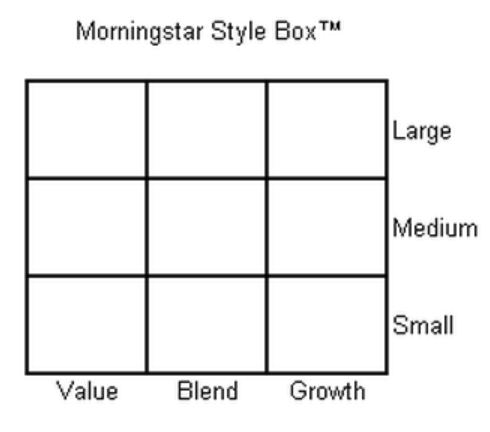
The first step in accurately assessing a fund’s past performance is to look at the Morningstar Style box, which divides mutual funds by market capitalization (small, medium and large) and by its investment objective (value, growth, and blend).  The box has 9 sections and can be seen in the graphic below:

This configuration allows you to place your chosen fund its correct category (one box on the “tic tac toe” spectrum).  This is helpful because it will allow you to compare total performance (rates of return) with funds of a similar size and investment approach.  Typically, investors make these comparisons over 3, 5, and 10 year time horizons (allowing you to smooth out short term fluctuations in the market).  Of course, performance comparisons can also be made relative to a benchmark index like the S&P 500, but the more specific performance comparisons (to those funds in a similar Morningstar category) tend to be more useful.

Separating Your Fund from the Market as a Whole

When looking to make an assessment of the market as a whole, the S&P 500 can be a useful benchmark for determining broad economic performance.  But in order to have a meaningful idea of your fund’s true merits, it must be compared to its peers those within the same style box category.

For example, roughly 90% of the available mutual funds underperformed the S&P 500 in 1998.  Index funds tied to the S&P 500 fall into the “blend” and “large cap” fund categories (which suggests that the S&P 500 has limited exposure to value and growth stocks).  In this year, as most mutual funds offered weaker returns than investments in the S&P 500, a majority of the similarly categorized “large cap” and “growth” funds actually beat the S&P 500 index.  From this, should we surmise that the managers of these funds put forward an exceptional performance?  Not exactly.

In 1998, growth funds with large market caps generated average returns of about 35% (which was about 8% better than what was seen in the S&P 500).  But some funds (such as the Vanguard Growth Index fund) generated returns above 42% for the year.  So, when some funds advertise the performance as “market leading” because they beat the S&P 500 benchmark, the first question to ask is whether or not the fund falls into the “large cap” and “growth” categories.  If this is true, you should not be as impressed by these results as you would be if the fund fell into one other categories (which would be a more impressive feat).  This is because the assets in that fund should have had no problem beating the S&P that year.

Matching Comparable Funds

There are some names that are well known in the fund community (such as Vanguard) that aim to provide access to index funds which fall into many of the Morningstar style boxes (Vanguard funds fall into 7 of these 9 categories).  So, when looking for funds to use as a measured standard of performance, these funds provide a good starting point.

Morningstar.com allows you to search for your fund using its name or ticker symbol.  You will then see a wide selection of informational articles related to the fund.  This will include its style box categories, yearly performance relative to the S&P 500 (for assessment against the broader market), and performance comparisons to funds that are more directly related to your fund of choice.   A quick internet search of this type can allow investors to assess the relative performance for mutual funds before making any share purchases.

SmartMoney’s Comparison Tools

Other sites, like SmartMoney.com, will allow you to compare funds through time periods of 1, 3, or 5 years.  These types of sites allow you to monitor how the funds in your 401(k) plan are performing when compared with a similarly positioned index fund.  The Vanguard funds make these comparisons particularly convenient and the following list shows which funds are comparable for each style box category.  You can use the ticker search at SmartMoney.com to look for these match-ups:

  • Small Cap Funds: Vanguard Small Cap Index Inv (NAESX) compares to the Russell 2000 Index
  • Mid Cap Funds: Shelton S&P Midcap Index (SPMIX) compares to the S&P Mid Cap 400 Index
  • Large Cap Funds (Value):  Vanguard Value Index (VIVAX) compares to the BARRA/S&P Value Index
  • Large Cap Funds (Growth):  Vanguard Growth Index (VIGRX) compares with the BARRA/S&P Growth Index
  • Large Cap Funds (Blend):  Vanguard 500 Index (VFINX) compares to the S&P 500 Index

In addition to this, Vanguard has addressed other style box categories with a value fund in the small cap category (VISVX), as well as a mid cap index fund (VIMSX).  But since these are recent additions to the market, there is not enough of a historical record to allow for a meaningful analysis.  Instead, when looking at mid cap funds, other options include the California Investment Trust S&P Midcap Fund (SPMIX).  When looking at small cap funds in the growth or value category, investors can compare the chosen fund with those in the blend index funds with small market capitalization.  One example is the Vanguard’s Small Cap Index Fund (NAESX).

Conclusion:  Market Returns and Performance Ratings are Only Meaningful When Compared to Their Peers

Making a comparison of the annual returns generated by your chosen fund to those generated by a similarly positioned index or index fund will allow you to accurately assess the track record and measure its performance on a relative basis.  In many cases, these performances are less than impressive, despite what the fund’s marketing team might suggest in advertisements.  In other cases, a fund will outperform its peers (and its associated index), so an investor’s main task is to identify a fund that consistently outperforms relative to its competition.

Filed Under: Mutual Funds Tagged With: Investing, mutual funds, Richard Cox

Characteristics of the Main Types of Mutual Funds

December 26, 2012 By Richard Cox

When reviewing your personal finances, be sure to let your saved money work for you and increase your assets. Follow along with Richard Cox’s investment guides.

For new investors looking at mutual funds, it is important to know that not all of these funds are exposed to the same markets or the same asset types.  Typically, a mutual fund will fall into one of three categories – Bond funds, Money Market funds, or Stock funds.  In order to increase diversification exposure, many investors will split their resources and buy into a portion of all three.  Here, we look at the characteristics of each of these Mutual Fund types.

Stock Funds

The most volatile of these funds is the Stock fund, which is sometimes called an Equity fund.  In these cases, the value of the fund might fluctuate sharply in small periods of time.  On the positive side, stocks perform better on a historical basis when compared to other asset classes.  This is generally due to the expectation that companies will later command a greater market share and improve on revenues and profit outlooks.  These factors tend to create increases in stock value for shareholders.

When gauging potential stock performance, it is important to consider the changing economic conditions which might affect corporate earnings, or risks such as upcoming lawsuits or possible restrictions in future product releases.  Stock funds have sub-divisions as well, which feature different types of assets:

  • Income Funds:  Focus on stocks with high dividend yields
  • Index Funds:  Attempt to match the performance of a major stock index (such as the Dow or S&P 500)
  • Sector Funds:  Specialize in industry sectors (such as technology, finance or healthcare)
  • Growth Funds:   Attempt to create substantial capital appreciation (but are less likely to pay dividends regularly)

Bond Funds

Bond funds will generally buy government or corporate debt, and are sometimes referred to as Fixed Income funds.  This is because Bond funds look to provide consistent investment income with regular dividend payments.  These funds are included in many investment portfolios because they tend to perform well when stock markets are losing value.  This helps to provide balance and risk protection for investors.

Bond funds are organized by sector (just like Stock Funds), and can vary in terms of potential risk.  Low risk funds invest in stable assets like US Treasury Bonds, while riskier funds invest in very high-yield bonds or those associated with corporations with low credit ratings.  Risk for bond funds can come from these areas:

  • Instances where bond issuers (either a government or a company) is unable to repay its debts
  • The bond is paid off prematurely, preventing a bond fund manager from re-investing profits in a higher return asset
  • Interest rates rise, bringing value declines to the purchased bonds

Money Market Funds

Money Market funds are typically associated with lower risk, relative to many other fund types and asset classes.  These funds have legal requirements which limit their investments to selected high quality investments over short time periods.  These assets are issued by the federal government, local municipalities, or stable US companies.  In exchange for this security, historical returns tend to be lower (when compared to stock or bond funds), and these lower rates of return make these funds vulnerable to value declines in periods of high inflation.

Choosing Your Mutual Fund

When choosing your mutual fund investments, it is important to keep all of these factors in mind.  Different fund types will perform better in certain economic environments and the total level of risk associated with each fund type will differ from investor to investor.

Filed Under: Mutual Funds Tagged With: mutual funds

Reducing Fees in Mutual Fund Investments

December 15, 2012 By Richard Cox

Investing money is one way that Coolchecks.net recommends you use to enhance your personal finance strategies. Here is a short guide to mutual funds.

Mutual Fund Investment Guide

Selecting a winning mutual fund can seem like a daunting task, so whether you are looking to invest in a managed fund based on your own interest or if you are forced to do this because index funds are not provided by your 401(k), it pays to have an understanding of the basic workings of these instruments and the ways mutual funds tend to behave in relation to the broader market. First, it is important to understand that many mutual funds underperform the many benchmark stock indices because of the fees that are associated with these investments.

As client investors, our primary task is to ensure that these fee charges are low, as this gives us a better chance to achieve returns that beat the rest of the market. To do this, we will summarize the major terms that you will inevitably encounter when buying into a mutual fund and then give a short checklist that should be followed before any real investments are made.

Expense Ratios

Expense ratios are created by the annual fees that are charged by all mutual funds. These fees combine administrative costs, distribution fees, management fees, and operating costs. These costs are combined and calculated as a percentage to total assets. Actively managed mutual funds usually have expense ratios in the neighborhood of 1.5% per year. Ideally, look for expense ratios of 1% or less, but this might take some work since average fees have been rising in recent years.

Understanding Turnover

The next essential element to understand is “turnover,” which measures the length of time a mutual hold will hold a stock. Funds incur expenses whenever a fund is bought or sold, so if a fund holds onto a stock for a longer period of time, there will be fewer trading expenses. Additionally, capital gains taxes will also be lower when turnover rates are correctly managed.

If, for example, a fund has a turnover rate of 100%, that fund will buy an entirely new collection of stocks each year. Mutual funds average turnover rates of 80% but it is possible to find funds with substantially lower rates (sometimes even as low as 5%). The lower the rate, the lower the charges that will be later transferred to the investor.

A Checklist for Mutual Fund Investors

A summary checklist to use when looking for winning mutual funds should look like this:

1.  No sales charges for clients (this includes level loads, front loads, and sales loads that are contingent deferred)
2.  An expense ratio that is lower than its peers (usually below 1%)
3.  Low turnover relative to the competition, (generally lower than 50% a year, a number closer to 20% is preferred).
4.  Fund policy that remains fully invested. (Cash reserves of something close to 0%.)

Understanding these aspects of mutual fund investing can be important in ensuring we achieve returns that beat the wider market. In short, we are looking to keep our fees low and to choose low turnover funds, as these tend to give us the best chance enhancing returns.

Filed Under: Mutual Funds Tagged With: Investing, mutual funds

Foreclosed Property A Good Buy? Check Closely Before You Jump

June 4, 2012 By Twila Van Leer

Foreclosures and short sales have been an unhappy downside to the American housing market in recent years. For those looking for a bargain, the temptation to snatch up something at a greatly reduced price makes the time seem ripe. But there are some precautions people in that mode should note carefully.

On the plus side, many distressed properties are selling at 5 percent to 10 percent below today’s market value. That’s as much as 50 percent or more below the peak prices of five to six years ago. Coupled with the current low interest rates, that’s enough to attract buyers with enough assets to take the plunge. But experienced Realtors advise caution. There are some common pitfalls in these deals. Some bargain-hunters have found that their offers on even listed short-sales go unanswered.

Banks make loans. They don’t sell real estate and even though they’ve had several years of dealing with property on which they have foreclosed, they still aren’t good at it, many prospective buyers complain. Weeks, even months of frustration may be ahead for those bent on such a purchase.

For one thing, lending institutions are bogged down with the sheer numbers of properties they have had to reclaim and the backlog can be a frustrating factor for the would-be new owners. It could take up to a year to consummate a deal. You have to be lucky to hit one of the “waves” that occur when the institution has worked through a number of problem loans and is ready to market a batch of properties. These sellers also differ in their approaches to ridding themselves of foreclosed properties. Some are in a hurry to sell and put on a price gauged to get the property sold. Others may pad the price in anticipation of being asked to make concessions.

Before you write out your check, listen to some tips offered by Realtors to help you maneuver the winding path to foreclosed property ownership:

1. Don’t let the posted price be the only criterion on which to base a decision. Consider all the factors to avoid belated sticker shock.

2. If what you want is a condo, check with the homeowners’ association and be certain it has adequate reserves and is certified by the U.S. Federal Housing Administration. Without that certification, would-be buyers relying on FHA-insured loans, would not accept the purchase. Some other types of loans have the same guidelines. Your resale potential could take a real nosedive. Be aware that some condominium complexes charge very high home-owner fees, which should be factored into the long-term cost.

3. Don’t rush into anything. Sometimes that great asking price can be a cover for significant problems with the property. If you lose what you saved on the bottom line through costly repairs, you haven’t benefited at all. Property that has been left to languish without any upkeep might be targeted by its political jurisdiction for fines for weeks, trash , unpaid utility bills, etc.. As the proud new owner, those are part of your deal. Some homeowners facing foreclosure feel free to walk off with anything that isn’t firmly attached.

The lower prices of housing in today’s market compared to what they were at the height may trip you up if you buy a short-sell home and then want to refinance. The lender may refuse because the property at today’s values is less than it was before. There also is the problem of multiple loans on a property. Second and third mortgages can muddy the waters pretty fast.

Banks that went along with the extra mortgages a few years ago are not nearly so eager now. All of the lenders who have a money interest in the property have to agree to a short sale. Best to become involved after all those items are settled.

Unless you are auction-savvy, don’t risk that route. Also be aware that you aren’t the only bargain-hunter in the market. Expect multi-offers situations and be prepared to dicker aggressively.

Some experts in the field are aware that there are bargains to be had, but unless you go into the short-sale/foreclosoure market with your eyes wide open, you may find that your “good buy” really meant good-bye to precious assets.

Filed Under: Foreclosures, Investing Basics Tagged With: Foreclosure, mortgage loans

  • « Go to Previous Page
  • Page 1
  • Page 2
  • Page 3
  • Page 4
  • Page 5
  • Go to Next Page »

Primary Sidebar

Personal Finance Articles

  • Make Saving A Priority
  • Review Your Home-Insurance Risks
  • Lowest Air Fare? Try August 28
  • Hackers Targeting Bitcoins
  • Keep Your Emergency Fund Intact

Save At Walmart

Search

Personal Finance Education

Investing Education from Morningstar.

As Seen On Intuit

Intuit.com has ranked Coolchecks.net #4 out of 10 of the best blogs to help you save money. We hope to help you become more aware of your own financial situation and strive to improve it.

Featured On Mint.com – July 2014

Mint Interview

Categories

  • Banking
    • Check Writing
    • Checking Accounts
    • Credit Cards
    • EMV Cards
    • Fees
    • Fraud
    • History
    • Student Loans
  • Best Of The Web
  • Budgets
    • Emergency Fund
    • Grocery Shopping
    • Saving Money
    • Spending Habits
  • Business
    • 3D Printing
    • Bankruptcy
    • Business Advertising
    • Business Development
    • Business Plans
    • Corportate Lessons
    • Data Mining
    • Legal Issues
    • Merchants
    • SEC
    • Security
    • Small Business Startups
  • Consumer Alerts
  • Cryptocurrency
  • Cutting Costs
  • Employment
    • best places to work
    • Careers
    • Interviews
    • Job Search
    • Top CEOs
    • Wages
  • Entrepreneurs
    • Attitudes
    • Entrepreneur Interviews
  • Featured
  • Finance
    • Automobiles
    • Credit Ratings
    • Education
    • Financial Planners
    • Foreclosures
    • Homes
    • Insurance
    • Investing
    • Mortgages
    • Personal Finance
    • Renting
    • Term Deposits
    • Travel
    • Work
  • Fraud
  • Government
  • Holidays
    • Christmas
    • Halloween
  • Internet
    • Bitcoin
    • Blogging Tips
    • Blogs, RSS and Podcasting
    • Databases
    • Facebook
    • Influence
    • marketing
    • Twitter
    • Website Reviews
    • WordPress
      • Key Words
  • Investing Basics
    • Hedge Funds
    • Investing
    • Mutual Funds
  • Life
    • Aging
    • Just For Fun
      • Punahou Alumni Corner
    • Millennials
    • Personal Health
  • Money Making Ideas
    • Affiliate Programs
    • Craigslist
    • Ebay
  • Money Management
    • Bankruptcies
    • Building Wealth
    • Child Care Costs
    • Christmas Shopping
    • Credit
      • Free Credit Report
    • Debit Cards
    • Debt
    • Debt Reduction
    • Health Insurance
    • Income
    • Inheritance
    • Interest Rates
    • Loans
    • Mortgages
    • New Years Resolutions
    • Retirement
    • Shopping Tips
    • Tax Strategies
    • Your Stories
  • Retirement
  • Self Improvement
    • Time Management
    • Work Habits
  • Shopping
    • Coupons
    • Online Shopping
  • Social Security
  • Tax Tips
  • Taxes
  • Technology
  • Trade
  • Uncategorized
  • Wealth

Best of Personal Finance Blogs

Best of BuyerZone Business Finance Blog Recipient

Personal Finance Sites We Recommend

Get personal finance advice from the people behind the top money blogs, including Wise Bread, The Simple Dollar, Mint and Nerd Wallet.

Copyright © 2026 ·Metro Pro · Genesis Framework by StudioPress · WordPress · Log in