• Skip to primary navigation
  • Skip to main content
  • Skip to primary sidebar
  • Money Management
    • Debt Reduction
    • Credit
    • Mortgages
    • Mutual Funds
    • Tax Strategies
    • Loans
  • Budgets
    • Saving Money
    • Income
  • Banking
    • Checking Accounts
    • Check Writing
    • Fraud
    • History
  • Entrepreneurs
    • Entrepreneur Interviews
    • Money Making Ideas
    • 3D Printing
  • Resources
  • Retirement
  • About
    • Privacy Policy

Personal Finance Blog

Tips And Stories To Help You With Managing Money

  • Privacy Policy
  • Saving Money In 2018
You are here: Home / Archives for Budgets / Spending Habits

Spending Habits

Trick Your Brain, Build Your Wealth

October 15, 2014 By Twila Van Leer

Make saving money automatic every month. The easier it is to save the better for you in the long run.
If we leave it to our brains, we don’t always end up financially well off. Evolution has created brains that look at the world in particular ways and predict certain behaviors that can be counterproductive. In short, humans tend to prefer short-term satisfaction over long-term gain.

So, time to change your mind. With effort, you can even use inherent thinking patterns to enhance your financial position. Here are some ideas:

Quit pitting saving against spending by making the savings automatic. Make a firm decision in favor of regular deposits into a savings account and then forget it.

Try to visualize what it is you want to achieve financially. A picture on the refrigerator of the object of long-term savings – a new home, maybe – is a constant visual reminder that you have to stick with the goal.

People tend to spend differently depending on their perception of where the money comes from. A credit card, for instance, may not offer as clear a notion as does cash, so it is easier to overspend with the card. Use cash when you can.

Use several savings accounts targeted to specific goals. That way, your brain is not tricked into thinking you are making more progress toward those goals than you really are. A generic savings account may be easier to dip into than one specifically labeled “Vacation in Paris.”

Save small bills. One-, five- or 10-dollar bills accumulate fast, although you may at first think it a strange way to save. It works because you are required to do mental accounting and there is an essence of “gambling” involved since you never know when the next bill will show up.

Use savings, except for retirement funds, to pay off credit card debt. At this point in time, savings earn little, and credit cards charge a lot. Make use of the difference. If you can pay down the credit card debt, you’ll have more to save. That requires a change in thinking and genuine action, but it’s worth it.

Ways of thinking about money, like everything else, can become habitual. The idea is to replace counterproductive thinking modes with those that will contribute to your financial well-being.


Filed Under: Featured, Spending Habits Tagged With: Saving Money

What Not To Buy In 2014

May 19, 2014 By Twila Van Leer

Save Money On Traveling
Extra Leg Room On Trips – Is It Worth The Price?
Technologies are changing and require more review of intended purchases if you’re in the market for products. Here is a list of products from around the web that you might want to avoid if you want to keep your money in your wallet.

1 – Landlines

Landline telephone services are rapidly being replaced by wireless phones. Two in five households had switched to wireless the first half of last year, up slightly from the first half of 2012. In the past decade, some 90 million adults, 38 percent of the population, became wireless-only. Scrapping the landline allows you to drop one of the monthly bills. And you needn’t be restricted to a cellphone. There’s Skype, which is free and puts you in touch with friends and family around the world via smartphone and other devices. FaceTime video may be free with a Wi-Fi connection. MagicJack Plus can be connected to a USB port, computer or regular phone router. It may cost $49.95 for the device and six months of service, after which the monthly service is $1.67 to $2.50 per month.  Some folks may want to retain their landline as well. There is more security in case of disruptions caused by bad weather or other problems.

2 – GPS

Before investing up to $300 to purchase a GPS device, look at new developments that serve the same purpose. There are GPS apps on many smartphones, a fair number of them free to upload.  A growing number of new cars come with a GPS option. Forty-nine percent of 2013 vehicles have a navigation system.

3 – Cable Television

Cable television is being replace by other technologies. Since 2004, subscribers to cable have been dropping out in favor of services such as Hulu and Netflix NFLX, which provide comparable service at a much lower cost. Using an Internet connection, consumers can stream many cable shows, news programs and sports events, as well as movies, directly to their TVs. Some channels offer access to programs through their websites. These services are available primarily to those who don’t care if their shows have been previously aired and who are willing to give up live programming.

4 – Hotel Rooms

The demand for hotel rooms, along with their rates, are going up. There are some alternatives, including apartments and homes where prices are lower and there is usually more space. The average daily rate at U.S. hotels is $110.59, up 4.1 percent from 2012 and 12.6 percent from 2010. The average is expected to rise to $115.68 in 2014, according to PricewaterhouseCoopers. Agencies such as Airbnb and Vacation Rentals By Owners, offer an assortment of homes you can rent. Some provide free airport pickup and drop-off services. This approach is particularly effective for large groups or families traveling together. Advantages may include many bedrooms and facilities for meal preparation. The downside: such arrangements usually offer less security than do hotels.

5 – DVD & Blue-Ray Players

DVD and Blue Ray player sales are down. Sales for DVD and Blu-ray units totaled 21.3 million in 20l2. That’s down 20-plus percent from a year prior and 24.8 percent from 2010.  More people are opting to stream movies from Internet services such as Hulu and Netflix. Many gamers can use their consoles to watch DVDs.

6 – Computers

Desktop and laptop computers are becoming obsolete to a degree. Tablets perform the same functions and they’re portable.  The price differential is considerable, with Apple’s IMac starting at $1,299, compared with an iPad at $299. Graphic designers and traders, obviously, will find it necessary to stay with large screens, but for the vast majority of users, the smaller versions fill the bill. Worldwide shipments of PCs fell 4 percent in 2012 over the prior year, an indication that PCs are losing ground in the computer market.

7 – Leg Room On Airplanes

Airlines are changing their approaches to giving passengers more amenities — for a fee. It has been common practice to provide an extra three to six inches of legroom in coach for an additional cost of up to $180. The seats often are in the exit rows or the first row in economy. But for a payment of $100 to $200, a traveler can be upgraded to business class, where seats are more comfortable and service is more accommodating. These are options that used to be reserved for frequent fliers, but now they are offered to any passenger willing to pay a bit more when they check in or at the gate.

8 – Credit Cards With Rewards

Credit card companies are altering rewards programs. Consumers should be wary now of promotions that offer rewards in points or miles. Many of the card issuers are requiring a greater outlay by the consumer to get the “free reward” they could have obtained earlier with fewer points. Many of the cards now come with annual fees ranging from $30 to $75. Instead, consider a credit card with a cash-back offering, a much more straightforward plan.  The usual kickback is 1 percent to 5 percent of the number of dollars involved in the purchase.

9 – Digital Cameras

Digital cameras are suffering an identity crisis. With competition from cell phones with photo capacities and an expanding range of options for picture-takers with particular goals in mind, there is a confusing array of choices.  Digital point-and-shoot cameras that have been the rage for years are seeing a decline in demand. Sales are down some 44 percent since 2012 and they’re expected to keep dropping. “Real” photographers are choosing larger, DSLR cameras, while those bent on action shots are finding models such as the Go-Pro best meet their needs. Be sure that what you get is what you really want.

10 – Credit Reports

By law, credit card reports cannot be more than $11.50 per report. Your credit score is often not included in these reports. You can order three different FICO scores – one from each credit reporting bureau – but it will cost you – $59.85. Some credit cards like Discover Card are showing customers credit scores every month when consumers sign on to their accounts. You can’t beat free credit scores!

As a consumer we want you to save money on all your purchases in 2014. If you know about other good savings tips, please share with us!

Filed Under: Budgets, Personal Finance, Saving Money, Spending Habits Tagged With: Saving Money

Powerful Budgets Help You Get What You Want

April 5, 2014 By Sherry Tingley

We all have them: Expenses we can’t sidestep, things we would like to have and long-term hopes and plans that require up-front planning.

Stretch Your Dollars By Budgeting
Budgeting Helps You Keep Your Dollars

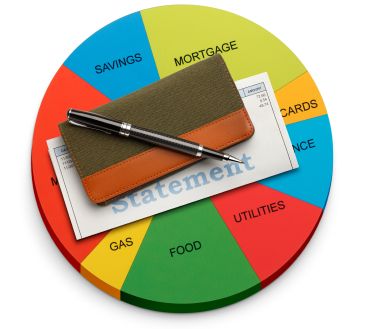
That’s what budgeting is all about. It gives you a clear picture of what you have, what you must spend and what’s left over for those things that are only dreams in the making. For most of us, it’s clear that the “musts” will eat up most of the paycheck. Surveys show that the average American household spends 80 percent of its income on essentials. Sixty percent, right up front, goes to housing, food, gas and insurance.

The budget becomes the tool that keeps you within the boundaries of your available income and allows you to wisely plan for the “wants.” What it takes is discipline, planning and prioritization.

Use Budgeting Tools Online

First off, be aware that many financial institutions offer on-line or paper plans to help you create a budget. Use them.

Goal Setting

Where to begin? Setting a goal is a good idea as a prelude to making the plan. Clearly put down in black and white what your main financial objectives are.

Establish Your Exact Income

The next step, obviously, is having a very clear picture of your income. That’s essential to planning the outgo. Start with your net income. Get some concrete evidence of what the figure actually is by reviewing pay stubs or other records of income. Standard deductions are shown, such as insurance, taxes, 401K contributions, etc. That will give you a list of what’s being skimmed off before you get what actually goes into the bank. The latter figure is what you’ll work with as you plan how to spend.

Discover Your Basic Expenses

The next step is to look at your basic expenses. As a rule, these don’t fluctuate much from month to month. They include rent or mortgage payments, utility costs, car payments and expenses, insurance and regular payments on existing loans, such as education costs.

Establish An Emergency Fund

Ideally, you need a safety net, a reserve for those unplanned life events such as unseen medical expenses, car repairs, large appliance replacements, necessary upgrades to furnaces, water heaters, etc. etc. The list is long and, for most people, entirely unpredictable except in the fact that they inevitably happen. Try hard to build yourself a little cushion against the day that it’s your turn. That means creating a savings program that is backed by a firm hands-off policy. An automatic deposit into a bank or credit union savings account , mutual fund or other established savings program may reduce the temptation to dip into this reserve. Setting up a yearly CD account may be what it takes to reduce the temptation to dip into easily available savings.

Cut Back

Look for places where you can trim. Do you really need several hundred options for television viewing. How about a basic program? Could you save on meals by taking a lunch to work a few times each week? Public transportation? Car pooling? Eating at home instead of frequently dining out? Expensive personal habits such as smoking and excessive drinking might offer a source of savings, as well as reducing medical expenses down the line. Look online to find advice, such as practical tips on how to save money. There are dozens of them.

Plan a certain amount of cash to see you through each pay period. Knowing you have just $60 in discretionary spending money may make the desire for a $60 pair of shoes easier to bypass.

Pay Off Credit Cards

Try to pay off credit cards. Don’t accumulate a pocketful to begin with. Choose one, based on the best combination of offerings, and stick with it. If that advice comes too late, make a concerted effort to pay them off one at a time, starting with the one with the highest interest. Add a few dollars to the monthly payment on that one account until it is paid off, then go to the next one. With your budget firmly in mind, resist the temptation to use credit cards for “whim” purchases.

Include every person in your household in the budgeting process. If a wife is firmly committed to a budget and her spouse is bent on accumulating debt, or vice versa, the effort is usually hopeless. Children who see the figures concretely may make fewer demands on the family resources. And they’ll learn the fundamentals of money management into the bargain.

Continue Planning Throughout The Year

A budget isn’t a one-time effort. Ongoing planning and revision are essential as life circumstances affect income and spending. Routinely balancing the bankbook is part of wise budgeting. It’s easy to miscalculate spending if you aren’t certain what the bottom line is. Save receipts and write down where you spend money so you can’t become hazy about actual expenditures.

Allow Occasional Splurges

An occasional splurge isn’t fatal, but there is a calming effect in being in control of your income and outgo. Make a budget your friend and stick with him.

Related articles across the web

  • Budgeting Mistakes That Can Cost You Hundreds

Filed Under: Budgets, Spending Habits Tagged With: budget, Budgeting

The Cure for Common Household Debt

June 18, 2013 By Tony Standin

At some point in our lives, many of us come to believe that accruing debt is part of life. After all, you can’t build credit without taking on debt, and credit scores are becoming increasingly more important when it comes to finding a place to live, purchasing a vehicle, and even getting a job. The problem is that many people wait too late to stomp their debt break. When you reach the point that your debt is eating up most of your income, you are headed for a financial car wreck.

Budgeting

budgeting

Many people just “wing it” with their finances and spend money as they feel the need/desire to. Financially speaking, that is the equivalent of trying to drive through the rain without windshield wipers. Without clear visibility, you can’t really see the road ahead. Start by making a list of your expenses, and it should include all your expenses, not just reoccurring monthly bills. Factor in costs like food, gas, parking, etc. While you can’t plan for every single expense, you can account for most of them. Set reasonable limits on personal expenses and stick to them. The first step in managing your debt is to know exactly where your money is going every month. [Read more…] about The Cure for Common Household Debt

Filed Under: Debt Reduction, Spending Habits Tagged With: Debt, eliminating debt, household, reduction

What helps you eliminate bad spending habits?

March 11, 2009 By Sherry Tingley

How many times have you made financial mistakes because of bad spending habits ?  Too many to count? Already reached perfection?

Life gives people daily opportunities to use good money management strategies or to ignore them. The good news is that if you have failed, there is always another day to try again at your goals.

Money management strategies can be as challenging for some people as going on a diet. For other people, keeping a budget and sticking to your goals is no problem at all.

Here are a few causes of people who have gotten themselves into bad situations.

  1. Poor communication with your significant other about money.
  2. Lack of setting realistic goals so spending is much easier.
  3. Little or no record keeping so you are unaware of how much you are spending.
  4. Allowing yourself to purchase things because you think you deserve them.
  5. Lack of career preparation so income levels aren’t what they should be.
  6. Taking care of everyone else before you take care of yourself.
  7. Failing to look at the consequences of barely meeting your bills from month to month.
  8. Little or no savings to rely on in case of emergencies.
  9. Being a recreational shopper.
  10. Not being able to distinguish between needs or wants.

Here are a few tips to help you break your bad spending habits

  1. Leave your credit cards at home. It’s much easier to spend if you take them wih you, so just leave them at home.
  2. Limit yourself to 1 or 2 credit card accounts. It’s easier to pay them down if you don’t have so many credit cards.
  3. Shop with a list and plan what you are going to buy.
  4. Recognize when you are impulse shopping.
  5. Go shopping with a friend that knows your goals.
  6. Use what you already have in your home.
  7. If you need therapy, get it. Don’t using shopping as therapy.
  8. Be resourceful and try to do without what you think you want.
  9. Remember: No-one ever became rich by spending all of their money.
  10. Ask yourself: “Do I really need this?”, “Will I end up wasting this?”, “Is this an extravagance I can easily live without?”

So find out what the real culprit is behind your urge to splurge and recognize it. Read about how to fix your bad spending habits.

Remind yourself daily that money or a lack of it doesn’t determine who you are. Your worth as a person has nothing to do with how much money you have. Once you truly believe this, and money is no longer connected to your sense of self-worth, you open up the psychological barriers that were keeping you from wisely handling the money you do have and limiting your ability to make more. 

Build a library of the best personal finance books out there. Find a great list of books at the Get Rich Slowly blog.

What helps you eliminate bad spending habits?

Filed Under: Spending Habits Tagged With: bad spending habits, money management strategies

  • « Go to Previous Page
  • Page 1
  • Interim pages omitted …
  • Page 7
  • Page 8
  • Page 9

Primary Sidebar

Personal Finance Articles

  • Make Saving A Priority
  • Review Your Home-Insurance Risks
  • Lowest Air Fare? Try August 28
  • Hackers Targeting Bitcoins
  • Keep Your Emergency Fund Intact

Save At Walmart

Search

Personal Finance Education

Investing Education from Morningstar.

As Seen On Intuit

Intuit.com has ranked Coolchecks.net #4 out of 10 of the best blogs to help you save money. We hope to help you become more aware of your own financial situation and strive to improve it.

Featured On Mint.com – July 2014

Mint Interview

Categories

  • Banking
    • Check Writing
    • Checking Accounts
    • Credit Cards
    • EMV Cards
    • Fees
    • Fraud
    • History
    • Student Loans
  • Best Of The Web
  • Budgets
    • Emergency Fund
    • Grocery Shopping
    • Saving Money
    • Spending Habits
  • Business
    • 3D Printing
    • Bankruptcy
    • Business Advertising
    • Business Development
    • Business Plans
    • Corportate Lessons
    • Data Mining
    • Legal Issues
    • Merchants
    • SEC
    • Security
    • Small Business Startups
  • Consumer Alerts
  • Cryptocurrency
  • Cutting Costs
  • Employment
    • best places to work
    • Careers
    • Interviews
    • Job Search
    • Top CEOs
    • Wages
  • Entrepreneurs
    • Attitudes
    • Entrepreneur Interviews
  • Featured
  • Finance
    • Automobiles
    • Credit Ratings
    • Education
    • Financial Planners
    • Foreclosures
    • Homes
    • Insurance
    • Investing
    • Mortgages
    • Personal Finance
    • Renting
    • Term Deposits
    • Travel
    • Work
  • Fraud
  • Government
  • Holidays
    • Christmas
    • Halloween
  • Internet
    • Bitcoin
    • Blogging Tips
    • Blogs, RSS and Podcasting
    • Databases
    • Facebook
    • Influence
    • marketing
    • Twitter
    • Website Reviews
    • WordPress
      • Key Words
  • Investing Basics
    • Hedge Funds
    • Investing
    • Mutual Funds
  • Life
    • Aging
    • Just For Fun
      • Punahou Alumni Corner
    • Millennials
    • Personal Health
  • Money Making Ideas
    • Affiliate Programs
    • Craigslist
    • Ebay
  • Money Management
    • Bankruptcies
    • Building Wealth
    • Child Care Costs
    • Christmas Shopping
    • Credit
      • Free Credit Report
    • Debit Cards
    • Debt
    • Debt Reduction
    • Health Insurance
    • Income
    • Inheritance
    • Interest Rates
    • Loans
    • Mortgages
    • New Years Resolutions
    • Retirement
    • Shopping Tips
    • Tax Strategies
    • Your Stories
  • Retirement
  • Self Improvement
    • Time Management
    • Work Habits
  • Shopping
    • Coupons
    • Online Shopping
  • Social Security
  • Tax Tips
  • Taxes
  • Technology
  • Trade
  • Uncategorized
  • Wealth

Best of Personal Finance Blogs

Best of BuyerZone Business Finance Blog Recipient

Personal Finance Sites We Recommend

Get personal finance advice from the people behind the top money blogs, including Wise Bread, The Simple Dollar, Mint and Nerd Wallet.

Copyright © 2026 ·Metro Pro · Genesis Framework by StudioPress · WordPress · Log in