• Skip to primary navigation
  • Skip to main content
  • Skip to primary sidebar
  • Money Management
    • Debt Reduction
    • Credit
    • Mortgages
    • Mutual Funds
    • Tax Strategies
    • Loans
  • Budgets
    • Saving Money
    • Income
  • Banking
    • Checking Accounts
    • Check Writing
    • Fraud
    • History
  • Entrepreneurs
    • Entrepreneur Interviews
    • Money Making Ideas
    • 3D Printing
  • Resources
  • Retirement
  • About
    • Privacy Policy

Personal Finance Blog

Tips And Stories To Help You With Managing Money

  • Privacy Policy
  • Saving Money In 2018
You are here: Home / Archives for Budgets / Spending Habits

Spending Habits

Money Management Tips For 30 Somethings

March 29, 2016 By Twila Van Leer

Manage money carefully in your 30's.
Manage money carefully in your 30’s.
What you do in your 30s, personal finance-wise, makes a difference to what your retirement will look like. There are some common mistakes people make in their 30s that influence the future. Here are some of them:

Over-spending for children

What you spend on cute clothes, sophisticated toys and even educational apps must be subtracted from what you expect to live on after you are through working. Better to spend conservatively and save money for your children’s college funds.

Not discussing finances before marriage

Getting married without discussing finances can be destructive. If by your 30s you have not learned to negotiate financial options, you could be in trouble. Money issues can become serious marital conflicts, leading to divorce or ongoing clashes. Learn to talk about finances and how to set monetary goals together.

Ignoring debt

Coping with consumer debt well into your middle years can be worrisome. There are always excuses to burden yourselves with debt. Children and the ordinary crises of life are among them. But ignoring debt can come back to haunt you. Budget aggressively, live thriftily, earn as much as you can and try to anticipate retirement free of consumer debt.

Keeping up with the Joneses

Over-extending for things like a house and/or cars is another pitfall. Temper your desires to have everything and to give your children everything and you’ll find yourself better prepared to make do in your retirement years. People don’t really need a huge house and several vehicles to rear happy children. Keeping up with the Joneses occupies the minds of too many of those in their 30s. Remember that the Joneses probably are trying to keep up with someone else up the ladder. Be reasonable. Buy within your means and put something aside for later.

Not leaving a will

Make out a will or set up a trust for your kids and your spouse. Save them the hassle of trying to sort things out in case of your passing. Set up a power of attorney and power of healthcare so things don’t get sticky at that point. Ditto life insurance. If you unexpectedly leave your family when they are still depending on your income or time, you need life insurance, enough to cover their needs, not just the minimum usually offered by an employer. Consider disability insurance. In your 30s, the chances of becoming disabled are greater than early death.

Ignoring investments

Re-evaluate retirement goals now and again. By 30, your income probably has increased. Re-calculate to ensure that your retirement will support the lifestyle you want to retain. Pay attention to how your investments are performing relative to those goals. Readjust if necessary to meet goals and risk tolerance. Find a capable financial planner to help you.

Not starting a college fund when kids are young

Don’t wait until your child/children are ready to go to college to prepare financially for that expensive undertaking. Put money into an online savings account toward that eventuality. Find ways, if possible, to enlarge your education savings. Some adults at this time of life, too, consider going back to school to enhance their employment possibilities. Be certain to carefully study how much you can expect to gain by more schooling before you enroll. You could be making an expensive mistake.

Not pursuing other income opportunities

Diversify your income. The days are essentially gone when you could expect to work for one employer throughout your life. If you have a hobby that can be converted to income, pursue it. Job loss is no longer uncommon and you may need fallback sources to get you from one job to another. Taking good care of your personal finances in your 30s could pay big dividends down the road. Pay attention.

Trending Today

  • Dave Ramsey's classes are life changing!Dave Ramsey’s classes are life changing!
  • Calculate your monthly mortgage payment.Calculate your monthly mortgage payment.
  • Common Fraud SchemesMillennials increase their savings but financial security slips.

Filed Under: Building Wealth, Debt, Saving Money, Spending Habits Tagged With: Budgeting, Debt, Investing, making money, money management

Should I Cut The Cable Cord?

March 15, 2016 By Twila Van Leer

Dropping Cable Or Satellite TV? Make An Educated Choice

Thinking of dropping live tv.
Many people are trying to decide whether to drop live tv.

The great majority of Americans, some 83 percent as of 2015, pay for TV service, according to Leitchman Research Group. They put out money for cable, satellite or fiber-optic providers. The percentage actually has dropped slightly since 2010, when it was at the 87 percent level. The difference, according to the researchers, is that fewer households are signing up for cable to replace those who have dropped the service. And some couples moving into their first home don’t sign up as a matter of course.

The percentages may continue to drop as people catch on to the fact that they don’t need cable or satellite to watch their favorite TV shows. Streaming, downloading, library discs and network TV are all reasonable alternatives.

Streaming:

Services such as HULU, Netflix and Amazon Prime give you access to thousands of shows, including past seasons of popular cable series, current episodes of network TV shows and original shows that are only available online. The average price of the services is just $9 per month, only a fraction of the $99-per-month average cost of cable or satellite. An advantage: you can tune in on your own schedule, rather than the network’s.

Downloads:

You have access to many TV shows from iTunes or VUDU for $2 to $3 each. That could become more expensive than cable or satellite if you get all your shows this way. But if you are an occasional viewer or if you want to watch just one particular show that you can’t get through a streaming service, it’s practical.

Library Discs:

Most modern libraries now offer videos for patrons. Check out your local library.

Network TV:

Despite the many delivery choices now available, it still is possible to watch TV the old-fashioned way without any additional fees. All you need is a good antenna, preferably a roof-mounted version. Various indoor antennas also are available if you don’t have easy access to a roof. You can even build your own with instructions from such publications as Popular Mechanics. Online tutorials can guide you in making an antenna from materials that are readily available, such as scrap wood and old coat hangers, cardboard and aluminum foil.

Choosing among the alternatives could save you a bundle. For instance, compare a $99-per-month cable fee with an $8-per-month HULU subscription. Over a year, that’s a $1,092 savings.

Filed Under: Cutting Costs, Debt Reduction, Saving Money, Spending Habits Tagged With: Budgeting, money management, save money

Watch Out For These Money Drains

April 28, 2015 By Twila Van Leer

Save money on things you can easily do yourself.
Many Americans feel they can’t build savings because there simply isn’t money left after the essentials are covered. But with a little creative effort, you can find a bit here and a bit there to stash away.

With personal saving at its lowest level since 2001 (expected to fall below 1 percent by the end of this year) there must be some creative thinking to get things turned around. Experts at bankrate.com have identified the following popular items as 10 of the “ biggest money drains,” that leave too many families broke and without a savings cushion:

Coffee. At an average price of $1.38 per cup (or more, depending on whom you buy it from) your daily cuppa can cost you at least $3.60 per year, money that could be building your savings account.

Cigarettes. The average price-per-pack in the United States is $4.54, adding up to about $1,660 each year.

Alcohol. Costs vary widely, depending on your choice of beverage, where you live and your favorite watering hole. But, with tip, the average cost of one beer is $5. If you indulge in two per day, the cost could mount to $3,650 per year. If your spirit of camaraderie leads you to “treat,” friends, the cost goes up commensurately.

Bottled water. A liter is, on average, $1.50, multiplying to $540 a year if you stop at one per day. The habit not only costs you, but is a detriment to the environment as the plastic containers stack up.

Manicures. It’s a feel-good luxury you can’t afford if you haven’t any savings. A $20-per-week visit to the manicurist robs your savings of $1,068 in a year. A bottle of nail polish is approximately $5.

Car washes: The average cost is $58 with detailing thrown in. But if you take the option every two months, that’s $348 per year.

Buying lunch every day. The daily cost of eating lunch out every workday is about $9 – $2,350 per year. Making a lunch at home is a nuisance, but the sacrifice will seem worth it as you watch your financial safety net grow stronger.

Vending machine snacks. Each little visit to the machine costs about a dollar, about $260 per year if you succumb every working day to the lure of chips and chocolate.

Interest on credit card bills. The median amount of credit card debt in America is $6,600. The average credit interest rate is 13.44 percent. Making just the minimum payment, it will take you 21 years to ride yourself of that debt – if you resist the urge to perpetuate it. Make real effort to whittle the amount down faster by making additional payments on the principal.

Unused memberships. If you have a $40-per-month membership in a spa or gym or any other type of activity that requires a regular fee and fail to use it, you’ve lost $40 per month. Use it or get rid of it.

You can’t just change your appetite. You have to change your point of view. But with a little self-discipline, you can find the wherewithal to help your savings grow. You’ll be happy that you did.

Filed Under: Spending Habits Tagged With: money management

Lower Gas Prices Provide Extra Money For Families

March 3, 2015 By Twila Van Leer

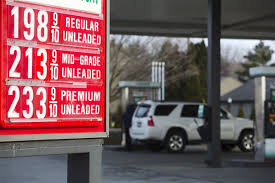
March 3, 2015 - Low Gas Prices around the country. At the Chevron station at 1284 Vine St & 1300, Murray, Utah - $1.88 a gallon.
March 3, 2015 – Low Gas Prices around the country. At the Chevron station at 1284 Vine St & 1300, Murray, Utah – $1.88 a gallon.
Financial experts predicted that American families would quickly pour the money they saved on precipitately dropped gasoline prices back into the economy. But the figures are proving them wrong. The money saved in the lowest gas prices in five years isn’t showing up in consumer reports.

In January, Americans in the aggregate spent some $6.7 billion less at the pump. But retail sales, excluding gas, actually dipped a bit from November to January. The figures suggest that consumers are using the money they save in gasoline purchases to reduce debt or increase savings. That is a carry-over from the Great Recession that made serious inroads into the country’s economy and left the average American a little leery of spending. Although that impedes economic growth in the near-term, it could have positive effects in the future, the experts say.

They are predicting annualized growth of 2.5 percent from January through March, a half point under the 3 percent they had forecast earlier.

Gas prices continue to remain low, although they have risen somewhat. In January, the average per-gallon price of $2.03 per gallon was the lowest since 2009. The price had gone up to $2.24 by late February, but that still is $1.10-per-gallon less than a year ago. The annual savings to a typical household is about $750, according to the Energy Information Administration. To keep a pulse on the changes in prices visit GasBuddy.com.

But with the left-over cautions bred by the recession still echoing, much of that savings will remain pocketed, the administration predicts. Americans are still cautious about overspending. They are saving more instead. The rate of savings rose to 4.9 percent of earnings in December, compared with 4.3 percent in November. Last month, the rate bumped up again, to 5.3 percent, the highest in a year and a half.

Some economists note that the savings from gas purchases are small, although they can grow over time. The cumulative effects don’t show up quickly. Also, many Americans are skeptical that the relatively low gas prices will last. They are cautious about spending the difference when it could be used to help reduce debt. The phenomenon is not new. Economists are aware that consumers tend to “wait and see” before they feel free to spend “found” money they hadn’t figured into their budgets. A lag of several months is typical.

Even so, signs indicate that the money will begin to make an impact on the economy in the coming months. New cars is one of the places it may be spent. Families that put off replacing a vehicle when the economy was sour may feel confident enough to make the splurge. In early 2013, the average age of a car in the U.S. was at a high of nearly 12 years. But last year, more families replaced their clunkers and car sales were at the highest in eight years. And the trend seems set to continue.

Filed Under: Spending Habits Tagged With: Saving Money

Impulse Buyers Becoming Extinct?

December 19, 2014 By Sherry Tingley

impulse-buyingIt is happening more and more. Today’s shoppers come to the store with something in mind, they pick it up and they leave without adding to the cart. The trend is likely to change the way the retailers approach sales.

The sellers often offer loss-leaders and deep discounts because they depend on shoppers to expand the list once they are inside the doors. They put milk at the back of the store and line the aisles and ends of aisles with tempting items. If the shoppers ignore these come-ons, the merchants lose.

Impulse buying is a psychological phenomenon, analysts say. Resisting it can be hard, according to Kit Yarrow, a professor at Golden Gate University, whose specialty is consumer psychology. She is quoted in a Wall Street Journal article.

Most everyone succumbs to impulse buying at times, Yarrow says. The best solution is to avoid situations in which you are tempted. Eating a piece of chocolate before going shopping may help. The glucose supports self-control. Giving yourself limited shopping time gives less time for temptation. If you make it an all-day excursion, the chances are great you’ll snatch something off the shelves that you hadn’t planned.

Online shopping has had an effect on impulse buying, Simply the use of technology has changed shopper psychology. People think and relate to others differently, Yarrow says. In most instances, these changes tend to take the thrill out of random shopping.

The online shopper has changed the whole process. Many shoppers want a more streamlined experience.

The recent recession had an effect on shoppers as well. When money got tighter, people were more careful about spending. They were less tempted to make unplanned purchases, despite the allure. They made fewer subconscious choices.

Impulse buying is triggered by one of two factors: An attractive price or an exciting purchase. Today’s buyer, faced with a glut of products, tends to look first to the pocketbook effect. Those who finally submit to their impulses often are emotionally drained because of family and/or work demands, Yarrow said. Or there are the newcomers to the shopping milieu whose resistance to impulse buying is lower. People who are angry in general may make shopping an outlet for unexpressed emotion.

To avoid the temptation to add to your shopping cart, follow a few simple rules:

Wait 20 minutes before making the purchase. That is the usual time it takes to cool the urge.

Think about what the purchase may cost you, not just the price of the item, but your decreased ability to buy what you might want more. Remind yourself how good a zero balance on your credit card feels. Or how you could be moving closer to a long-range financial goal such as a new car or a vacation. Remember how long you have to work to fund the purchase you are considering. Stalling is a good tactic in financial planning.

Delay shopping if you are tired, hungry or thirsty. Those physical demands may confuse your thinking about what you need. Avoid paying with apps or credit cards if possible. If you use cash, it is easier to see money leaving your hands.

Filed Under: Spending Habits Tagged With: budget

  • « Go to Previous Page
  • Page 1
  • Interim pages omitted …
  • Page 6
  • Page 7
  • Page 8
  • Page 9
  • Go to Next Page »

Primary Sidebar

Personal Finance Articles

  • Make Saving A Priority
  • Review Your Home-Insurance Risks
  • Lowest Air Fare? Try August 28
  • Hackers Targeting Bitcoins
  • Keep Your Emergency Fund Intact

Save At Walmart

Search

Personal Finance Education

Investing Education from Morningstar.

As Seen On Intuit

Intuit.com has ranked Coolchecks.net #4 out of 10 of the best blogs to help you save money. We hope to help you become more aware of your own financial situation and strive to improve it.

Featured On Mint.com – July 2014

Mint Interview

Categories

  • Banking
    • Check Writing
    • Checking Accounts
    • Credit Cards
    • EMV Cards
    • Fees
    • Fraud
    • History
    • Student Loans
  • Best Of The Web
  • Budgets
    • Emergency Fund
    • Grocery Shopping
    • Saving Money
    • Spending Habits
  • Business
    • 3D Printing
    • Bankruptcy
    • Business Advertising
    • Business Development
    • Business Plans
    • Corportate Lessons
    • Data Mining
    • Legal Issues
    • Merchants
    • SEC
    • Security
    • Small Business Startups
  • Consumer Alerts
  • Cryptocurrency
  • Cutting Costs
  • Employment
    • best places to work
    • Careers
    • Interviews
    • Job Search
    • Top CEOs
    • Wages
  • Entrepreneurs
    • Attitudes
    • Entrepreneur Interviews
  • Featured
  • Finance
    • Automobiles
    • Credit Ratings
    • Education
    • Financial Planners
    • Foreclosures
    • Homes
    • Insurance
    • Investing
    • Mortgages
    • Personal Finance
    • Renting
    • Term Deposits
    • Travel
    • Work
  • Fraud
  • Government
  • Holidays
    • Christmas
    • Halloween
  • Internet
    • Bitcoin
    • Blogging Tips
    • Blogs, RSS and Podcasting
    • Databases
    • Facebook
    • Influence
    • marketing
    • Twitter
    • Website Reviews
    • WordPress
      • Key Words
  • Investing Basics
    • Hedge Funds
    • Investing
    • Mutual Funds
  • Life
    • Aging
    • Just For Fun
      • Punahou Alumni Corner
    • Millennials
    • Personal Health
  • Money Making Ideas
    • Affiliate Programs
    • Craigslist
    • Ebay
  • Money Management
    • Bankruptcies
    • Building Wealth
    • Child Care Costs
    • Christmas Shopping
    • Credit
      • Free Credit Report
    • Debit Cards
    • Debt
    • Debt Reduction
    • Health Insurance
    • Income
    • Inheritance
    • Interest Rates
    • Loans
    • Mortgages
    • New Years Resolutions
    • Retirement
    • Shopping Tips
    • Tax Strategies
    • Your Stories
  • Retirement
  • Self Improvement
    • Time Management
    • Work Habits
  • Shopping
    • Coupons
    • Online Shopping
  • Social Security
  • Tax Tips
  • Taxes
  • Technology
  • Trade
  • Uncategorized
  • Wealth

Best of Personal Finance Blogs

Best of BuyerZone Business Finance Blog Recipient

Personal Finance Sites We Recommend

Get personal finance advice from the people behind the top money blogs, including Wise Bread, The Simple Dollar, Mint and Nerd Wallet.

Copyright © 2026 ·Metro Pro · Genesis Framework by StudioPress · WordPress · Log in