• Skip to primary navigation
  • Skip to main content
  • Skip to primary sidebar
  • Money Management
    • Debt Reduction
    • Credit
    • Mortgages
    • Mutual Funds
    • Tax Strategies
    • Loans
  • Budgets
    • Saving Money
    • Income
  • Banking
    • Checking Accounts
    • Check Writing
    • Fraud
    • History
  • Entrepreneurs
    • Entrepreneur Interviews
    • Money Making Ideas
    • 3D Printing
  • Resources
  • Retirement
  • About
    • Privacy Policy

Personal Finance Blog

Tips And Stories To Help You With Managing Money

  • Privacy Policy
  • Saving Money In 2018
You are here: Home / Archives for Finance

Finance

Should They Sell Their Home?

June 8, 2012 By Sherry Tingley

Personal Finance and Home BuyingPeople get into all kinds of financial problems when they are unable to assess accurately what their incomes will allow them to buy. Examples of this are plentiful when you read forums dealing with saving money and personal finance.

In a recent forum thread, a young woman asked for advice about whether she and her husband should sell their home because they felt they were in over their heads. They have been in their new home for seven months and it dawned on them that they were having a hard time making ends meet.They explained their situation, including the current income and their living expenses

She stated that she and her husband were both gainfully employed with a combined income of $130K. She said that they had a decent income, but they felt “poor.” Their net income was $7K per month with $4,200 going towards their mortgage payment. Besides their mortgage payments, their debt was about $55K in both student loans and repayment of the loan money they borrowed to get into their home. They weren’t going into the hole every month, but they had no breathing room. They also have two very young children for whom they have to pay childcare while she works. Adding in their other expenses, the total expenses for the family is $6,770.00 per month, leaving very little room for savings or emergencies.

The important thing here is that their mortgage payment is 60% of their net monthly income. That is the main issue. The lender loaned money to them when they shouldn’t have. Somehow, we as consumers think that if a lending institution is willing to loan us the money we need, then why not do it? Even after December 2007 through June 2009, the worst recession in American history since The Great Depression, banks apparently are still loaning money to people when it is not in anyone’s best interest but the banks.

To get back to the savings forum thread, people advised the couple to cut back on spending and basically sell the house. The penny pinching that could be done by the couple is probably not worth the time or effort.

So how did this couple miss so many important economic lessons? First, somehow they felt “rich” because of their incomes. They really were erroneous in thinking that and should have gone to a good financial planner well before they started thinking about moving to their new home.
They should have been able to predict their monthly expenses prior to moving. Had they done that, they may have decided to do something different with their money. The big red flag that they missed was knowing that they had to borrow money for their down payment. That alone should have put the brakes on this home purchase.

What makes one rich is creating a strategic long term plan and then following through with it. Getting good financial advice about any purchase that will impact your for over four years is a good idea. Financial education is a life-long process and luckily we can learn from our own mistakes and benefit from the wisdom of others. What do you think this couple should have done?

Filed Under: Mortgages, Personal Finance Tagged With: money management, Mortgages, Personal Finance

Foreclosed Property A Good Buy? Check Closely Before You Jump

June 4, 2012 By Twila Van Leer

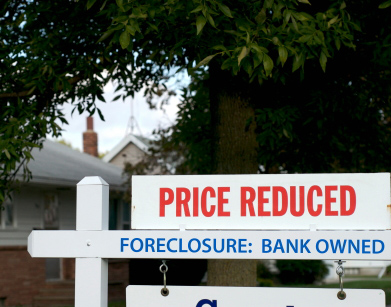
Foreclosures and short sales have been an unhappy downside to the American housing market in recent years. For those looking for a bargain, the temptation to snatch up something at a greatly reduced price makes the time seem ripe. But there are some precautions people in that mode should note carefully.

On the plus side, many distressed properties are selling at 5 percent to 10 percent below today’s market value. That’s as much as 50 percent or more below the peak prices of five to six years ago. Coupled with the current low interest rates, that’s enough to attract buyers with enough assets to take the plunge. But experienced Realtors advise caution. There are some common pitfalls in these deals. Some bargain-hunters have found that their offers on even listed short-sales go unanswered.

Banks make loans. They don’t sell real estate and even though they’ve had several years of dealing with property on which they have foreclosed, they still aren’t good at it, many prospective buyers complain. Weeks, even months of frustration may be ahead for those bent on such a purchase.

For one thing, lending institutions are bogged down with the sheer numbers of properties they have had to reclaim and the backlog can be a frustrating factor for the would-be new owners. It could take up to a year to consummate a deal. You have to be lucky to hit one of the “waves” that occur when the institution has worked through a number of problem loans and is ready to market a batch of properties. These sellers also differ in their approaches to ridding themselves of foreclosed properties. Some are in a hurry to sell and put on a price gauged to get the property sold. Others may pad the price in anticipation of being asked to make concessions.

Before you write out your check, listen to some tips offered by Realtors to help you maneuver the winding path to foreclosed property ownership:

1. Don’t let the posted price be the only criterion on which to base a decision. Consider all the factors to avoid belated sticker shock.

2. If what you want is a condo, check with the homeowners’ association and be certain it has adequate reserves and is certified by the U.S. Federal Housing Administration. Without that certification, would-be buyers relying on FHA-insured loans, would not accept the purchase. Some other types of loans have the same guidelines. Your resale potential could take a real nosedive. Be aware that some condominium complexes charge very high home-owner fees, which should be factored into the long-term cost.

3. Don’t rush into anything. Sometimes that great asking price can be a cover for significant problems with the property. If you lose what you saved on the bottom line through costly repairs, you haven’t benefited at all. Property that has been left to languish without any upkeep might be targeted by its political jurisdiction for fines for weeks, trash , unpaid utility bills, etc.. As the proud new owner, those are part of your deal. Some homeowners facing foreclosure feel free to walk off with anything that isn’t firmly attached.

The lower prices of housing in today’s market compared to what they were at the height may trip you up if you buy a short-sell home and then want to refinance. The lender may refuse because the property at today’s values is less than it was before. There also is the problem of multiple loans on a property. Second and third mortgages can muddy the waters pretty fast.

Banks that went along with the extra mortgages a few years ago are not nearly so eager now. All of the lenders who have a money interest in the property have to agree to a short sale. Best to become involved after all those items are settled.

Unless you are auction-savvy, don’t risk that route. Also be aware that you aren’t the only bargain-hunter in the market. Expect multi-offers situations and be prepared to dicker aggressively.

Some experts in the field are aware that there are bargains to be had, but unless you go into the short-sale/foreclosoure market with your eyes wide open, you may find that your “good buy” really meant good-bye to precious assets.

Filed Under: Foreclosures, Investing Basics Tagged With: Foreclosure, mortgage loans

Basic Tips For Buying A New Home

May 25, 2012 By Twila Van Leer

Before You Sign Mortgage Papers, Know the Facts

First-time home buyers can find themselves bogged down hopelessly in a sea for facts, figures, statistics, competitive advertising jargon and who knows what all else. That argues for a thoughtful preliminary process that will ensure that you go into what likely will be one of the most important purchases of your life. A clear vision of what you really want in a home, what you can realistically afford and what portion of your earning power and your time you want to dedicate to home ownership should guide your ultimate decision.

Obviously, if more than one person is to be affected in the process, a thorough discussion of every detail is essential. Don’t give anyone else the opportunity for “I told you so’s.”

Start with the question: Do we really want to do this? If there is some doubt that you will remain in the location where you want to buy, home ownership may not be for you. Up-front costs tend to skew the figures mostly in the first few years. If you are not likely to pass that point, you could end up losing money if you relocate. Since no crystal ball has yet been invented to forecast every twist and turn in a society that is prone to make life changes, there is no way to assure the future. But don’t overlook the obvious.

Maintain A Good Credit Rating

Be sure before you make any moves that your credit rating is as healthy as possible. A few months before you want to start looking, get a copy of your credit data and be certain it is correct. Resolve problems before you start any discussion of money so that they don’t become part of what is already an onerous process.

Know What You Can Afford

Be realistic about what you can afford. The usual advice is that you can afford a home two and a half times your annual income. But there are plenty of variables, such as how much debt you are carrying going into the home purchasing routine and whether your income is likely to stay on track. If Mom decides post-purchase to stay home to raise children, how will that affect your bottom line? Online “calculators” are available to help you picture your personal finances relative to what your home will cost you.

Determine Your Down Payment

Find out up front how much you will have to produce for a down payment. You may well qualify for a loan requiring 20 percent down or less. Many private and public lenders offer homes with a down payment as small as 3 percent. Study your options carefully before making a decision, and remember all of the up-front money issues before you are into the actual purchase mode.

Choose A Good Neighborhood

Many factors will affect your decision on where to locate. But as a rule of thumb, areas that have good schools have several advantages. Even if you don’t have children in school who would benefit from such a location, it is a fact known to Realtors all across the country that re-selling in such a neighborhood is enhanced, since that is one of the factors many people include on their “where to live” wish lists, a feature that boosts property values.

Use A Real Estate Professional

When you get serious, involve a professional. Despite all the readily available resources online, there are details that might slip past you that a professional would recognize. Don’t look for the busiest, look for the one who will keep your interests foremost as serious negotiations begin.

Understand the difference between points and rates. When you are selecting a mortgage, you may be offered the option of paying points. That means you pay at the beginning some of the interest that you will be required to pay at closing, in exchange for a lower interest rate. If you expect to be in the home for three to five years, the points may be the better deal. A lower interest rate will save you more over the term of the mortgage.

Getting pre-approved may save you the hassle of looking at properties you can’t afford, only to be disappointed. You will be in a better position to make a valid offer if you do find the property that is just right. Pre-approval is different from pre-qualification, which is based on just a cursory review of your financial data. Pre-approval goes deeper into your income, debt and credit history.

Make a study of recent sales in your desired neighborhood before making a bid. Look at the past three months and if homes have been selling at 5 percent or so under the asking price, make a bid that is 8-to-10 percent below the listed price.

Hire a home inspector aside from the home appraiser the lender will require anyway. An engineer with experience in doing home inspections would be best, especially if he has experience in the area where you plan to buy. He likely will be aware of existing problems in the neighborhood, if any, and be able to alert you to potential problems that could rack up expensive repairs in the future.

There. Ready? Get set and go find the house of your dreams!

Filed Under: Homes, Mortgages Tagged With: mortgage loans, Mortgages

Personal Finance Software Reviews

February 10, 2012 By Guest

Managing money has always been an issue for individuals and businesses and today’s rapidly evolving economy makes individual planning even more complex. Two of the earliest and most popular software programs for managing personal finances are Microsoft Money and Quicken, but today there are literally hundreds from which to choose. Thus, selecting the “best” has never been more difficult.

Asking people to choose the “best” of anything, however, is a relative question, that is, the advantages and drawbacks are usually more a matter of individual preference. With that in mind, let us look first at the factors that make up the choice of “best.”

Price – It is just not possible to avoid a consideration of price. Consumers want the greatest value for their money. Sometimes price is based on added perks in the software and sometimes not. Wise or not, price often is the single greatest factor in a buying decision, so it must be considered.

Simplicity – The single biggest reason many do not like Quicken is because it is somewhat difficult to learn and use. The same argument was often heard regarding Microsoft Money. Many consumers want as simple a user interface as possible, whereas others may prefer…

More Choices – Some will sacrifice simplicity to obtain multiple applications for the handling of more obscure personal finance situations.

Flexibility – Similar to more choice, a flexible software package will allow a user more options for controlling the parameters of their personal finance situation

Reliability – One of the possible reasons for the demise of Microsoft money that has been offered by onlookers is reliability. Microsoft ceased selling Money on the claim that there was too little a demand for the program. Perhaps this is the reason. Consumers want solutions that can be relied upon to do what they want, when they want.

Choices?

With these five factors in mind, let us now look at some of the better software choices available today.

Budgetpulse

Free, simple, but internationally compatible, what this software lacks in complexity, it makes up for in ease of use, and of course, price.

Buxfer

What started as simple has grown rather complex; this software however, makes up for that by allowing the importation of data directly from finance accounts such as banks and credit card systems. In addition, it now has an iPhone app. Also free.

Mint

Many claim that mint has the largest number of online clients and this claim appears to have considerable basis in fact. The Alexa traffic rating for this site is around 2000, which places traffic in the millions daily. They must be doing something right. It too, is free.

Quicken

Still a favorite of millions, the price of this hard-line program for your personal computer remains a low $39.95. It continues to be easy-to-use, comprehensive, and secure.

AceMoney

Simple and comprehensive, this award-winning personal finance software is a favorite of millions. At only $39.95, this one gives Quicken stiff competition.

YNAB

Which means, You Need A Budget, is a small software company run by a husband wife team from Utah. The price tends to frighten some away ($60.00), but for a smaller, rather young software company, this one makes a pretty good product. Big plus? One platform is compatible with any operating system.

When choosing the “best” personal finance software for you, write down what you consider to be most important, flexibility versus complexity, price versus value, simplicity or complete? Once you know those factors it’ll be far easier to settle on which software is right for you.


Written By: Sam Mauz

Sam Mauz is a blogger who enjoys writing about personal finance. When not blogging about personal finance or working for Wonga.com, Sam can be found soaking up rays on the hiking trails of Arizona.

Filed Under: Personal Finance Tagged With: Personal Finance, software

Depreciating Assets Can Hurt Your Finances

November 30, 2011 By Sherry Tingley

Everyone has them— depreciating assets. What are they? Assets that lose value over time rather than gaining value. It isn’t possible, it seems, to avoid purchasing a car, major appliances and electronics. They are financial realities. However, the trick is to purchase what you need rather than what you want and to be aware up front what depreciation rates assets can have. There are some assets you probably could do without if you took into consideration how fast they depreciate. If you can’t do without them, take special care in acquiring them.

Common Depreciating Assets

Timeshares: Many people purchase them without realizing the money holes they can become. Unlike the majority of standard real estate, most timeshares lose 50 percent of their value immediately upon their purchase from a resort. Additional depreciation, up to 90 percent, occurs over the next few years.

Boats: There is a reason why boat owners often lament that the two happiest days of their lives were the day they bought their first boat and the day they sold that same piece of property. The dream of boat ownership is quickly absorbed in the reality of the expense such ownership entails. Boat rental may seem an expensive alternative, but it is usually far less expensive than to own your own. Your own boat is usually a depreciating asset you could do without.

Recreational vehicles: Just like cares and boats, RVs love a large percentage of their retail value the minute you depart from the dealer’s parking lot and they continue to lose value as they age. Few people use RVs as much as they expect to when they plunk down the purchase price. Add the costs of gas and the space rental many people have to pay for the RVs when they are not in use and ownership doesn’t make much sense.

Luxury cars: There is not much chance of avoiding a car purchase forever, but keep in mind that it is a depreciating asset. To get the most out of your purchase, focus on what you really need, not what suits your ego or what will keep you in the running with the Joneses. A used car in good condition has already seen much of the initial depreciation priced out. The corollary is someone who wants to have the benefit of gold’s stability and buys jewelry instead. You can’t have it both ways.

Electronic Gadgets: They not only depreciate, they do it quickly. Owning the latest and, purportedly the greatest in computers or electronic gadgets may be popular, but it also is the least cost-effective option. The latest models always come with a premium price. Last year’s model is usually just as effective for most people. And last year’s models will be heavily discounted as soon as the new model appears on the horizon. Make sure your purchase checks out with your wealth building plans.

The prospect of any large purchase should trigger the question: “Do I really need this?” If the answer is “Yes.” proceed wisely. Opt for the product that fulfills your actual needs at the best possible value. Depreciating assets eventually affect your finances, so avoid them when possible and consider devaluation as one of the factors to evaluate as you make your purchasing decisions.

Filed Under: Building Wealth, Personal Finance Tagged With: Building Wealth, depreciation, deprecitating assets, money management

  • « Go to Previous Page
  • Page 1
  • Interim pages omitted …
  • Page 23
  • Page 24
  • Page 25
  • Page 26
  • Page 27
  • Page 28
  • Go to Next Page »

Primary Sidebar

Personal Finance Articles

  • Make Saving A Priority
  • Review Your Home-Insurance Risks
  • Lowest Air Fare? Try August 28
  • Hackers Targeting Bitcoins
  • Keep Your Emergency Fund Intact

Save At Walmart

Search

Personal Finance Education

Investing Education from Morningstar.

As Seen On Intuit

Intuit.com has ranked Coolchecks.net #4 out of 10 of the best blogs to help you save money. We hope to help you become more aware of your own financial situation and strive to improve it.

Featured On Mint.com – July 2014

Mint Interview

Categories

  • Banking
    • Check Writing
    • Checking Accounts
    • Credit Cards
    • EMV Cards
    • Fees
    • Fraud
    • History
    • Student Loans
  • Best Of The Web
  • Budgets
    • Emergency Fund
    • Grocery Shopping
    • Saving Money
    • Spending Habits
  • Business
    • 3D Printing
    • Bankruptcy
    • Business Advertising
    • Business Development
    • Business Plans
    • Corportate Lessons
    • Data Mining
    • Legal Issues
    • Merchants
    • SEC
    • Security
    • Small Business Startups
  • Consumer Alerts
  • Cryptocurrency
  • Cutting Costs
  • Employment
    • best places to work
    • Careers
    • Interviews
    • Job Search
    • Top CEOs
    • Wages
  • Entrepreneurs
    • Attitudes
    • Entrepreneur Interviews
  • Featured
  • Finance
    • Automobiles
    • Credit Ratings
    • Education
    • Financial Planners
    • Foreclosures
    • Homes
    • Insurance
    • Investing
    • Mortgages
    • Personal Finance
    • Renting
    • Term Deposits
    • Travel
    • Work
  • Fraud
  • Government
  • Holidays
    • Christmas
    • Halloween
  • Internet
    • Bitcoin
    • Blogging Tips
    • Blogs, RSS and Podcasting
    • Databases
    • Facebook
    • Influence
    • marketing
    • Twitter
    • Website Reviews
    • WordPress
      • Key Words
  • Investing Basics
    • Hedge Funds
    • Investing
    • Mutual Funds
  • Life
    • Aging
    • Just For Fun
      • Punahou Alumni Corner
    • Millennials
    • Personal Health
  • Money Making Ideas
    • Affiliate Programs
    • Craigslist
    • Ebay
  • Money Management
    • Bankruptcies
    • Building Wealth
    • Child Care Costs
    • Christmas Shopping
    • Credit
      • Free Credit Report
    • Debit Cards
    • Debt
    • Debt Reduction
    • Health Insurance
    • Income
    • Inheritance
    • Interest Rates
    • Loans
    • Mortgages
    • New Years Resolutions
    • Retirement
    • Shopping Tips
    • Tax Strategies
    • Your Stories
  • Retirement
  • Self Improvement
    • Time Management
    • Work Habits
  • Shopping
    • Coupons
    • Online Shopping
  • Social Security
  • Tax Tips
  • Taxes
  • Technology
  • Trade
  • Uncategorized
  • Wealth

Best of Personal Finance Blogs

Best of BuyerZone Business Finance Blog Recipient

Personal Finance Sites We Recommend

Get personal finance advice from the people behind the top money blogs, including Wise Bread, The Simple Dollar, Mint and Nerd Wallet.

Copyright © 2026 ·Metro Pro · Genesis Framework by StudioPress · WordPress · Log in