• Skip to primary navigation
  • Skip to main content
  • Skip to primary sidebar
  • Money Management
    • Debt Reduction
    • Credit
    • Mortgages
    • Mutual Funds
    • Tax Strategies
    • Loans
  • Budgets
    • Saving Money
    • Income
  • Banking
    • Checking Accounts
    • Check Writing
    • Fraud
    • History
  • Entrepreneurs
    • Entrepreneur Interviews
    • Money Making Ideas
    • 3D Printing
  • Resources
  • Retirement
  • About
    • Privacy Policy

Personal Finance Blog

Tips And Stories To Help You With Managing Money

  • Privacy Policy
  • Saving Money In 2018
You are here: Home / Archives for Finance

Finance

Americans Are In A Spending Mode

June 24, 2018 By Twila Van Leer

Americans Spending Mode
Government figures show that retail sales in May were up by 5.9 percent over the same month last year
If you’ve been on a shopping spree recently, you have lots of company. Government figures show that retail sales in May were up by 5.9 percent over the same month last year. That’s a 0.8 percent increase for this year.

Americans are flocking to clothing stores, restaurants and home-improvement stores at a higher rate, the economists report. The increase at “physical stores” outpaced that in “nonstore retailers” such as Amazon, the figures show.

A strong economy and a booming job market, with unemployment at its lowest rate since 2000, are credited with the surge in spending. Tax cuts enacted last year also put some discretionary money into many purses. Spenders watched to see what would happen with taxes and the cuts were an all-clear signal for a shopping bonanza.

At the beginning of this year, economists predicted a 3 percent expansion of the economy. Now they are looking at 3.5 percent.
But, it is not likely that the spending spree will go on indefinitely.

Savings have suffered as the household money went into purchasing. The rate dipped to 2.8 percent in April, one of only three times since the 2008 recession that the figure has been below 3 percent.

Responding to the current spending climate, the Federal Reserve has upped the prime interest rate, and is expected to make additional increases this year. Another factor that could cool the heated economy is the tariff wars going on between the United States and other countries. Combined these market effects could put an end to big spending.

Auto sales are expected to jump sharply if the Trump Administration carries through with threats to put tariffs on cars from Europe and Japan. That would put a damper on car sales, which have shown a 4 percent increase over a year ago. Gas prices also are a factor, with a 17.7 percent increase in gas prices over last year. Fewer car sales and higher gas prices may be the deciding factors for people anticipating a car purchase.

Filed Under: Government, Personal Finance, Spending Habits

Feds Raise Interest Rates, Promise More

June 19, 2018 By Twila Van Leer

Feds Raise Interest Rates
The current increase is the second this year and the seventh since the recession.
The Federal Reserve raised the prime interest rate recently by just a small percentage, but enough to raise expectations that Americans will face higher borrowing costs for homes and other big-ticket items., including credit card costs.

The benchmark rate now stands at 1.75 to 2 percent. It’s the first time the rate has reached that level since 2008, when the economy tanked while the feds were hoping to get rates down to zero.

The recent action indicates the Fed has confidence in the current economy and that it has enough strength to accommodate a slight increase in borrowing costs. The increase is evidence that recovery from the 2008 recession is strong.

The current increase is the second this year and the seventh since the recession.

While announcing the increase, the federal agency also indicated that two other jumps in the prime rate are likely this year.

Filed Under: Finance, Interest Rates, Loans, Mortgages

More New Jobs Than Skilled Workers

June 8, 2018 By Twila Van Leer

More new jobs than skilled workers
The number of hires reported for the month of May was in excess of 200,000, which left some 20,000 jobs unfilled
With 223,000 new jobs reported in the United States in May, the unemployment rate dived to a new 18-year low of 3.8 percent., the lowest since 1969. But the flip side is a shortage of skilled workers to fill that record number of available jobs.

The number of hires reported for the month was in excess of 200,000, which left some 20,000 jobs unfilled. The good news in the job market shows that the country’s economy is exhibiting plenty of vigor. In many industries, the addition of jobs has been accompanied by rising salaries.

The plentitude of jobs was attributed in large part to the retail marketing industry, which added 31,000 jobs to the total. Health care hirers accounted for 29,000, construction firms added 25,000 workers and manufacturers took on 18,000.

Economists were surprised by the healthy increases in construction and manufacturing, two areas of the economy that have complained most about worker shortages.

Although some job sectors saw improved worker pay, the big raises that were anticipated have not materialized. But wages are rising gradually. Hourly pay rose by 8 cents, to $28.92 an hour, in May, making the 12-month increase 2.7 percent.

The current economic expansion could become the longest ever if the indicators continue to show improvement for another year.

Some companies have offered higher pay and benefits, are providing training and established partnerships with vocational schools to widen the potential employee pool. In some instances, restrictions on felons have been relaxed.

If pay isn’t increasing as much as workers would like, they at least can rejoice in a slow inflation rate. The Fed has not been prone to increase the prime interest rate, which means people wanting to buy a new home or car are not affected by rising commercial interest rates. It is expected now that the Fed will only bump up the rate a small amount this year, unless there is a dramatic upturn in inflation.

The rosy May report is not expected to nosedive when the June figures come out, the gurus are guessing.

Filed Under: Business, Employment, Personal Finance, Wages

Financial Mistakes You Make In Your 20s

June 4, 2018 By Twila Van Leer

Financial Mistakes Made in Your 20s
Trim your expenditures to match the income, being sure to pay yourself with a little savings each pay period
Humans don’t learn all there is to know about personal finances in a day. It’s commonplace for people to learn by their mistakes early in life.

Among the most common financial errors people make in their 20s are:

Ignoring your financial flow.

A first job sometimes is the shocker. You find out after a few paychecks just how much of what you have earned goes into taxes and deductions such as health insurance. If you don’t pay attention, your expectations compared to your realities may get out of sync. Learn from the experts who say, “It’s not what you make, it’s what you keep that counts.” And develop a realistic budget. Trim your expenditures to match the income, being sure to pay yourself with a little savings each pay period.

Letting friends create your financial agenda.

It may be a tough decision, but learn to say no when your friends suggest ways to spend money that you really can’t afford, such as eating out or stopping at the local watering hole for a day’s end refresher. Use public transportation if possible, and brown-bag lunch now and again.

Not realizing that time will cure some financial stresses.

It is likely you will make more in the future, but don’t wait for the future to start serious saving. If your company has a 401(k) option, hop on it. If you can’t take full advantage of the plan to begin with, keep upgrading your contribution as raises come along. It’s the beginning of a trend you should maintain throughout your working career. If you save $200 per month beginning at age 23, with a 6 percent rate of return, you will have $425,000 when you retire at 65. If you wait until you’re 33 to begin, the same savings will only total half that amount.

Work on getting student loans repaid.

Some 2.6 million student loan borrowers in the first quarter of this year opted to pause their monthly payments through forebearance, a government allowance that stops payments, but allows interest to accrue. Make such a move a very last option if you possibly can. Ask your loan servicer first for deferment, but if that can’t be managed, opt for an income-driven repayment plan. If you never get to the point where your payments can be raised, the debt may be forgiven after 20 to 25 years.

Consider more debt for grad school.

Though a higher degree is likely to provide more financial flexibility in the future, additional education should be a carefully planned option. More Americans are getting advanced degrees – about 12 percent of those 25 and older. But it is wise to plan. Go to school part time and take advantage of any tuition assistance your work may provide. Before you sign up for classes, use a student loan calculator to see what debt you will have accumulated in exchange for enhanced earning ability. It may shock you and encourage you to take baby steps toward an advanced degree rather than incur more student debt.

Filed Under: Employment, Personal Finance, Saving Money, Spending Habits, Student Loans

Choose the Right Credit Card for Your Business

June 1, 2018 By Twila Van Leer

Business Credit Card
Don’t begin using your business credit card without being firmly conversant with the card’s interest rate, payment terms and fees
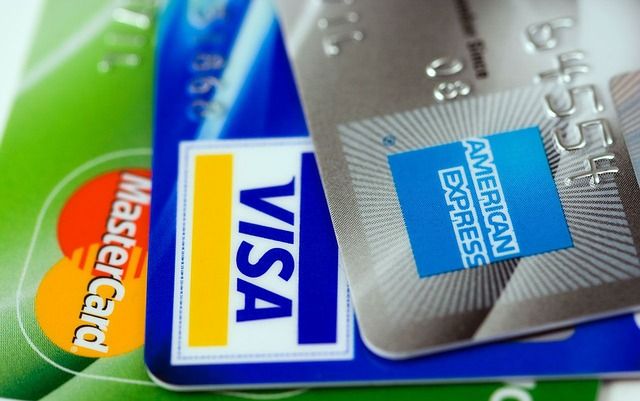
A credit card is a handy tool for your small business, but you first need to study the options and choose the card that best fits your needs. It provides a convenient way to establish credit, manage cash flow and keep your business and personal expenses separate.

According to the Small Business Administration, there are numerous possibilities, including teaser rate cards (among the most popular), low interest rate cards, rewards cards, airline or frequent flyer cards, unsecured business credit cards, secured cards and prepaid cards.

Start by analyzing how you spend money in your business. Do you want to pay the charges monthly or over time? What grace period does the card you are considering allow?

Expect a credit check when you apply for a business credit card. In most cases, a personal check will be conducted as well as your business credit. Find out if you will be personally liable for outstanding debt on the card. That may depend on whether the card carrier offers commercial liability, joint or several liability.

Don’t begin using your business credit card without being firmly conversant with the card’s interest rate, payment terms and whether it requires fees. Do the benefits offered outweigh the fees? Fees may be charged for cash advances, late payments and foreign transactions. If you expect to carry a balance, what is the annual percentage rate? Create an action plan for using the card, including payoff limits on the balance.

If you will use the credit card for company travel, you might look into a card that offers airline-mile rewards. Look at other awards a card offers, such as internet and phone services, shipping services, gift cards and discounts to selected retailers or simple cash rebates. If your business spends consistently in particular categories, compare cards and get the most benefit for the way you spend company dollars. If you tend to carry a large balance, you could pay more in interest than you earn in perks.

Filed Under: Business, Credit Cards, Finance, Small Business Startups

  • « Go to Previous Page
  • Page 1
  • Page 2
  • Page 3
  • Page 4
  • Interim pages omitted …
  • Page 28
  • Go to Next Page »

Primary Sidebar

Personal Finance Articles

  • Make Saving A Priority
  • Review Your Home-Insurance Risks
  • Lowest Air Fare? Try August 28
  • Hackers Targeting Bitcoins
  • Keep Your Emergency Fund Intact

Save At Walmart

Search

Personal Finance Education

Investing Education from Morningstar.

As Seen On Intuit

Intuit.com has ranked Coolchecks.net #4 out of 10 of the best blogs to help you save money. We hope to help you become more aware of your own financial situation and strive to improve it.

Featured On Mint.com – July 2014

Mint Interview

Categories

  • Banking
    • Check Writing
    • Checking Accounts
    • Credit Cards
    • EMV Cards
    • Fees
    • Fraud
    • History
    • Student Loans
  • Best Of The Web
  • Budgets
    • Emergency Fund
    • Grocery Shopping
    • Saving Money
    • Spending Habits
  • Business
    • 3D Printing
    • Bankruptcy
    • Business Advertising
    • Business Development
    • Business Plans
    • Corportate Lessons
    • Data Mining
    • Legal Issues
    • Merchants
    • SEC
    • Security
    • Small Business Startups
  • Consumer Alerts
  • Cryptocurrency
  • Cutting Costs
  • Employment
    • best places to work
    • Careers
    • Interviews
    • Job Search
    • Top CEOs
    • Wages
  • Entrepreneurs
    • Attitudes
    • Entrepreneur Interviews
  • Featured
  • Finance
    • Automobiles
    • Credit Ratings
    • Education
    • Financial Planners
    • Foreclosures
    • Homes
    • Insurance
    • Investing
    • Mortgages
    • Personal Finance
    • Renting
    • Term Deposits
    • Travel
    • Work
  • Fraud
  • Government
  • Holidays
    • Christmas
    • Halloween
  • Internet
    • Bitcoin
    • Blogging Tips
    • Blogs, RSS and Podcasting
    • Databases
    • Facebook
    • Influence
    • marketing
    • Twitter
    • Website Reviews
    • WordPress
      • Key Words
  • Investing Basics
    • Hedge Funds
    • Investing
    • Mutual Funds
  • Life
    • Aging
    • Just For Fun
      • Punahou Alumni Corner
    • Millennials
    • Personal Health
  • Money Making Ideas
    • Affiliate Programs
    • Craigslist
    • Ebay
  • Money Management
    • Bankruptcies
    • Building Wealth
    • Child Care Costs
    • Christmas Shopping
    • Credit
      • Free Credit Report
    • Debit Cards
    • Debt
    • Debt Reduction
    • Health Insurance
    • Income
    • Inheritance
    • Interest Rates
    • Loans
    • Mortgages
    • New Years Resolutions
    • Retirement
    • Shopping Tips
    • Tax Strategies
    • Your Stories
  • Retirement
  • Self Improvement
    • Time Management
    • Work Habits
  • Shopping
    • Coupons
    • Online Shopping
  • Social Security
  • Tax Tips
  • Taxes
  • Technology
  • Trade
  • Uncategorized
  • Wealth

Best of Personal Finance Blogs

Best of BuyerZone Business Finance Blog Recipient

Personal Finance Sites We Recommend

Get personal finance advice from the people behind the top money blogs, including Wise Bread, The Simple Dollar, Mint and Nerd Wallet.

Copyright © 2026 ·Metro Pro · Genesis Framework by StudioPress · WordPress · Log in