• Skip to primary navigation
  • Skip to main content
  • Skip to primary sidebar
  • Money Management
    • Debt Reduction
    • Credit
    • Mortgages
    • Mutual Funds
    • Tax Strategies
    • Loans
  • Budgets
    • Saving Money
    • Income
  • Banking
    • Checking Accounts
    • Check Writing
    • Fraud
    • History
  • Entrepreneurs
    • Entrepreneur Interviews
    • Money Making Ideas
    • 3D Printing
  • Resources
  • Retirement
  • About
    • Privacy Policy

Personal Finance Blog

Tips And Stories To Help You With Managing Money

  • Privacy Policy
  • Saving Money In 2018
You are here: Home / Archives for Finance

Finance

Has Your Identity Has Been Stolen

October 29, 2017 By Twila Van Leer

Identity Theft
Learn how you can know that you are safe from identity theft.
With data breaches at large retailers and the Equifax credit rating company, it’s easy to feel jittery about how secure your personal finances may be. The highly publicized instances gave hackers access to the personal data of millions of Americans. So how do you know if your information is being used without your knowledge?

Unfortunately, it may be years before it is apparent that your ID is compromised. And the longer it goes unnoticed, the longer the crooks have to misuse your name, Social Security Number and other personal information for their own purposes.

Look for these signs:

If you get strange bills or statements that you can’t immediately identify, it may be the first signs of identity theft. Always open your mail even if it looks unimportant. An unfamiliar service provider or credit account may be your first clue. What you first think is junk mail may be a bill for services or goods you have no knowledge of.

On the other hand, be aware if there are irregularities in the bills you ordinarily receive. It may be that a criminal has changed the address on the account to help him or her to establish other accounts. If your expected regular mail stops, it is a sign that a change of address request has been filed to facilitate the crook’s use of your identity.

Odd charges on credit card or banking accounts are a signal that your information is being used by someone else. Credit card companies try to alert customers to unusual activity, but they can’t catch all of it. The fraud may start out small as the thief tests to see if the card is active. Some of the scammers keep their charges small to prolong the time before they are discovered and steps taken to halt them.

If you are denied money by an ATM, turned down for a loan or advised that your health insurance is being denied because you are over the annual limit, take immediate steps. Even if you think you are talking with someone who has a legitimate concern in your financial matters, never share a PIN by phone. Caller ID numbers can be spoofed.

If creditors and collection agencies start calling about late or missed payments, don’t shrug the calls off as errors. Get on the chase at once.

If you were expecting a tax refund or if the IRS notifies you that you filed two tax returns, that is a red flag. The Department of Justice knows that thieves have stolen billions of dollars from the U.S. Treasury by filing bogus tax returns using stolen identities. Verify that a caller asking questions about your taxes is a bona fide representative of the IRS before divulging any information.
You can get a free copy of your credit report if you are suspicious of activities surrounding your finances. If the report shows accounts with which you are not familiar, it’s time to start down the long and winding road to resolution of the theft of your identity. You should routinely check your credit report even if you have no reason to think your information is being used by someone else.
Filed Under: Credit, Finance, Fraud, Personal Finance

Equifax Fallout Begins

October 26, 2017 By Twila Van Leer

Equifax
Equifax reported that 143 million Americans had their information, including Social Security numbers and other personal data, exposed in the hack.
People who froze their credit to minimize financial damage in the wake of the hack of credit reporter Equifax are now realizing what that means.

The problem is massive. Equifax reported that 143 million Americans had their information, including Social Security numbers and other personal data, exposed in the hack. The company’s CEO resigned in the wake of the credit disaster and Congress is discussing how another such disaster might be avoided.

The aftermath is becoming apparent as people who reacted by freezing their credit try to buy things such as the new iPhone that is in high demand or other big-ticket items.

It is possible to unfreeze your credit if you are anticipating a large purchase and then freezing it again afterward. But that may take time and your credit is vulnerable during the interim.

Experts advise that you let the major credit bureau know several hours or at most several days before you apply for financing. The three bureaus are TransUnion, Experian and Equifax. You will likely be charged $3 to $10 for each action at each of the three bureaus.

Sellers, such as Apple and other wireless carriers, often asked for a credit report before they approve the sale of a new phone. The costs and the hassle of unfreezing and refreezing your credit information may make the acquisition of a new super-phone – or any other costly item – more trouble than it is worth to the consumer.

Citizens Financial Group of Providence, R.I., which runs the Apple financing program, has already announced that it will not new or existing customers who have frozen their credit, at least temporarily. Sprint, Verizon, 4:58 PM-Mobile and AT&T also run credit checks with the three credit agencies. Their policies vary, but it is one of the indications that the Equifax hack will affect the buying practices of many Americans.

Filed Under: Credit, Credit Ratings, Fraud, Security

ATM Fees at Record Highs

October 24, 2017 By Twila Van Leer

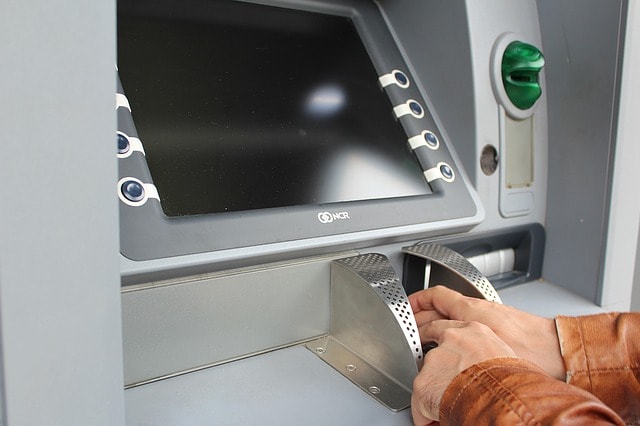
ATM Fees
You can avoid fees by being proactive about your money.
Makes you wonder, doesn’t it? Why should you pay a fee to access your own money. But the fact is that fees for withdrawing money from an out-of-network ATM are now 55 percent higher than they were 10 years ago – and rising.

The average cost now is a record $4.69 per transaction, according to Bankrate.com, which did a survey to reach its conclusions. And the fees are likely to continue rising, Bankrate officials say, as fewer people use cash and make fewer withdrawals from the automatic tellers.

Banks that have ATMs on the premises are charging more to non-customers who use the machines to make up the difference.

The five cities that have the highest charges for out-of-network ATM transactions are : Pittsburgh, $5.19; New York, $5.14; Washington D.C. and Cleveland, tied at $5.11; and Atlanta, $5.05.

Rises in overdraft fees also are costing consumers more to handle their money. The average fee hit a new high this year of $33.38 per bounce. Philadelphians pay the heftiest fee at $35.30, while in San Francisco, the fee is $31.44 on average.

You can avoid fees by being proactive about your money, Plan ahead if you need to make an ATM withdrawal and avoid machines that are not in your bank’s network. Be aware of where you can make free withdrawals or get change when you make purchases with your card. Use your phone to find out where the ATMs in your network are available. Make a habit of carrying a small amount of cash. Find a bank that doesn’t charge ATM fees.

Avoid overdrafts by keeping close tabs on your balances. It’s as easy as making a smartphone check.

Getting signed up for email or text alerts that let you know you are approaching the level where your balance is chancy is smart. Fees are a waste of your money, so avoid them every chance you get.

Filed Under: Fees, Money Management, Personal Finance

Look Before You Jump Into A Car Lease

October 19, 2017 By Twila Van Leer

Car Lease
Many leasing companies base their low monthly payments on a low mileage limit.
Leasing a car rather than purchasing one outright may be a cost-effective choice, but there are some fine details that might trip you up. Be sure you read the fine print before signing.

Consumer advice experts at Edmunds.com offer these tips to help you make an informed choice:

You may be asked to pay a hefty fee up front to qualify for the comparatively low monthly payments. Repaying may become a problem if anything should happen, such as theft of the vehicle or a wreck. The insurance company would reimburse the leasing company for the value of the car, but the money paid up front likely would not be reimbursed to the lessee.

The advice is not to pay more than $2,000 in advance, and less if possible. That would increase the monthly payment, but you’d have the option of putting the “pre-lease” amount into 1:18 AMan interest-bearing account. Or use what you have to help make the monthly payments. If something happens to the vehicle during the lease term, you won’t lose a chunk of money to the dealer.

“Gap insurance” is a very good idea. It covers you if the vehicle is stolen or totaled and your regular insurance doesn’t cover the full amount of its value under the lease terms. Like all vehicles, a leased car loses value as soon as it leaves the lot. Ask before the lease is finalized if the contract includes gap insurance. If not, you may want to keep looking for a lease plan that does.

Underestimating the miles you have driven in a leased vehicle could cost you. Many leasing companies base their low monthly payments on a low mileage limit. When you turn in the vehicle, the overages on mileage could add significantly to the cost. Ask for a higher limit to begin with if you are pretty sure you’ll run over the mileage limit. That could result in a higher monthly payment. Balance it out before signing.

If you fail to maintain the vehicle, you could pay more for wear and tear when you turn it in. A rule of thumb: If a scratch or ding is larger than the size of a driver’s license or business card, it is likely to fall into the category of “normal use.” Be aware of the leasing company’s standards before you get into the deal. If there is significant damage, you can expect to pay in full.

Leasing for a long time may entail additional costs. After the car passes beyond its warranty, usually three years, any costs for maintenance, such as brakes and tires, becomes your responsibility. You are then putting money into a vehicle you don’t own. You pay those costs over and above the lease cost.

Filed Under: Finance, Insurance

What the Founding Fathers Said About Budgeting

October 8, 2017 By Twila Van Leer

Founding Fathers
“In this world, nothing can be said to be certain, except death and taxes.”
This time of year, Americans look back to the beginnings of the country and honor those who sacrificed to make it happen. The Founding Fathers not only set the scene for a new nation, they also had cogent things to say about money and personal finances.
Here are a few of their bits of advice:

John Adams: “All the perplexities, confusion and distress in America arise not from the defects of the Constitution, not from want of honor or virtue, so much as from downright ignorance of the nature of coin, credit and circulation.” (Letter to Thomas Jefferson, 1787.)

Thomas Jefferson: “But I know nothing more important to inculcate into the minds of young people than the wisdom, the honor and the blessed comfort of living within their income, to calculate in good time how much less pain will cost them the plainest style of living which keeps them out of debt, than after a few years of splendor above their income, to have their property taken away for debt when they have a family growing up to maintain and provide for.” (Letter to Martha Jefferson Randolph, 1808.)

Benjamin Franklin: “It is a singular advantage of taxes on articles of consumption that they contain in their own nature a security against excess. They prescribe their own limit, which cannot be exceeded without defeating the end purpose, that is, an extension of the revenue.” (Federalist No. 21)

“In this world, nothing can be said to be certain, except death and taxes.” (Letter to French scientist Jean-Baptiste Leroy, 1798.)

“A penny saved is a penny earned.” (Poor Richard’s Almanac.)

Alexander Hamilton (as described in the currently-popular musical): “The ten-dollar founding father without a father got a lot farther by working a lot harder, by being a lot smarter, by being a self-starter. By fourteen, they placed him in charge of a trading charter.”

Abigail Adams: “Learning is not attained by chance, it must be sought for with ardor and attended to with diligence” (Letter to her son, John Quincy, 1780.)

George Washington: He was a man of few words, but a stickler for keeping track of his personal finances. Appointed commander-in-chief of the Continental Army in 1775, he did not accept a salary, but asked only for reimbursement of his expenses after the war. He then recorded everything from brooms to mutton to payment for his soldiers, meticulously keeping track of every penny in expenditures. He never went into debt, as some of his contemporaries did and died a rich man.

Marquis de Lafayette: “I read, I study, I examine, I listen, I think and out of all that I try to form an idea into which I put as much common sense as I can.” (Letter to his father, 1776) Though not officially a “founding father,” he was a trusted confidant of Washington and played a pivotal role in the colonists’ struggle for independence. He was the point man for the colonists’ relations with France and showed a great example of thrift and carefully money management.

Filed Under: History, Money Management, Personal Finance

  • « Go to Previous Page
  • Page 1
  • Interim pages omitted …
  • Page 10
  • Page 11
  • Page 12
  • Page 13
  • Page 14
  • Interim pages omitted …
  • Page 28
  • Go to Next Page »

Primary Sidebar

Personal Finance Articles

  • Make Saving A Priority
  • Review Your Home-Insurance Risks
  • Lowest Air Fare? Try August 28
  • Hackers Targeting Bitcoins
  • Keep Your Emergency Fund Intact

Save At Walmart

Search

Personal Finance Education

Investing Education from Morningstar.

As Seen On Intuit

Intuit.com has ranked Coolchecks.net #4 out of 10 of the best blogs to help you save money. We hope to help you become more aware of your own financial situation and strive to improve it.

Featured On Mint.com – July 2014

Mint Interview

Categories

  • Banking
    • Check Writing
    • Checking Accounts
    • Credit Cards
    • EMV Cards
    • Fees
    • Fraud
    • History
    • Student Loans
  • Best Of The Web
  • Budgets
    • Emergency Fund
    • Grocery Shopping
    • Saving Money
    • Spending Habits
  • Business
    • 3D Printing
    • Bankruptcy
    • Business Advertising
    • Business Development
    • Business Plans
    • Corportate Lessons
    • Data Mining
    • Legal Issues
    • Merchants
    • SEC
    • Security
    • Small Business Startups
  • Consumer Alerts
  • Cryptocurrency
  • Cutting Costs
  • Employment
    • best places to work
    • Careers
    • Interviews
    • Job Search
    • Top CEOs
    • Wages
  • Entrepreneurs
    • Attitudes
    • Entrepreneur Interviews
  • Featured
  • Finance
    • Automobiles
    • Credit Ratings
    • Education
    • Financial Planners
    • Foreclosures
    • Homes
    • Insurance
    • Investing
    • Mortgages
    • Personal Finance
    • Renting
    • Term Deposits
    • Travel
    • Work
  • Fraud
  • Government
  • Holidays
    • Christmas
    • Halloween
  • Internet
    • Bitcoin
    • Blogging Tips
    • Blogs, RSS and Podcasting
    • Databases
    • Facebook
    • Influence
    • marketing
    • Twitter
    • Website Reviews
    • WordPress
      • Key Words
  • Investing Basics
    • Hedge Funds
    • Investing
    • Mutual Funds
  • Life
    • Aging
    • Just For Fun
      • Punahou Alumni Corner
    • Millennials
    • Personal Health
  • Money Making Ideas
    • Affiliate Programs
    • Craigslist
    • Ebay
  • Money Management
    • Bankruptcies
    • Building Wealth
    • Child Care Costs
    • Christmas Shopping
    • Credit
      • Free Credit Report
    • Debit Cards
    • Debt
    • Debt Reduction
    • Health Insurance
    • Income
    • Inheritance
    • Interest Rates
    • Loans
    • Mortgages
    • New Years Resolutions
    • Retirement
    • Shopping Tips
    • Tax Strategies
    • Your Stories
  • Retirement
  • Self Improvement
    • Time Management
    • Work Habits
  • Shopping
    • Coupons
    • Online Shopping
  • Social Security
  • Tax Tips
  • Taxes
  • Technology
  • Trade
  • Uncategorized
  • Wealth

Best of Personal Finance Blogs

Best of BuyerZone Business Finance Blog Recipient

Personal Finance Sites We Recommend

Get personal finance advice from the people behind the top money blogs, including Wise Bread, The Simple Dollar, Mint and Nerd Wallet.

Copyright © 2026 ·Metro Pro · Genesis Framework by StudioPress · WordPress · Log in