• Skip to primary navigation
  • Skip to main content
  • Skip to primary sidebar
  • Money Management
    • Debt Reduction
    • Credit
    • Mortgages
    • Mutual Funds
    • Tax Strategies
    • Loans
  • Budgets
    • Saving Money
    • Income
  • Banking
    • Checking Accounts
    • Check Writing
    • Fraud
    • History
  • Entrepreneurs
    • Entrepreneur Interviews
    • Money Making Ideas
    • 3D Printing
  • Resources
  • Retirement
  • About
    • Privacy Policy

Personal Finance Blog

Tips And Stories To Help You With Managing Money

  • Privacy Policy
  • Saving Money In 2018
You are here: Home / Archives for Money Management / Credit

Credit

Do You Really Need A Credit Card?

August 30, 2014 By Sherry Tingley

credit-cardsSome folks love them. Some folks hate them. Either way, credit cards have become an almost universal financial fact of modern living in America.

Having one is probably a good idea, says Christopher Viale, board chairman of the Association of Independent Consumer Credit Counseling Agencies. They’re important in building a good credit score and many card holders judiciously cash in on the related perks – rewards programs, points, cash back or miles, to make their money go farther.

However, Viale says, there may be a downside to using your credit card as first choice in making payments. They constitute a serious temptation to overspend, which could result in excessive debt and damage to your credit score.

Experts list these warning signs that your credit is controlling you instead of the other way round:

No. 1: Pay your credit card bill on time each month. Missing payments can create chaos. Your VantageScore could drop 70 to 90 points for the first instance of missed payment. If you are able to make only minimum payments and are struggling to do that, take it as a warning sign. Stop using the card and pay with cash. Make a plan for getting the card back on an even keel. If you have multiple cards, concentrate on the one with the highest interest, while continuing to make minimum payments on the other cards. Resist the temptation to spend just to benefit from special offers or discounts from retailers. What you stand to lose is more than what you stand to gain. At least once a year, write down your expenditures and scrutinize them. If an honest analysis shows you are overspending, adjust.

No. 2: If you are using a card that carries interest rates of 18 to 20 percent, consider that a red flag. It’s important to your credit scores and competitive loans to show some smart spending habits. Cards with lower interest rates are available. If you apply for a card with lower interest and are turned down, you can be assured your credit use is out of balance and needs attention. Brand loyalty at this point is counter productive. Don’t stick with a card that doesn’t offer you the rates and rewards you deserve. Too many inquiries into credit card offerings can hurt your credit score. Don’t apply for a new card until you’ve done your homework. Closing a credit card account also can have negative connotations, so consider if it is worth keeping your current card as part of your overall assessment.

No. 3: If you have been beguiled by the lure of attractive sign-on bonuses and lucrative rewards offerings and now have a wallet full of cards, it’s time to assess and start trimming. The more credit you have in your pocket, the more likely you are to overspend. And you may find yourself confused about which payments you have made and when. Not worth the prospect of missing a payment. Viale suggests two cards that have good rewards points.

No. 4: Luxury credit cards are designed to attract attention. Flashy colors and materials heavier than plastic seem (only seem) to lend some extra legitimacy to your card. Beware such ego strokes. If you see them as status symbols, take a closer look. Luxury cards may carry high annual fees. They may have very high or even unlimited credit limits, a clear invitation to overspend, a disaster for average card holders. Be certain your credit limit is manageable. If you have one of these “status cards” in your array, consider closing it out. Look for a more reasonable card in the same issuer’s selection. Closing out a card entirely could affect your credit score, but there are times when that is the best thing to do. A temporary dip in the score is preferable to keeping a high-fee card that tempts you to overspend.


Filed Under: Credit Tagged With: money management

Correcting Your Credit Report

May 31, 2014 By Twila Van Leer

Errors can keep you from qualifying for a home purchase.
What used to be “a brick wall” consumers crashed into when they tried to correct information on their credit reports is falling, Money Magazine reports. Errors on your credit report often influence an individual’s ability to buy a home or make other major financial decisions.

The Consumer Financial Protection Bureau has pushed for easier ways to make corrections in the reports. Three major credit reporting companies, Equifax, Experian and TransUnion, have always been convinced that they need to allow customers to dispute mistakes but now they are making that process streamlined by offering a way for consumers to do it online and in greater detail. The companies have changed their complaint systems in response to the CFPB pressure, the magazine states.

Under the new processes, the reporting agencies are obligated to forward materials provided by the customer to the creditor. If the alleged errors are confirmed, the creditor is obligated to fix the errors with all three of the reporting agencies. In 2011, the agencies received about 8 million complaints about errors in their reports.

To submit disputes online use these addresses:

Trans Union
Equifax
Experian
To receive a free report once a year go to:
Annual Credit Report

You must have the number of your credit report to access these sites.

To expedite the correction of mistakes, contact both the credit bureau and the organization that provided the information to the bureau. Both are obliged under terms of the Fair Credit Reporting Act to correct inaccurate or incomplete information in your report.

Usually after you have reported specific mistakes in your credit report, the credit bureau must investigate within 30 days, unless they consider your complaint frivolous. Include copies of documents that support your complaint, not the originals. It might be well to include a copy of the erroneous report with the information you are contesting clearly identified. State your complaint and add material to support your position. Request that the erroneous material be deleted or corrected. Be sure your complete name and address are included. Make copies of the correspondence and send the letter by certified mail.

Notify the creditor who has received the erroneous report that you are disputing the information and are in touch with the credit bureau. If the provider chooses to correspond with the bureau, he should include a notice of your dispute. Ask for copies of their correspondence. The process takes 30 to 90 days.

Check your credit reports on a regular basis so that you can keep your buying power strong.

Filed Under: Free Credit Report Tagged With: credit report, money management

Which Debts Should You Pay Off First?

May 21, 2014 By Kevin Mercadante

Managing Debt, Debt ManagementThere is all kinds of advice floating around as to which debts you should pay off first. Most advisors seem to have a preference for paying off credit cards or mortgages ahead of other types of debt.

There may be no right and wrong when it comes to paying off debt – after all, paying off just about any debt is a step in the right direction. But some debts are more threatening than others, so we’re going to look at paying off debts in the order of most risky to least risky. When you look at it that way, the whole order changes.

1. Car loans

I am a strong advocate of paying off car loans ahead of any other type of debt. There are two primary reasons for this:

High monthly payment to balance. If you owe $10,000 on a credit card, your monthly payment is probably around $200. On a student loan debt, it’s probably a little bit over $100. With a car loan, the monthly payment could easily be $400. That is a big, fat monthly payment, and getting rid of it as soon as possible will do wonders to improve your cash flow, and make it easier for you to concentrate on paying off other debts. Typically, paying off a car loan gives you the greatest bang for the buck when it comes to improving your budget. This is why it needs to be the first loan that you pay off.

The outcome if you are unable to pay this debt. This is an issue most people don’t think much about, but you need to. Typically, a car is an asset that you use in the production of income. Whether you use your car for business purposes or to commute to your job, you need your car in order to earn a living. If you lost your job and could no longer afford to make the payments on your car, the car would be repossessed and you would be unable to get a new job for lack of a way to get there. For this reason alone, paying off your car loan should get top priority.

2. Business loans

There are a large number of people who are self-employed in small businesses and have certain assets that are required in order for them to generate income. Paying off debts associated with these assets is a close second to paying off car loans.

The case here is similar to giving a priority to paying off your car loan. An asset used in the production of income should be owned free and clear, that way if you hit on hard times and couldn’t afford to make your debt payments, you will still be able to earn a living.

3. Other secured loans

If you have a secured loan that is collateralized by an important asset, you should pay it off as soon as possible. This may not be a true priority if the loan is secured by furniture or a recreational vehicle, since they are not necessities. But if the loan is attached to something you can’t live without, it should be given a priority. This is because normal functioning in your household will not be possible in the event that a major asset is repossessed.

4. Credit cards – smallest to largest

Most financial advisors make paying off credit cards the number one priority. But in the grand scheme of things, credit cards are more of an annoyance than anything else. If you fall behind, the creditors can harass you and threaten you with of all kinds cataclysms, but they won’t be able to remove important major assets from your life. You’ll still be able to get to work every day, to heat your house and to do your laundry, you’ll just have to get used to living under a constant cloud of threats.

The two most compelling reasons to payoff credit cards are:

  1. High interest rates, and
  2. The rates are variable

These are legitimate concerns, but in the current low interest rate environment, you have time to payoff the more dangerous loans listed above before taking on any of your credit cards. And if you do, you’ll have more cash to payoff your credit cards.

5. Student loans

These days it seems that nearly anyone who has a student loan wants to pay it off. That makes sense, given the long-term nature of the debt. But at the end of the day, student loan debts are simply not that threatening. Monthly payments are low compared to the outstanding balance, and interest rates are far more well behaved than your credit cards. In short, student loans aren’t going anywhere so you have plenty of time to take care of other debts first.

Given the fact that student loan debts are typically large balances, you’ll probably need to payoff other debts before taking on these. In order to make substantial progress in paying off a large balance, you’ll have to clear the decks of other obligations to free up your cash flow to make the larger payments. Which is another compelling reason to pay off other debts ahead of your student loans.

6. Your Mortgage

Next to credit cards, paying off the mortgage is probably the most recommended course of action. But there are a whole lot of reasons to hold this debt until last:

  • The loan is secured by your home, which probably has enough equity that you can sell it to payoff the loan, if push came to shove.
  • If you have negative equity in the house, the lender would be in no hurry to foreclose on you anyway, giving you time to work out some sort of settlement.
  • Mortgages typically carry lower rates of interest than other types of debt.
  • You’re probably getting some kind of income tax break on mortgage interest.
  • If it’s a fixed rate mortgage, your payment cannot increase.
  • A mortgage is long-term debt, which means you have close to forever to pay it off; in the meantime, you have the benefit of living in the house.

Perhaps the biggest reason of all to put mortgages at the back of the payoff line is their sheer size. Let’s say that you are three years into a 30 year mortgage, and still owe $250,000 on it. Even if you concentrate all of your efforts on paying off the mortgage, it will probably still taking years to do it.

And if it will take years, you’ll need to have all of your other debts paid off first, that way you’ll have the money that you need to make a serious effort to make your mortgage go away.

Filed Under: Credit, Debt Tagged With: money management

Mortgage Rates Are Down

May 12, 2014 By Twila Van Leer

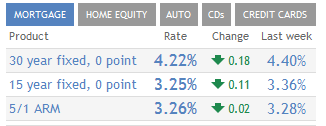
mortgage-ratesAnyone who has ever ventured into the world of home buying has learned something about the interest rates that are an integral part of the deal. They yo-yo up and down almost daily. In early May, they hit the lowest level they have been for awhile, at 4.21 percent for a 30-year fixed rate house loan. That was a decline from 4.29 percent the previous week. For a 15-year loan the rate 3.32 percent, a drop from the 3.38 percent of the previous week. The 15-year option is popular for those refinancing existing mortgages.

These rates were the lowest since last November.

The question for most lay folk not privy to the ups and downs of the housing market, the question is: What causes the swings? Why do they rise and fall so consistently and so fast?

Believe it or not, such things as global unrest and a weak U.S. economic recovery from the recent recession are major factors. What happens in Africa and Russia and China sends shock waves into the American economy and affects transactions at the most basic levels. The old saying that it’s a small world is especially true when it comes to the fluctuations in the American housing market.

Negative economic effects in other places on the globe contribute to the ongoing bid for Treasury debt, which drives yields down, with a subsequent dip in mortgage rates as well, financial gurus say. That’s good news for those in the market for a home. The practical effect is a lower house payment. For instance, on a $200,000 home with a 30-year fixed rate mortgage, the monthly payment would be $979 a month at rate of 4.21 percent. At the norm of 6 percent, the home buyer could expect to shell out about $1,200 per month. Though the fractional increases or decreases in the interest rate seem negligible, they make a big difference when you’re making a long-term loan.

There are, of course, other factors at play. Stricter lending standards have to some extent limited the impact of the lower interest rates, according to data compiled by the National Association of Realtors. A high credit score can even the effect. But for those with lower scores, credit is still very tight, the association reports. Many of those who would like to jump into the housing market can’t find financing, despite the attraction of a lower interest rate.

The best solution for those whose credit is marginal is to work on improving the credit score to make themselves more appealing to those who made loan decisions.

Filed Under: Credit, Mortgages Tagged With: Credit Scores, mortgage loans, Mortgages

Take a Good Look Before Refinancing Your Mortgage

January 31, 2014 By Sherry Tingley

Thinking about refinancing your mortgage to pay off credit card debt? Don’t jump too fast. There are factors that make such a financial leap a very bad idea.

credit-card-trapOn the face of it, it seems a good idea to swap “bad” credit card debt for an extension of your mortgage, which is generally viewed as “good” debt. Among the arguments people use when making such a decision is the fact that mortgage interest is tax-deductible, while credit card interest — usually much higher, climbing up to 30 percent in some instances — is not. In fact, long experience shows that making such a change is seldom a wise step.

Trading Unsecured Debt For Secured Debt

The most compelling reason you should not exchange mortgage debt for credit card debt is that you are converting unsecured debt (the credit card balances) for secured debt. A credit card company doesn’t ask for security, only your word that you will pay the debt. If you fail to pay, you could conceivably be sued, although most credit card companies don’t go to that extreme unless your balances are very large. The company could put a lien on your home, but typically it could not force you to sell.

With a mortgage, your house becomes collateral for the loan. The lender has a security interest in your home.

Loan Costs

Refinancing is not free. You’ll likely have to pay for an appraisal and possibly a home inspection, as well as loan origination fees and closing costs. The cost will depend on your credit score, your mortgage lender and the amount of the mortgage. In 2008, the Bankrate Survey determined that closing costs to refinance a $200,000 home amounted to an average $3,118. Those costs may to a degree offset the costs of high interest rates on credit cards.

Longer Time To Repay

Refinancing extends the time you will be obligated to discharge a mortgage (and the credit card debt you have added to the mortgage.) In reality, you are only extending the life of the credit card debt to the mortgage. That may mean it stays with you for the usual 15- to 30-year term of the mortgage. It is possible you will end up paying more interest than if you chose to plug along and pay off the credit card debt as you are able.

Credit Score Damage

A refinance may damage your credit score. It will trigger a new inquiry on your credit report by shortening the average or y our accounts. The companies that do credit reports will note the higher mortgage and be nervous, particularly if the level or your income is marginal. The impact may be short-term, especially as large-balance credit card debt will no longer show up in the reports, but there will be some impact.

Difficulties Selling Your Home

Selling your home may become more problematic if there are additional mortgages. To sell, you must pay off the balance of the mortgage burdens, and most likely pay a real estate commission of up to 6 percent. Banks typically won’t let you refinance a home unless the anticipated mortgage amount is below 80 percent of the home’s value. And be aware that home values tend to respond to financial vagaries and can fall fast. Having to sell under pressure because of such situations as a new job location might force you into missing the optimum return for your property.

Little Changes Made In Decreasing New Debt

Too many people who use a mortgage refinance to resolve credit card issues don’t overhaul their budgets and change their spending habits to avoid racking up more debt. They pile debt upon debt at an increased risk of losing their home because the mortgage payment is now higher and there are fewer options available. A genuine commitment to avoiding credit card debt is essential to getting any benefit from a refinance.

Solutions

Better alternatives for dealing with high-interest debt include debt settlement, debt consolidation and  even bankruptcy. Putting your home at risk should be a last resort.

Related articles across the web

  • Debt Management: Save or Pay Down Debt

Filed Under: Credit, Finance, Money Management, Mortgages Tagged With: Debt, Mortgages

  • « Go to Previous Page
  • Page 1
  • Page 2
  • Page 3
  • Page 4
  • Page 5
  • Page 6
  • Go to Next Page »

Primary Sidebar

Personal Finance Articles

  • Make Saving A Priority
  • Review Your Home-Insurance Risks
  • Lowest Air Fare? Try August 28
  • Hackers Targeting Bitcoins
  • Keep Your Emergency Fund Intact

Save At Walmart

Search

Personal Finance Education

Investing Education from Morningstar.

As Seen On Intuit

Intuit.com has ranked Coolchecks.net #4 out of 10 of the best blogs to help you save money. We hope to help you become more aware of your own financial situation and strive to improve it.

Featured On Mint.com – July 2014

Mint Interview

Categories

  • Banking
    • Check Writing
    • Checking Accounts
    • Credit Cards
    • EMV Cards
    • Fees
    • Fraud
    • History
    • Student Loans
  • Best Of The Web
  • Budgets
    • Emergency Fund
    • Grocery Shopping
    • Saving Money
    • Spending Habits
  • Business
    • 3D Printing
    • Bankruptcy
    • Business Advertising
    • Business Development
    • Business Plans
    • Corportate Lessons
    • Data Mining
    • Legal Issues
    • Merchants
    • SEC
    • Security
    • Small Business Startups
  • Consumer Alerts
  • Cryptocurrency
  • Cutting Costs
  • Employment
    • best places to work
    • Careers
    • Interviews
    • Job Search
    • Top CEOs
    • Wages
  • Entrepreneurs
    • Attitudes
    • Entrepreneur Interviews
  • Featured
  • Finance
    • Automobiles
    • Credit Ratings
    • Education
    • Financial Planners
    • Foreclosures
    • Homes
    • Insurance
    • Investing
    • Mortgages
    • Personal Finance
    • Renting
    • Term Deposits
    • Travel
    • Work
  • Fraud
  • Government
  • Holidays
    • Christmas
    • Halloween
  • Internet
    • Bitcoin
    • Blogging Tips
    • Blogs, RSS and Podcasting
    • Databases
    • Facebook
    • Influence
    • marketing
    • Twitter
    • Website Reviews
    • WordPress
      • Key Words
  • Investing Basics
    • Hedge Funds
    • Investing
    • Mutual Funds
  • Life
    • Aging
    • Just For Fun
      • Punahou Alumni Corner
    • Millennials
    • Personal Health
  • Money Making Ideas
    • Affiliate Programs
    • Craigslist
    • Ebay
  • Money Management
    • Bankruptcies
    • Building Wealth
    • Child Care Costs
    • Christmas Shopping
    • Credit
      • Free Credit Report
    • Debit Cards
    • Debt
    • Debt Reduction
    • Health Insurance
    • Income
    • Inheritance
    • Interest Rates
    • Loans
    • Mortgages
    • New Years Resolutions
    • Retirement
    • Shopping Tips
    • Tax Strategies
    • Your Stories
  • Retirement
  • Self Improvement
    • Time Management
    • Work Habits
  • Shopping
    • Coupons
    • Online Shopping
  • Social Security
  • Tax Tips
  • Taxes
  • Technology
  • Trade
  • Uncategorized
  • Wealth

Best of Personal Finance Blogs

Best of BuyerZone Business Finance Blog Recipient

Personal Finance Sites We Recommend

Get personal finance advice from the people behind the top money blogs, including Wise Bread, The Simple Dollar, Mint and Nerd Wallet.

Copyright © 2026 ·Metro Pro · Genesis Framework by StudioPress · WordPress · Log in