• Skip to primary navigation
  • Skip to main content
  • Skip to primary sidebar
  • Money Management
    • Debt Reduction
    • Credit
    • Mortgages
    • Mutual Funds
    • Tax Strategies
    • Loans
  • Budgets
    • Saving Money
    • Income
  • Banking
    • Checking Accounts
    • Check Writing
    • Fraud
    • History
  • Entrepreneurs
    • Entrepreneur Interviews
    • Money Making Ideas
    • 3D Printing
  • Resources
  • Retirement
  • About
    • Privacy Policy

Personal Finance Blog

Tips And Stories To Help You With Managing Money

  • Privacy Policy
  • Saving Money In 2018
You are here: Home / Archives for Budgets

Budgets

How Your Spending Data Is Being Used By Banks

January 10, 2014 By Sherry Tingley

Customer spending patterns are analyzed by algorithms.

Targeted advertising has reached a whole new level in the “Card Linked Space.” If you bank with one of the 400 financial institutions (including Bank of America, Regions Bank, PNC Bank,  Fiserv, and Intuit) that have partnered with Cardlytics, then every spending action that you make with a debit card is stored and analyzed to serve you with the perfect advertisement.

Shopping for groceries? Sporting Goods? Boutiques? Accessories? Home Improvement? You will receive ads that target items commonly sold by those types of merchants. If they had item level data on your purchases, you would see adds for individual items, but banks only get the total amount spent and the merchant names.

Understanding how the algorithms could work with your data takes a little imagination. Can your spending patterns lead them to the conclusion that you are a mom driving kids to and from school and after school activities. Can they tell if you are single or married? Can they tell if you are a baby boomer or senior citizen? Using this information can they predict what types of products you might be interested in?

Lynne Laube & Scott Grimes - Creators of Cardlytics - Photo from Forbes Magazine
Lynne Laube & Scott Grimes – Creators of Cardlytics – Photo from Forbes Magazine

Cardlytics, a company that analyzes $500 billion dollars worth of spending – over 11 billion transactions, seems to be able to accomplish this. They have been accurate enough that hedge funds call and ask to buy their data to predicts increases or decreases in sales. In fact, Cardlytics has patented (U.S. Patent No. 8,595,065) the spending algorithms calling them – Cardlytics Offer Placement System (OPS).

Is it all an invasion of privacy or is there some good to be found?

According to a recent article “Reading Your Financial Footprint,” in Forbes Magazine (Dec. 16, 2013), customers have saved $17,000,000. Sales generated were a staggering $700,000,000. Depending on how you interpret those results, it seems like the whole system actually saves you money.

Interesting to note is that the people that started Cardlytics, Lynne Laube and Scott Grimes had significant experience with the banking industry. Lynne Laube was the Vice President and COO of Capital One and Scott Grimes was their Senior Vice President and general manager. Both with finance, business and marketing backgrounds these two entrepreneurs look young enough to be included in the millionaires under 40 club.

For consumers, we are not likely to see this type of advertising go away. In fact, it will probably increase more as even more sophisticated algorithms are developed. The upside to consumers is not only saving money on products they would be purchasing anyway, but saving them time hunting for bargains, loyalty cards or bulk purchasing deals. Marketing certainly seems to be at the top of it’s game in 2014.


Related articles across the web

  • Forbes Highlights Cardlytics’ Growth and Future of Card-Linked Offers
  • The Revolutionary Way Marketers Read Your Financial Footprints
  • 5 Tools to Target Customers Based on Past Purchase Behavior

Filed Under: Banking, Saving Money Tagged With: banking, credit cards, Saving Money

10 Tips To Saving Money In 2014

January 9, 2014 By Sherry Tingley

saving-plansThis is the time of year when many people make an effort to get a handle on their budget. People are turning their thoughts to self-improvement and personal finance is on their minds.

Generally speaking the ability to save money monthly depends on what you do everyday. Do you ask yourself each day if you are adding or subtracting to your net worth?

Companies like Wallet.ai  are developing algorithms that will help you answer these questions and send you a notification when you are getting off the savings path. They will analyze  your spending patterns and then send you text messages suggesting ways you can cut back. Someday we may be turning over our financial control to a robot.

Until that day comes, people still need to rely on good common sense while doing their financial planning. Below, you will find some helpful money saving tips to use in 2014.

1. Lower Media Consumption

Look into all the media that you are consuming on a daily basis. That means your cell phone, your home internet access, your cable television, your extra devices, like iPads or tablets and add them all up. The bill can easily add up to over $300 a month. Talk to your providers and see about how you can reduce this amount and still enjoy the media that is most important to you.

2. Spend Less On Dining Out

eating-out
Let’s face it, dining out is enjoyable and like it or not, you will make all kinds of exceptions in your head about why you need to eat out. To combat this, try hitting restaurants that have happy hours and dinner entrees at half price. Check the coupon sites for restaurant specials. Forgo the expensive dessert, fancy waters and cocktails. When reading your menu, don’t ignore prices just because there is no dollar sign in front of the numbers.

3. Spend Less On Movies

Going out to the movies will always be a powerful form of entertainment. Ticket prices have gone up in some theaters to $11.50 per person. Watch for special days that theaters reduce their prices and you can sometimes save up to 50% off. If you have Netflix at home, watching episodes of good television productions has become so popular that newscasters have coined a new phrase for 2013 – “Binge Watching.” You may get caught up in this activity for days at a time, but still you will be saving entertainment money by staying at home.

4. Enjoy Nature

The outdoors provides plenty of opportunities for enjoyment. Hiking local trails will keep you away from shopping centers and provide you with good exercise as well. If you are trapped inside because of bad weather, try your local indoor gyms.

5. YouTube Parties

Gather your friends together and have everybody contribute their favorite “funniest YouTube videos.” Television producers aren’t the only ones that can provide you entertainment.

6. Cut Back Cruising Expenses

Save money by bringing your own wine on board and by booking spa treatments ahead of time. Arrange to be a guest speaker on board the ship to lower costs. Book an inside room instead of a room with an ocean view. You’ll have plenty of time to have enjoy the ocean. Check for deals at VacationsToGo.com.

7. Read More

If you are looking for action and adventure, BuzzFeed published reviews of  16 books they judge as perfect movie scripts. Make your reading more enjoyable by using a Kindle PaperWhite which holds over 1,000 books and is small enough to easily carry around with you. With free 3g connections in over 100 countries, no contracts  and no monthly fees, reading has never been more convenient.

8. Save 10% or More Of Your Income

When people tell you to pay yourself first, they mean save part of  your income. Decide on a percentage to save each month and then set up an automatic transfer to your savings account so that it is done automatically. This system of automatic transfers makes savings much easier.

 9. Avoid Buying Just Because It’s ON SALE

Everyone uses different criteria for spending, but one common problem is that people see things on SALE and make purchases just because of the sale. There isn’t anything wrong with doing that if the purchase is within your budget.  The question that fails to get asked is “Do I Really Need This Item?”

10. Avoid Thinking “There is room on my credit card.”

Silly as this may sound, some people decide they can afford something if they have room on their credit card for it. Of all erroneous purchasing strategies, this is the worst one to make. You should be paying off your credit card expenses every month. You should also remember that there is a rule about the amount of credit that is extended to you. Credit scores are based on the percentage of debt extended to you and the balance you owe. Best advice is to keep this under a 50% ratio to maintain good credit scores.

We look forward to hearing what your best money saving strategies are in 2014. Please let us know by commenting below.

Filed Under: Saving Money Tagged With: banking, Saving Money

Why Saving Money Always Beats Investing Money

December 2, 2013 By

Shop and earn money. Yes, even when you're buying socks."
Shop and earn money. Yes, even when you’re buying socks.

A “penny saved really is a penny earned”–unless you’re referring to a penny that’s sitting in a savings account or an investment certificate. With today’s pathetic interest rates paid on investments, there are far better ways to put your money to work for you. And one of them is by shopping wisely.

Yes, you can save when you’re spending. If you’re scratching your head with your eyebrows furrowed up in puzzlement, and your finger hovering over the “back” arrow, wait just one second. It really does make sense.

Think of it this way. A person would be extremely hard pressed to find an investment that paid them an interest rate of 25%–and anything that could potentially offer such a high rate of return would involve an enormous amount of risk. But, what if you could save 25% off the purchase price of grocery items that you usually buy? By shopping wisely you would be, in effect, earning 25% on the money you invest in your groceries. You didn’t have to risk losing a single penny of your hard-earned dough. And, unlike the interest earned on investments, you don’t have to pay taxes on the money you saved at the supermarket.

Now that your eyebrows have returned to normal, here are a few ways that you can put your money to work for you in your everyday life.

Become a coupon clipper

If you made fun of your mother for clipping coupons, you may want to smack yourself up the side of the head. Your mother was, in fact, a wise women who knew how to save herself some coin. Why not use a coupon to save 75 cents on your next loaf of bread? There is no shame in being frugal. If you’re so anxious to waste 75 cents, I’m sure there are charities more deserving than your local grocer.

Compare prices

A loaf of Wonder Bread tastes the same no matter where you buy it, so why not get the best price? No one is suggesting that you burn expensive petrol running around from one store to the next. That would be pointless. But you can check out the sales flyers for bargains and plan your shopping trips accordingly.

Buy in bulk

If you see a great deal on toilet paper, stock up. Why buy just enough for the next couple of weeks, when you’ll only have to run out for more–and pay regular price? Huge savings on non-perishable items present you with an opportunity to save a fortune and really get your money working for you.

Curb unnecessary spending

Think of the money you would save if you learned to say “no” to the desire to buy for buying’s sake. Instead of wasting money on items you don’t really need, try a few techniques to avoid emotional spending. Don’t go to places that are filled with temptation. Don’t carry credit or debit cards. Don’t withdraw excess cash from your bank account. Brownbag your lunches and fore-go the expensive coffees and lattes from your favorite cafe.

Don’t get hung up on brand names

In many cases, the only difference between a brand name and its generic counterpart is the price. Admittedly, no one is telling you that you have to abandon your favorite brand of ketchup or laundry soap, but do try giving generic items a chance. Seriously, no one can tell the difference between one manufacturer’s dry pasta from another. And switching equates to savings.

If you train yourself to be a frugal consumer, you will soon find that “a fortune saved is a fortune earned.” So stop fretting over the puny amount of interest that your bank account earns. You’ve got a wallet full of coupons, an arm full of flyers, and a travel mug filled with coffee from home. Go out and get richer.

How do you spend to save?

Kimberley Laws is a freelance writer, avid blogger, and coupon clipping queen. She has written on a vast array topics including career choices for WAHMs, financial software, social media marketing and online reputation management. You can follow her at The Embiggens Project.

Photo courtesy of photos.com.

Filed Under: Saving Money Tagged With: Budgeting, Saving Money

The Cure for Common Household Debt

June 18, 2013 By Tony Standin

At some point in our lives, many of us come to believe that accruing debt is part of life. After all, you can’t build credit without taking on debt, and credit scores are becoming increasingly more important when it comes to finding a place to live, purchasing a vehicle, and even getting a job. The problem is that many people wait too late to stomp their debt break. When you reach the point that your debt is eating up most of your income, you are headed for a financial car wreck.

Budgeting

budgeting

Many people just “wing it” with their finances and spend money as they feel the need/desire to. Financially speaking, that is the equivalent of trying to drive through the rain without windshield wipers. Without clear visibility, you can’t really see the road ahead. Start by making a list of your expenses, and it should include all your expenses, not just reoccurring monthly bills. Factor in costs like food, gas, parking, etc. While you can’t plan for every single expense, you can account for most of them. Set reasonable limits on personal expenses and stick to them. The first step in managing your debt is to know exactly where your money is going every month. [Read more…] about The Cure for Common Household Debt

Filed Under: Debt Reduction, Spending Habits Tagged With: Debt, eliminating debt, household, reduction

Building Up Your Savings Accounts

May 6, 2013 By Sherry Tingley

Savings Accuonts
Save For Rainy Days

Every year a survey called the Financial Literacy Survey, questions about 2,000 adults that are over 18 years of age. Results from this year indicate that building a savings account is the one area of improvement that people need to make. About two in five people say that their emergency savings account is something they are constantly worried about. The same amount of people are worried about not having enough money set aside for retirement. So how can you save more money?

Give Up A Bad Habit

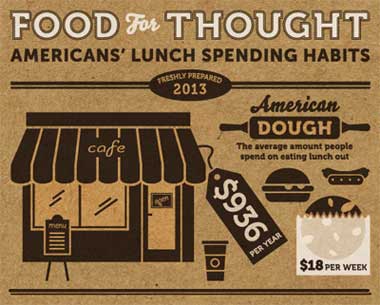
People enjoy habits because they make life easier and require less thought. It is time to ask yourself what habit have you created that is costing you money every week? Which one can you manage to live without? If you are eating lunch out 5 times a week, you could be spending $200 a month ($2,400 a year) on this luxury. Cut down to 2 times a week and you can save up to $1,440 a year.

Save The Change

Create a place to empty out all the change you accumulate each day. Save the change plus the lowest bill in your wallet. Make this a habit for a month. See how long you can do it and add up the amount you have saved. To build real wealth, put that money in a money market savings account or mutual fund. The longer you leave it alone, the more it will grow.

Spend Less Than You Earn

There is no way to build wealth unless you spend less than you earn. To meet this goal, you may have to increase your income, just to start saving the amount of money you need. Evaluate what you need to adjust in your life to make this possible and then do it.

Learn From The Best Finance Books

Dave Ramsey’s Total Money Makeover will teach you how to get rid of debt and build wealth. It is nice to learn from someone who has seen both poverty and wealth.

Ilyce R. Glink, wrote a book called, “50 Simple Things You Can Do To Improve Your Personal Finances.” Her first suggestion involves preparing a place in your home for handling your personal finance tasks. Getting organized like this really helps. She also offers many new ideas about saving money. She covers topics like taxes, credit reports, planning for retirement and budgeting. For a short read, this book is worth the current price of $2.89.

Learning Online

Since 2008, the number of people that said they have learned about personal finance on the internet has grown from 4% to 12%. While everything you read on the Internet is not guaranteed to be true, there are reliable sources for you to use without hesitation. Bankrate.com has a trusted reputation and provides you with current mortgage rates, housing trends and retirement information.

Although many people report that they don’t feel that they have enough of a savings account, there are many solutions to that problem. Start today by using these personal finance tips from Coolchecks.net.

Filed Under: Saving Money Tagged With: Saving Money

  • « Go to Previous Page
  • Page 1
  • Interim pages omitted …
  • Page 18
  • Page 19
  • Page 20
  • Page 21
  • Page 22
  • Interim pages omitted …
  • Page 28
  • Go to Next Page »

Primary Sidebar

Personal Finance Articles

  • Make Saving A Priority
  • Review Your Home-Insurance Risks
  • Lowest Air Fare? Try August 28
  • Hackers Targeting Bitcoins
  • Keep Your Emergency Fund Intact

Save At Walmart

Search

Personal Finance Education

Investing Education from Morningstar.

As Seen On Intuit

Intuit.com has ranked Coolchecks.net #4 out of 10 of the best blogs to help you save money. We hope to help you become more aware of your own financial situation and strive to improve it.

Featured On Mint.com – July 2014

Mint Interview

Categories

  • Banking
    • Check Writing
    • Checking Accounts
    • Credit Cards
    • EMV Cards
    • Fees
    • Fraud
    • History
    • Student Loans
  • Best Of The Web
  • Budgets
    • Emergency Fund
    • Grocery Shopping
    • Saving Money
    • Spending Habits
  • Business
    • 3D Printing
    • Bankruptcy
    • Business Advertising
    • Business Development
    • Business Plans
    • Corportate Lessons
    • Data Mining
    • Legal Issues
    • Merchants
    • SEC
    • Security
    • Small Business Startups
  • Consumer Alerts
  • Cryptocurrency
  • Cutting Costs
  • Employment
    • best places to work
    • Careers
    • Interviews
    • Job Search
    • Top CEOs
    • Wages
  • Entrepreneurs
    • Attitudes
    • Entrepreneur Interviews
  • Featured
  • Finance
    • Automobiles
    • Credit Ratings
    • Education
    • Financial Planners
    • Foreclosures
    • Homes
    • Insurance
    • Investing
    • Mortgages
    • Personal Finance
    • Renting
    • Term Deposits
    • Travel
    • Work
  • Fraud
  • Government
  • Holidays
    • Christmas
    • Halloween
  • Internet
    • Bitcoin
    • Blogging Tips
    • Blogs, RSS and Podcasting
    • Databases
    • Facebook
    • Influence
    • marketing
    • Twitter
    • Website Reviews
    • WordPress
      • Key Words
  • Investing Basics
    • Hedge Funds
    • Investing
    • Mutual Funds
  • Life
    • Aging
    • Just For Fun
      • Punahou Alumni Corner
    • Millennials
    • Personal Health
  • Money Making Ideas
    • Affiliate Programs
    • Craigslist
    • Ebay
  • Money Management
    • Bankruptcies
    • Building Wealth
    • Child Care Costs
    • Christmas Shopping
    • Credit
      • Free Credit Report
    • Debit Cards
    • Debt
    • Debt Reduction
    • Health Insurance
    • Income
    • Inheritance
    • Interest Rates
    • Loans
    • Mortgages
    • New Years Resolutions
    • Retirement
    • Shopping Tips
    • Tax Strategies
    • Your Stories
  • Retirement
  • Self Improvement
    • Time Management
    • Work Habits
  • Shopping
    • Coupons
    • Online Shopping
  • Social Security
  • Tax Tips
  • Taxes
  • Technology
  • Trade
  • Uncategorized
  • Wealth

Best of Personal Finance Blogs

Best of BuyerZone Business Finance Blog Recipient

Personal Finance Sites We Recommend

Get personal finance advice from the people behind the top money blogs, including Wise Bread, The Simple Dollar, Mint and Nerd Wallet.

Copyright © 2026 ·Metro Pro · Genesis Framework by StudioPress · WordPress · Log in