
• Skip to primary navigation
  • Skip to main content
  • Skip to primary sidebar
  • Money Management
    • Debt Reduction
    • Credit
    • Mortgages
    • Mutual Funds
    • Tax Strategies
    • Loans
  • Budgets
    • Saving Money
    • Income
  • Banking
    • Checking Accounts
    • Check Writing
    • Fraud
    • History
  • Entrepreneurs
    • Entrepreneur Interviews
    • Money Making Ideas
    • 3D Printing
  • Resources
  • Retirement
  • About
    • Privacy Policy

Personal Finance Blog

Tips And Stories To Help You With Managing Money

  • Privacy Policy
  • Saving Money In 2018
You are here: Home / Archives for Budgets

Budgets

5 Steps To Get Out Of Debt

December 5, 2014 By Sherry Tingley

Your debt load is not insurmountable. Make a plan to whittle it down to zero.
Conquering The Debt Monster

The first step to getting out of debt is breaking it down into manageable portions and creating solutions a step at a time.

Allowing the problem to overwhelm you to the point of inaction assures that it will continue unabated.

ReadyForZero, a company that creates answers for people who are in debt, advises that a full understanding of your own finances is the key to getting a handle on debt. The company’s advice includes:

1. Know where your money goes.

Replace fear with facts. Be minutely aware of how much money comes into your household each month and where it goes.

If you make most of your purchases with a debit or credit card, log into your online account and do a detailed study of your purchase history. Divide it into categories such as Groceries, Entertainment, Rent, Utilities, Transportation, etc. If you use cash, track spending for a month to develop this data.

2. Don’t Spend Too Much

Are you spending too much? Debt is inevitable if your outgo exceeds your income. Resisting the ubiquitous advertising that surrounds us is a conscious choice that must be made. New electronic gadgets, clothing or cars seldom lead to real happiness if you can’t afford them and they shackle you with debt. Examine your spending behavior and start to change your mental processes. Remove the triggers that encourage you to overspend. Learn to distinguish between real needs and simple desires.

Get rid of your credit cards. Use only debit cards, cash or checks. These modes won’t allow you to overspend as credit cards do. If you are addicted to spending, find new way to gain pleasure and happiness. There are things you can do in almost any community that don’t cost money.

3. Focus On One Debt With The Highest Interest Rates

Pay off debts that carry the highest interest rates first. Add just a few dollars to each payment, more if possible. Some lenders will agree to a lower interest rate. If they will not, look for a transfer option that will give you a better rate. Consider a consolidation loan, but only if the interest savings are real. A small reduction in the interest rate can translate into a big savings.

4. Change Your Motivation

Your motivations have to change. And that isn’t easy. Find inspiration in your family, your life goals or meeting some kind of challenge. Make visible reminders, such a family photos and written ultimate objectives, that are constant reminders if the family is your focus. Write down goals, such as buying a house, retiring early or otherwise meeting life goals and put them where you see them daily. Set a specific date when you hope to be debt free and circle it on a calendar that you can’t ignore.

5. Increase Your Income

If low income is at the root of your indebtedness, try to resolve it. Look for a source of income outside your regular job. Sites such as Elance.com and oDesk.com offer short-term freelance jobs you can do at home. There are jobs in writing, designing, transcribing, organizing and other specialties that are listed online. If it is possible, try to increase your earnings at the job you have. If you can, upgrade your skills to make yourself more valuable to your employer. Research what other people in your job category make and, if necessary, try to match their earnings.

These steps will all make little inroads into your debt load. But none of them will make a difference if you don’t take that first step: the conviction that you can do it. Let fear and inertia drop to the side and begin.

Filed Under: Saving Money Tagged With: Saving Money

Save Big Bucks On Energy Bills

November 23, 2014 By Twila Van Leer

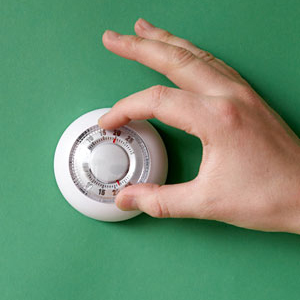
Reducing heating costs can save money.
Face it, folks. Indian Summer is not coming back, and already some parts of the country have posted record early-winter storms. Time to crank up the furnace so you can defy the elements and be comfortable in your own home.

You can do it more economically if you learn some tricks about keeping energy costs in line. Many of the tips you hear are not really reliable and could be costing you money.

For instance, programmable thermostats. They really don’t measure up to the hype. And if you’re using a fireplace to supplement the furnace output, you may find the heat is simply going up the fireplace chimney. And despite the name, duct tape really doesn’t seal ducts.

According to a Chicago Tribune article by Gregory Karp, there really are ways to minimize heating costs, but they come from authentic sources, not product hype. He quotes Max Sherman, a scientist at Lawrence Berkeley National Laboratory.

Sherman is the one who conducted extensive tests on duct tape and found it is not a reliable way to seal ducts. Other tapes out-perform it, he found.

Among the words to the wise expounded by Sherman:

The ambience, aroma and traditional perception of the comfort of a fireplace do nothing to make that a good way to heat a house. The cost of paying for firewood, which most suburbanites must do, may eclipse the costs of natural gas. The fireplace has a healthy appetite for oxygen and doesn’t mind taking it from the warm air coming from the furnace if you combine heating methods. The only way to save money with a fireplace is to close off all the rooms except the one in which the fireplace is located.

Programmable thermostats do, at a cost, what you could do by simply walking over to the thermostat and changing it by hand. As the name suggests, they require programming and the result doesn’t always correlate with the need. Simple thermostats are just a clock that changes the setting on a timed basis. More complex versions may, for instance, turn up the heat in the morning on a day when you are sleeping in or are away from home. Hand-setting to meet real needs is preferable.

If you have widely varying temperatures where you live, a heat pump may have more difficulty responding to changes, Sherman said. Set-back can be difficult for the pumps and your savings disappear.

If you really want the convenience of a programmable thermostat, you must actually program it. The devices sell from $50 to $500 and vary in sophistication. You are responsible to understand your own model and use it to meet very particular needs of your home.

Sherman warns against cranking up the heat to an abnormally high temperature as a first step to heating the house. Setting the thermostat abnormally high will only waste costly energy. He suggests thinking of the furnace as a light bulb. It is either off or on and upping the temperature will not make it any more “on.”

Maintaining a constant temperature, whether you are home or not, is not a good approach, despite claims to the contrary. If the furnace is on, it is using energy. He advises setting the temperature at 68 degrees and turning it down for sleep times and when you expect to be away for awhile. You can save up to 1 percent per year on your heating bill for each degree you set the thermometer back for eight hours, he said.

If you expect that such steps as installing more efficient windows will lower your heating costs, consider first how much you pay for the new windows. It could take a long time before there is any savings over the investment, Sherman says. Windows come behind sealing, insulation and system efficiency improvements in the list of things you can do to improve your energy situation. But if you want to change windows for aesthetic reasons, be sure the replacements are energy-efficient. Cheaper and ultimately more effective steps include sealing gaps and cracks around windows, doors, ducts, pipe cutouts and other areas that are conduits for cool air. air. Blowing sealant into ductwork (aero sealing) is effective, although initially expensive. A professional energy audit may be worthwhile, although it will cost from $250 to $800.

Least expensive among the steps to lower energy costs are the simplest: Put on a sweater and slippers during the day and use more bedding or an electric blanket at night.

Filed Under: Budgets, Cutting Costs Tagged With: Saving Money

6 Tips For LIving On One Income

November 18, 2014 By Sherry Tingley

Determine a good budget to use and make sure you stick to it.
One Income? Make It Enough

Two-income families have become almost the norm in the United States, but some families, for whatever reasons, can and do get by on the earnings of just one breadwinner.

It requires planning and commitment, but it is possible.

Analyze Your Budget

Start with an honest and thorough review of your current financial picture. How much do you spend? How much of the spending is for necessities and how much for luxuries you could do without? Think of ways you could cut back, such as eating more meals at home rather than out. Use the analysis to make a realistic new one-income budget.

Plan Your Spending

Get over some old habits, such as whipping out the credit card whenever you see something you might like to have, but don’t really need. Based on your new realities, give first priority to the expenses of running a household. Plan for some savings and then limit spending for other things to what is left.

Six Month Emergency Fund

Experts advise a six-month cushion in case of emergencies. That protects against financial disaster when the breadwinner is laid off, becomes ill or injured – any of the multiple disasters large or small that life sometimes dishes up.

Experiment Before Losing The Second Income

Try out a single-income existence before plunging headlong into it permanently. While you still have two incomes, put one into savings for several months or a year to test how it would work in reality. The cached money could become part of the cushion just mentioned.

Ask Tax Adviser For Advice

Talk to a tax professional who can tell you what moving to a single income might do to your tax liability. Moving into a lower tax bracket may offset some of the loss you experience from reducing your income. But have the facts in hand before you take the leap.

Cut Down Living Costs

Search for ways to reduce your costs. Many two-salary households may find they have accumulated a number of trivial items that could easily be sacrificed in the name of the new one-salary mode of living. Cut down the number of channels you carry on cable. Assess your insurance policies to see if they are more than adequate or if you can save by bundling. Each household budget is different, but engage everyone in your group in setting priorities and trimming excess. It will be worth some sacrifice if circumstances now call for a one-salary approach to living.

Filed Under: Budgets

WeChat Saves You Money On Long Distance Charges

November 10, 2014 By Sherry Tingley

WeChat is the fifth most-used smartphone app in the world.

Smart phone messaging applications have become essential to doing business, keeping in touch with friends, having fun on a vacation and saving money.

WeChat, an instant messaging system developed by the Chinese Internet company, Tencent has become an extremely popular messaging app. GlobalWebIndex lists WeChat as the fifth most-used smartphone app in the world. Forbes magazine says, “It is undoubtedly the most powerful mobile app in China today and is fast becoming one of the world’s most powerful too.”

Let’s review some of the features of the messaging app. It has the standard text messaging, photo messaging, video messaging features, social gaming, and it has talking functions. Talking functions are much like using a walkie talkie. Video calls makes the app even more valuable. Forming groups can be quite powerful as well. Up to 500 people can be in one group. While talking with groups, only one person can talk at once.

The number one reason people like this app is because it allows users to talk for free. That means if you have contacts around the world, you can talk for free.  Talking through the application has cut down the enormous costs of long distance charges.

Globally, WeChat has around 397 million users. The app is most popular in China, where it was built and launched in 2011.  There are around 300 million Chinese users. While China actively blocks some popular social websites they have not blocked this app.

So how can WeChat be both good and bad? The app also has a GPS system that allows other people to see where you are. In fact, there is a feature that let’s you shake your phone and find other members close to you that you can add as contacts.

This tracking ability has caused some problems. Chinese authorities have linked the systems use to a large number of crimes. Recently Tencent identified and shut down over 20 million accounts that they had successfully linked to prostitution rings.

There was a tragic incident where a Chinese woman met a man through WeChat and arranged to meet with him. Little did she know that he had just spent 13 years in prison and was currently being investigated for rape. The meeting proved fatal for the young woman. She was robbed and murdered.

There are also people who are concerned about threats to national security as well as personal privacy issues. The gps functions in the app reveals your geographic location. Security officials could monitor users’ movements in real time, critics say, and give non-users access to text messages and contact books. Countries such as the United States, Taiwan and India, as well as the home nation of China have all wondered about the threats to national security.

The benefits of the app will have to be weighed carefully for each individual.   It is quite touching to see how one teenager, nervous to perform in a violin concert was reassured by doing a video call with her instructor.

?list=UUFkxNvRQLTqFHo2B5sQORVw


Filed Under: Featured, Saving Money Tagged With: Saving Money

Start Early To Teach Kids Finances

October 28, 2014 By Twila Van Leer

Saving money is a good habit to get into.
Teaching kids to save money can help them in all aspects of life.
Like everything else, children have to learn the basics about personal finances in ways that make sense to them. Unfortunately, money matters often are overlooked when it comes to what’s important for them to know.

Starting early and being consistent are the keys to helping your children avoid the big bump that comes with hitting the financial world uninformed.

Start with regular savings. If the child has an allowance, convince him or her that putting a portion of that money into savings is a good idea. Don’t just assume they will go along with that approach. If they can be taught to save toward a particular goal, such as a new toy or a special outing, it will be more meaningful. But if they only save money to spend it immediately, they may miss the message. Only a portion of their savings should be in this category.

Many parents (nine out of 10, according to some sources) expect children to work for their allowance, another little dose of the real world that may come in handy as they embark into their own financial independence.

Sharing your family financial basics with children as they are able to understand is good backup for savings accounts. If your own finances are in disarray, they will have a hard time coming to healthy conclusions. Remember that the amount of the child’s allowance or savings is not as important as the consistency.

Starting early and regularly to absorb the basics of money management is the key to responsibility later on. When faced with their first forays into auto ownership, college and other adult expenses, they won’t be overwhelmed with it all. The loan officers with whom they deal will be more impressed if they have the vocabulary and the familiarity with financial terms and concepts.

Sound, lifelong money management skills may be the best gift you can offer to your children.

Filed Under: Saving Money

  • « Go to Previous Page
  • Page 1
  • Interim pages omitted …
  • Page 14
  • Page 15
  • Page 16
  • Page 17
  • Page 18
  • Interim pages omitted …
  • Page 28
  • Go to Next Page »

Primary Sidebar

Personal Finance Articles

  • Make Saving A Priority
  • Review Your Home-Insurance Risks
  • Lowest Air Fare? Try August 28
  • Hackers Targeting Bitcoins
  • Keep Your Emergency Fund Intact

Save At Walmart

Search

Personal Finance Education

Investing Education from Morningstar.

As Seen On Intuit

Intuit.com has ranked Coolchecks.net #4 out of 10 of the best blogs to help you save money. We hope to help you become more aware of your own financial situation and strive to improve it.

Featured On Mint.com – July 2014

Mint Interview

Categories

  • Banking
    • Check Writing
    • Checking Accounts
    • Credit Cards
    • EMV Cards
    • Fees
    • Fraud
    • History
    • Student Loans
  • Best Of The Web
  • Budgets
    • Emergency Fund
    • Grocery Shopping
    • Saving Money
    • Spending Habits
  • Business
    • 3D Printing
    • Bankruptcy
    • Business Advertising
    • Business Development
    • Business Plans
    • Corportate Lessons
    • Data Mining
    • Legal Issues
    • Merchants
    • SEC
    • Security
    • Small Business Startups
  • Consumer Alerts
  • Cryptocurrency
  • Cutting Costs
  • Employment
    • best places to work
    • Careers
    • Interviews
    • Job Search
    • Top CEOs
    • Wages
  • Entrepreneurs
    • Attitudes
    • Entrepreneur Interviews
  • Featured
  • Finance
    • Automobiles
    • Credit Ratings
    • Education
    • Financial Planners
    • Foreclosures
    • Homes
    • Insurance
    • Investing
    • Mortgages
    • Personal Finance
    • Renting
    • Term Deposits
    • Travel
    • Work
  • Fraud
  • Government
  • Holidays
    • Christmas
    • Halloween
  • Internet
    • Bitcoin
    • Blogging Tips
    • Blogs, RSS and Podcasting
    • Databases
    • Facebook
    • Influence
    • marketing
    • Twitter
    • Website Reviews
    • WordPress
      • Key Words
  • Investing Basics
    • Hedge Funds
    • Investing
    • Mutual Funds
  • Life
    • Aging
    • Just For Fun
      • Punahou Alumni Corner
    • Millennials
    • Personal Health
  • Money Making Ideas
    • Affiliate Programs
    • Craigslist
    • Ebay
  • Money Management
    • Bankruptcies
    • Building Wealth
    • Child Care Costs
    • Christmas Shopping
    • Credit
      • Free Credit Report
    • Debit Cards
    • Debt
    • Debt Reduction
    • Health Insurance
    • Income
    • Inheritance
    • Interest Rates
    • Loans
    • Mortgages
    • New Years Resolutions
    • Retirement
    • Shopping Tips
    • Tax Strategies
    • Your Stories
  • Retirement
  • Self Improvement
    • Time Management
    • Work Habits
  • Shopping
    • Coupons
    • Online Shopping
  • Social Security
  • Tax Tips
  • Taxes
  • Technology
  • Trade
  • Uncategorized
  • Wealth

Best of Personal Finance Blogs

Best of BuyerZone Business Finance Blog Recipient

Personal Finance Sites We Recommend

Get personal finance advice from the people behind the top money blogs, including Wise Bread, The Simple Dollar, Mint and Nerd Wallet.

Copyright © 2026 ·Metro Pro · Genesis Framework by StudioPress · WordPress · Log in