• Skip to primary navigation
  • Skip to main content
  • Skip to primary sidebar
  • Money Management
    • Debt Reduction
    • Credit
    • Mortgages
    • Mutual Funds
    • Tax Strategies
    • Loans
  • Budgets
    • Saving Money
    • Income
  • Banking
    • Checking Accounts
    • Check Writing
    • Fraud
    • History
  • Entrepreneurs
    • Entrepreneur Interviews
    • Money Making Ideas
    • 3D Printing
  • Resources
  • Retirement
  • About
    • Privacy Policy

Personal Finance Blog

Tips And Stories To Help You With Managing Money

  • Privacy Policy
  • Saving Money In 2018
You are here: Home / Archives for Budgets

Budgets

Watch Out For These Money Drains

April 28, 2015 By Twila Van Leer

Save money on things you can easily do yourself.
Many Americans feel they can’t build savings because there simply isn’t money left after the essentials are covered. But with a little creative effort, you can find a bit here and a bit there to stash away.

With personal saving at its lowest level since 2001 (expected to fall below 1 percent by the end of this year) there must be some creative thinking to get things turned around. Experts at bankrate.com have identified the following popular items as 10 of the “ biggest money drains,” that leave too many families broke and without a savings cushion:

Coffee. At an average price of $1.38 per cup (or more, depending on whom you buy it from) your daily cuppa can cost you at least $3.60 per year, money that could be building your savings account.

Cigarettes. The average price-per-pack in the United States is $4.54, adding up to about $1,660 each year.

Alcohol. Costs vary widely, depending on your choice of beverage, where you live and your favorite watering hole. But, with tip, the average cost of one beer is $5. If you indulge in two per day, the cost could mount to $3,650 per year. If your spirit of camaraderie leads you to “treat,” friends, the cost goes up commensurately.

Bottled water. A liter is, on average, $1.50, multiplying to $540 a year if you stop at one per day. The habit not only costs you, but is a detriment to the environment as the plastic containers stack up.

Manicures. It’s a feel-good luxury you can’t afford if you haven’t any savings. A $20-per-week visit to the manicurist robs your savings of $1,068 in a year. A bottle of nail polish is approximately $5.

Car washes: The average cost is $58 with detailing thrown in. But if you take the option every two months, that’s $348 per year.

Buying lunch every day. The daily cost of eating lunch out every workday is about $9 – $2,350 per year. Making a lunch at home is a nuisance, but the sacrifice will seem worth it as you watch your financial safety net grow stronger.

Vending machine snacks. Each little visit to the machine costs about a dollar, about $260 per year if you succumb every working day to the lure of chips and chocolate.

Interest on credit card bills. The median amount of credit card debt in America is $6,600. The average credit interest rate is 13.44 percent. Making just the minimum payment, it will take you 21 years to ride yourself of that debt – if you resist the urge to perpetuate it. Make real effort to whittle the amount down faster by making additional payments on the principal.

Unused memberships. If you have a $40-per-month membership in a spa or gym or any other type of activity that requires a regular fee and fail to use it, you’ve lost $40 per month. Use it or get rid of it.

You can’t just change your appetite. You have to change your point of view. But with a little self-discipline, you can find the wherewithal to help your savings grow. You’ll be happy that you did.
Filed Under: Spending Habits Tagged With: money management

Amazon Home Services Marketplace

March 30, 2015 By Twila Van Leer

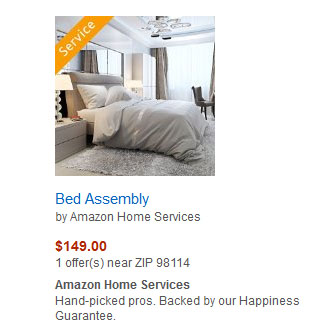
amazon-local-servicesAmazon has launched its Home Services (formerly Amazon Local Services). If you are looking for voice lessons, yoga classes, furniture assemble, mounting wall televisions, setting up baby gates, house keeping or even assembling those products you buy at Ikea, now you can order them directly on Amazon. You can list your services on Amazon if you are a service provider or you can look for services close to you. Using geo based technology, Amazon matches your queries with your zip code. How will this impact your lifestyle? Hopefully it will make it much easier for you to get help with simple to expert projects.

Amazon Home Services competes directly with Angie’s List and other online local services. The number of Amazon’s service categories and the number of cities in which they are offered are both ballooning. It will take some time for the public to get used to ordering local services this way and time for merchants to list their services on Amazon.

As of March 30, Amazon Home Services was available in Miami, San Francisco, New York, Houston, Seattle, Chicago, Washington D.C., Philadelphia, Boston, Dallas, Atlanta, Phoenix, San Diego, San Jose, Portland, Minneapolis, Detroit, Denver, Riverside, Tampa, Orlando, Austin, Sacramento, Pittsburgh, Nashville, Cincinnati, Charlotte and St. Louis. Other locations are being added regularly.

Quietly introduced in late 2014, the service initially featured service providers whose businesses could help Amazon shoppers with additional needs related to purchases, such as installers who could put up a new TV. The expanded program goes well beyond that concept.

Now the list includes such things as plumbers, home improvement sources, lawn and garden, auto mechanics, computer and electronics aids and yoga instructors. There is a “more” category for items that jibe with those listings. It includes such exotica as “goat grazing” and “singing performances.” The goal is to have a list for anything a customer is likely to need, including housecleaning and babysitting.

The introduction of the expanded service is a big step toward competing effectively in the on-demand economy. Amazon is partnering with some of the on-demand service startups, but not trying to replace them entirely. The approach is consistent with what Amazon has done with other initiatives, such as its online art store or the Amazon Sellers program. Experimentation has proved that the relationships can increase sales for small retailers of physical goods.

Amazon hand-picks the businesses it includes at its sites and ensures that they are licensed, insured and background-checked. The mega company had taken a 20 percent cut of services costing under $1,000 and 15 percent of those over that amount. But in conjunction with the new launch, service fees have been readjusted in three categories with varying fees. The company also has built in safeguards to assure the authenticity of user reviews and prevent spurious reviews by those who want to cause trouble for a competitor. Amazon shoppers buy services by putting them in an online cart so reviews can be authenticated.

The Amazon website says that prices quoted in the service are the same as those prospective customers would receive if they called the service provider direct. That answers some complaints from customers who sought services in the earlier phase of the program. Amazon also offers to match prices if the customer can find them cheaper elsewhere.

Filed Under: Business Development, Saving Money Tagged With: Amazon, business, entrepreneur, Local Services

How To Shrink Your Energy Bills

March 23, 2015 By Twila Van Leer

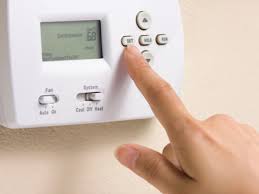
Lower your utilities bills by getting a programmable thermostat.
Winter may be on the downside this year, but it isn’t too late to trim your energy consumption and save money at the same time you are helping the environment.

Tips to reduce your bills while trimming your carbon footprint include:

Heating & Cooling

Invest in a programmable thermostat. It can be set to reduce heat when you are not going to be home. No point in keeping things toasty when there’s no one around. It could save as much as $180 per year. Some of these thermostats can be set by mobile device in case the situation changes during a day.

Home Energy Audit

Conduct an energy audit, with a professional to look at areas of your home that need improvement. Heat and energy can slip out of doors, windows and other outlets. Take steps to correct these areas. A professional will look at lifestyle factors such as preferences in heat levels and the areas of your home in which the most living takes place. It may be possible to decrease energy demands by sealing off some areas or by increasing insulation.

Check Your Windows

If your windows are letting in cold air, it may be worth your while to have double-paning installed or to change the windows outright. The investment will pay off over time as energy costs decline.

An alternative to complete replacement of windows is to use window film to reduce the amount of cold air coming into the house. Keep curtains and blinds closed as another step to minimize the infiltration of cold air.

Siding On The Outside Of Your Home

Another step that requires an expenditure up front but saves more over time is installation of vinyl siding on your home. More people who are determined to go green are choosing this option. Vinyl is low-maintenance and long lasting. And it meets the requirements of Energy Star incentives. It has one of the highest returns on investment among remodeling options.

The sun is your friend. Keep blinds and curtains closed at night, but open them during daylight to take advantage of natural heating. Be sure to seal cracks with weather stripping so the full benefit of the sun’s warmth won’t be lost.

Maintain Heating System

Do regular inspections of your heating system. It may not need replacing, but periodic maintenance can keep it functioning at full efficiency. Get advice from a professional to be certain it is in good working condition. Keep the furnace clean and vacuum filters at least once a month for best efficiency. Replace filters regularly and even oftener if they become dirty during high-use times.

A fireplace is good for supplementing heat, but also can let in cold air. Keep the damper closed when there is no fire burning so that cold air does not enter through the chimney. If you don’t use the fireplace, plug the flue and seal it to conserve energy.

Ceiling Fans

Change the direction of your ceiling fan, if necessary, to clockwise. That will push heat down to ground level and keep it in the house. During the summer, a fan should be revolving counter-clockwise to push hot air up to the ceiling.

Curtains

Investing in insulated curtains and area rugs when you redecorate is a long-term aid to energy efficiency. And training family members to be energy-conscious, including wearing sweaters to minimize heating needs, is part of the overall plan to cut costs. A sticky note or two in high-traffic areas can help keep everyone on the same page as you pursue your energy goals.

Filed Under: Budgets

Avoid Financial Troubles

March 13, 2015 By Twila Van Leer

budget-savingsKeeping your household out of financial hot water isn’t always easy and it takes the cooperation of an entire family. But it can be done and the best way is to keep on top of things and take steps to balance the picture before there is serious trouble.

These tips will help you organize and then recognize warning signs that might prevent upsets:

Create a realistic budget and then stick with it. A budget is not set in concrete and needs periodic analysis and tweaking to be certain it is still adequate. If there are changes to your income or new demands on the outgo, create a new budget to incorporate those changes.

Don’t buy on impulse. If you see something you feel you want, don’t make the purchase on the spot. Go home and think it over. Discuss with other family members. There’s a good chance you may, on reconsideration, come to the conclusion that you can do without the item.

Avoid sales. Purchasing a $300 item for $200 isn’t a $100 savings unless the item really is necessary. Staying away from temptation is easier than overcoming it on the spot with the item staring you in the face.

Get medical insurance if at all possible, even a stopgap policy with a big deductible is better than nothing in a medical emergency. Not having any cushion at all is inviting financial ruin if the emergency you hope will never happen happens.

Be very careful of charging. Charge only if you have the ability to pay for the item within your next pay period. Future income is always chancy. Try chucking all your credit cards or at least tuck them into a drawer and see if you can do without them for awhile. That exercise may help you look at credit in a different way.

Keep rent or house payments as low as possible. Promise yourselves something more elegant when your earnings have increased, then discipline yourselves to wait. If your mortgage payments keep you on the thin edge of your financial capacity, consider refinancing.

Don’t cosign or guarantee a loan for anyone else. Even though it appears safe that the other party will be able to handle the payments, a thousand things can happen. Your signature on the loan/sale makes you the primary borrower. The same holds true of entering into obligations with a spouse or significant other, particularly if you suspect he or she is not financially responsible. You’ll find yourself saddled with repayment if, for any reason, the other individual can’t or won’t pay.

Be careful of investing, particularly in such speculative ventures as real estate, penny stocks or junk bonds. Be conservative with your investments, sticking with certificates of deposit, money market funds and government bonds.

Filed Under: Budgets

Lower Gas Prices Provide Extra Money For Families

March 3, 2015 By Twila Van Leer

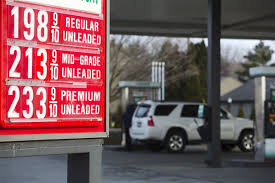
March 3, 2015 - Low Gas Prices around the country. At the Chevron station at 1284 Vine St & 1300, Murray, Utah - $1.88 a gallon.
March 3, 2015 – Low Gas Prices around the country. At the Chevron station at 1284 Vine St & 1300, Murray, Utah – $1.88 a gallon.
Financial experts predicted that American families would quickly pour the money they saved on precipitately dropped gasoline prices back into the economy. But the figures are proving them wrong. The money saved in the lowest gas prices in five years isn’t showing up in consumer reports.

In January, Americans in the aggregate spent some $6.7 billion less at the pump. But retail sales, excluding gas, actually dipped a bit from November to January. The figures suggest that consumers are using the money they save in gasoline purchases to reduce debt or increase savings. That is a carry-over from the Great Recession that made serious inroads into the country’s economy and left the average American a little leery of spending. Although that impedes economic growth in the near-term, it could have positive effects in the future, the experts say.

They are predicting annualized growth of 2.5 percent from January through March, a half point under the 3 percent they had forecast earlier.

Gas prices continue to remain low, although they have risen somewhat. In January, the average per-gallon price of $2.03 per gallon was the lowest since 2009. The price had gone up to $2.24 by late February, but that still is $1.10-per-gallon less than a year ago. The annual savings to a typical household is about $750, according to the Energy Information Administration. To keep a pulse on the changes in prices visit GasBuddy.com.

But with the left-over cautions bred by the recession still echoing, much of that savings will remain pocketed, the administration predicts. Americans are still cautious about overspending. They are saving more instead. The rate of savings rose to 4.9 percent of earnings in December, compared with 4.3 percent in November. Last month, the rate bumped up again, to 5.3 percent, the highest in a year and a half.

Some economists note that the savings from gas purchases are small, although they can grow over time. The cumulative effects don’t show up quickly. Also, many Americans are skeptical that the relatively low gas prices will last. They are cautious about spending the difference when it could be used to help reduce debt. The phenomenon is not new. Economists are aware that consumers tend to “wait and see” before they feel free to spend “found” money they hadn’t figured into their budgets. A lag of several months is typical.

Even so, signs indicate that the money will begin to make an impact on the economy in the coming months. New cars is one of the places it may be spent. Families that put off replacing a vehicle when the economy was sour may feel confident enough to make the splurge. In early 2013, the average age of a car in the U.S. was at a high of nearly 12 years. But last year, more families replaced their clunkers and car sales were at the highest in eight years. And the trend seems set to continue.

Filed Under: Spending Habits Tagged With: Saving Money

  • « Go to Previous Page
  • Page 1
  • Interim pages omitted …
  • Page 11
  • Page 12
  • Page 13
  • Page 14
  • Page 15
  • Interim pages omitted …
  • Page 28
  • Go to Next Page »

Primary Sidebar

Personal Finance Articles

  • Make Saving A Priority
  • Review Your Home-Insurance Risks
  • Lowest Air Fare? Try August 28
  • Hackers Targeting Bitcoins
  • Keep Your Emergency Fund Intact

Save At Walmart

Search

Personal Finance Education

Investing Education from Morningstar.

As Seen On Intuit

Intuit.com has ranked Coolchecks.net #4 out of 10 of the best blogs to help you save money. We hope to help you become more aware of your own financial situation and strive to improve it.

Featured On Mint.com – July 2014

Mint Interview

Categories

  • Banking
    • Check Writing
    • Checking Accounts
    • Credit Cards
    • EMV Cards
    • Fees
    • Fraud
    • History
    • Student Loans
  • Best Of The Web
  • Budgets
    • Emergency Fund
    • Grocery Shopping
    • Saving Money
    • Spending Habits
  • Business
    • 3D Printing
    • Bankruptcy
    • Business Advertising
    • Business Development
    • Business Plans
    • Corportate Lessons
    • Data Mining
    • Legal Issues
    • Merchants
    • SEC
    • Security
    • Small Business Startups
  • Consumer Alerts
  • Cryptocurrency
  • Cutting Costs
  • Employment
    • best places to work
    • Careers
    • Interviews
    • Job Search
    • Top CEOs
    • Wages
  • Entrepreneurs
    • Attitudes
    • Entrepreneur Interviews
  • Featured
  • Finance
    • Automobiles
    • Credit Ratings
    • Education
    • Financial Planners
    • Foreclosures
    • Homes
    • Insurance
    • Investing
    • Mortgages
    • Personal Finance
    • Renting
    • Term Deposits
    • Travel
    • Work
  • Fraud
  • Government
  • Holidays
    • Christmas
    • Halloween
  • Internet
    • Bitcoin
    • Blogging Tips
    • Blogs, RSS and Podcasting
    • Databases
    • Facebook
    • Influence
    • marketing
    • Twitter
    • Website Reviews
    • WordPress
      • Key Words
  • Investing Basics
    • Hedge Funds
    • Investing
    • Mutual Funds
  • Life
    • Aging
    • Just For Fun
      • Punahou Alumni Corner
    • Millennials
    • Personal Health
  • Money Making Ideas
    • Affiliate Programs
    • Craigslist
    • Ebay
  • Money Management
    • Bankruptcies
    • Building Wealth
    • Child Care Costs
    • Christmas Shopping
    • Credit
      • Free Credit Report
    • Debit Cards
    • Debt
    • Debt Reduction
    • Health Insurance
    • Income
    • Inheritance
    • Interest Rates
    • Loans
    • Mortgages
    • New Years Resolutions
    • Retirement
    • Shopping Tips
    • Tax Strategies
    • Your Stories
  • Retirement
  • Self Improvement
    • Time Management
    • Work Habits
  • Shopping
    • Coupons
    • Online Shopping
  • Social Security
  • Tax Tips
  • Taxes
  • Technology
  • Trade
  • Uncategorized
  • Wealth

Best of Personal Finance Blogs

Best of BuyerZone Business Finance Blog Recipient

Personal Finance Sites We Recommend

Get personal finance advice from the people behind the top money blogs, including Wise Bread, The Simple Dollar, Mint and Nerd Wallet.

Copyright © 2026 ·Metro Pro · Genesis Framework by StudioPress · WordPress · Log in