• Skip to primary navigation
  • Skip to main content
  • Skip to primary sidebar
  • Money Management
    • Debt Reduction
    • Credit
    • Mortgages
    • Mutual Funds
    • Tax Strategies
    • Loans
  • Budgets
    • Saving Money
    • Income
  • Banking
    • Checking Accounts
    • Check Writing
    • Fraud
    • History
  • Entrepreneurs
    • Entrepreneur Interviews
    • Money Making Ideas
    • 3D Printing
  • Resources
  • Retirement
  • About
    • Privacy Policy

Personal Finance Blog

Tips And Stories To Help You With Managing Money

  • Privacy Policy
  • Saving Money In 2018
You are here: Home / Archives for Banking

Banking

Watch Bank Statements For Fuel Fraud

April 1, 2015 By Twila Van Leer

Watch your bank statements to make sure there are no fraudulent charges.
The price of gasoline is lower than it has been for a while. Still, nobody wants to pay for gas someone else pumped into their vehicle and charged on your debit card. It happens more frequently than you’d think. In some areas of Florida it has become epidemic.

How does it happen and how do you avoid it? First and foremost, check bank statements regularly to spot any unexplained charges.

Suspicious charges on your card for gas tend to be in large amounts, often higher than the amount you could possibly put in your vehicle. In the industry, they call the unlawful activity “skimmer tampering.”

Thieves can get your card number in several ways, according to an industry spokesperson. They are skillful and inventive in lifting your numbers and putting them on a new card, she said. They use them frequently in gas stations or convenience stores. Often, they will purchase large amounts of diesel fuel that they can quickly unload for cash.

How to protect yourself? Check your bank statement weekly, watching for anything that seems unusual or out of place. A charge made in a neighborhood or at a gas station you don’t frequent or in an amount that is unusual is a dead give-away.

Stop using the card and alert the vendor immediately.
Filed Under: Fraud Tagged With: Saving Money

Liability Shift In Credit Card Fraud

February 25, 2015 By Twila Van Leer

Smart-card-based credit card payment systems improve security.
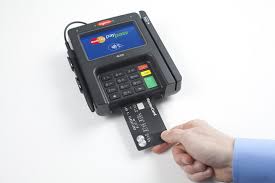
About half the world’s credit card fraud happens in America. This new processing terminal uses technology that reads the latest EMV chip embedded credit card.

Due to massive losses that have occurred through large-scale credit card data breaches, there will be a change in credit card liability. Beginning on October 1, 2015, a shift in liability places the responsibility for fraudulent credit card charges on the merchant and/or banks that don’t use new technology to accommodate chip-based credit cards. The changes, the first major alterations in decades, will make credit card fraud more difficult.

The traditional magnetic strip credit cards now in wide use will be replaced with cards that have embedded chips and PINS. Fraudsters will find themselves stymied as more users turn to these cards, dubbed EMV cards, an abbreviated form of Europay, MasterCard and Visa.

The Losers

The losers will be the merchants who are not EMV ready and banks who don’t issue cards with the new technology. Historically, card issuers have eaten the loss due to counterfeit cards. Now the responsibility will shift to the merchant who processed the card without the new technology or the bank that issued the card without EMV technology. Magnetic card swipes are easily counterfeited, and now account for billions of dollars in fraud losses every year – an estimated 7 billion in the United States alone.

Start Dates

On Oct.1, when the rules change, merchants who have not installed EMV terminals will be burdened with the costs of fraudulent transactions, but those who offer EMV protected services will be off the hook. When the new technology was developed, the card networks decided that improving point of sale devices and the design of the credit card itself would be the best way to go.

It will take time for the new technology to settle in. Experts estimate that by the Oct. 1 start date about 35 percent of merchants will have the technology to process EMV sales. And only 15 percent to 25 percent of cards issued will have the chips to facilitate the secure purchases. By the end of the year, the expectations are that 70 percent of credit cards, 41 percent of debit cards and 59 percent of terminals will be ready for the new technology.

Big Retailers Comply

Predictably, the largest merchants are gearing up to lead the parade. They and others are trying to stay ahead of the curve in being prepared for the change. Widely publicized security breaches such as the devastating Target fiasco are impetus for the merchants to make themselves – and their customers – more secure. The cost of installing the new equipment is about $200 per terminal.

New Industry Created By EMV Needs

Those who produce and install the equipment are being hard-pressed to meet demand. Small merchants are at the tail-end of the parade toward EMV technology, and the demand is so great there are many competitors ahead of them.

What Banks Issue EMV Credit Cards?

Among the card issuers, large banks also are better poised to make the change, with regional banks less ready to distribute EMV-enabled cards to customers. There is no huge supply of EMV chips, and these institutions may see a lag in catching up with the technology, so they may face greater fraud losses. American Express, Bank of America, Chase, Citi and Wells Fargo banks all issue cards with the new chip technology.

Europe is ahead of the United States in implementation of EMV-protected card transactions, with experience going back to 2005. Since then, online sales have increased significantly. The experts expect the same jump in the U.S.

Looking Forwards

The shift in liability will open new doors for mobile payment processing in 2015. New technologies that process payments through mobile phones may lead to some steep learning curves by consumers, retailers and banks, but chances are the learning will be worth it in the long run.

Read More At Wall Street Journal

Filed Under: Credit, Credit Cards Tagged With: credit cards

Small Businesses Also Get Hacked

October 23, 2014 By Twila Van Leer

Scott Schrober, CEO of Varitronic Systems,
Everyone has heard, read about or seen the multi analyses of the disastrous computer breaches at JP Morgan Chase, Target and Home Depot, but what about the small businesses that have suffered similar (possibly greater when you consider scale) crises?

About 44 percent of the small companies in the country have been affected by cyber crime, according to a 2013 survey by the National Small Business Association. The average cost of dealing with the damage was $8,700, the association reported.

The small businesses often become part of the damage inflicted on the larger businesses. When JPMorgan Chase data was breached, for instance, 7 million small businesses shared in the fallout, along with 76 million households. Target Corp., Michael’s Stores, Home Depot and Neiman Marcus, who also reported compromised information in the past year, also have small contracting companies as customers.

Businesses lose revenue when they have to shut down their systems to allow the experts to ferret out the harmful viruses that caused the damage. Additional costs are racked up as the affected companies have to notify each company or individual who was affected by the breach. Most states require a compromised business to notify customers. If lawsuits are brought by injured customers, the costs go up again.

Small businesses sometimes become vulnerable to attack because the owners believe they can’t afford the software programs and consulting services that might protect them, or the time to deal with potential attacks. Some small businessmen and women simply are not aware of the risks. They don’t know that they can be attacked by what they believe is a relatively harmless source. An innocent-seeming email from a friend whose computer has been attacked may mean trouble. Not knowing how sophisticated the enemy has become can be fatal.

Scott Schrober, CEO of Varitronic Systems, took steps to protect his company after a hacker weaseled $50,000 from his company’s bank account recently, an Associated Press story related. Schrober took steps to prevent any further intrusion by investing $50,000 in security and plans and intends to spend another $20,000. He believes his company was targeted because computer security is his business. The thieves were sending a message.

While there is no security system that will absolutely guarantee immunity from hackers, experts suggests that small business owners take these precautions:

  • Pay a computer security consultant to evaluate your system and make recommendations.
  • Purchase insurance to cover potential losses. Premiums can be as low as $1,000 for a million dollars in coverage.
  • Install free anti-virus and anti-malware software that you can find online. Add firewalls that block attempts to access.
  • Make certain that your email provider has effective security.
  • Use a separate company to process orders to avoid having customer credit card information stolen. Be certain that the company you collaborate with has a secure system.
  • Look into a service that specializes in spotting fraudulent credit card transactions.

Filed Under: Fraud, Security Tagged With: business

EMV Technology Becoming a Credit Card Reality

October 14, 2014 By Twila Van Leer

Chip and signature technology for credit cards is helping fight theft.
With credit card security becoming more challenging, more banks are issuing cards with tiny computer chips that will, hopefully, make card use less risky.

Over the next year, it is likely that banks will replace credit and debit cards that feature magnetic strips with chip-embedded cards. One of the country’s largest bankers, Bank of America, announced recently that new customers will be issued cards with chips. Existing cards will be upgraded as they expire, the bank said.

The chips create a unique code for each transaction, which, hopefully, will stymie thieves who can use the magnetic strip information to create new cards.

The new technology has been in use in foreign countries for some time and U.S. banks have issued chip-embedded cards to Americans planning foreign travel. Shifting to chips in the U.S., however, has been complicated by the complex payment networks in use, according to a New York Times article. However, recent instances of serious data breaches has spurred adoption of the chip technology. Among the recent breaches was hacking of Home Depot data, which jeopardized data on 56 million cards.

Among the large financial institutions hurrying into the process is Chase, which said it already has issued a large number of chipped cards and expects that by the end of the year most of its debit cards will have the new technology. Wells Fargo is experimenting and plans to issue chip-embedded cards in the coming year. Citibank also will make the full shift in 2015. Most customers already have the option of requesting a chipped card.

While the banks hurry to implement the new technology, many retailers are behind the curve, the NYT article said. They do not have payment terminals to process the cards. Some major retailers, including Whole Foods, Sam’s Club and Costco, have the equipment and are accepting the new cards. It is expected that most big stores will have the right payment terminals by October 2015. Meanwhile, some card issuers are including magnetic strips as well as chips on their cards so customers can use either technology.

Users will discover some differences as the chip-embedded cards go into service. Magnetic stripe cards are swiped at the cash register. Chip cards are dipped into a reader and remain there for a few seconds while the transaction is approved. Customers will need more cautious to be certain they retrieve the card. That’s a small requirement in exchange for what will be less worrisome shopping.

Filed Under: Banking Tagged With: credit cards, EMV Technology

Wal-Mart Offers new GoBank Accounts Sans Overdraft Fees

October 8, 2014 By Sherry Tingley

Walmart Is Offering Pre-Paid Debit Cards
Walmart Is Offering Reloadable Pre-Paid Cards
Joining other large retailers that engage in semi-banking practices, shopping giant Wal-Mart has opted to provide a card-based program for customers who may overspend their accounts while purchasing in their stores.

The world’s largest retailer had teamed with Green Dot Corp., a leader in creating reloadable prepaid cards. New mobile checking accounts issued by Wal-Mart under the cooperative effort will not require fees for overdrafts and bounced checks. An $8.95 monthly fee will be charged for these GoBank accounts. The fee is waived if there is a deposit of $500 or more each month.

Accounts can be opened by purchasing a $2.95 starter kit at any Wal-Mart Store. A smartphone is a necessity, since most of the banking transactions are done through an app. Credit Bureau ratings commonly used to determine eligibility are not part of the application requirements. The idea behind GoBank is to provide options for people who don’t have a lot of money and may have poor credit scores.

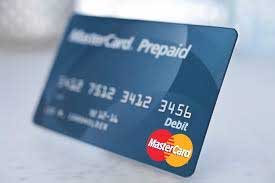
The kit includes a MasterCard debit card that can be used to withdraw money or make purchases. No fee is charged for ATM withdrawal services at the 42,000 locations around the country. If money is withdrawn from ATMs outside the system, a $2.50 charge is levied. A 3 percent fee is added to withdrawals outside the United States.

The new arrangement is one of several moves being made to help Americans who are still feeling the effects of the recent recession. Both Bank of America and Citibank have begun offering fee-free accounts this year.

Regulators have been looking more closely at overdraft fees, which in some instances can go up to $35 per incident. The regulators have responded to concerns by requiring banks to get written approval from a customer to provide overdraft protection, which allows a customer’s account to dip below zero. Those who choose to have the overdraft protection still pay high fees. Some customers at large banks regularly rack up fees in the neighborhood of $260 a year, according to the Consumer Financial Protection Bureau.

Wal-Mart’s Daniel Eckert, senior vice president for services, said GoBank was the retailer’s response to customer concerns that regular banking fees are too high.

Filed Under: Checking Accounts Tagged With: Bank Fees, banking, Checking Accounts

  • « Go to Previous Page
  • Page 1
  • Interim pages omitted …
  • Page 5
  • Page 6
  • Page 7
  • Page 8
  • Page 9
  • Interim pages omitted …
  • Page 13
  • Go to Next Page »

Primary Sidebar

Personal Finance Articles

  • Make Saving A Priority
  • Review Your Home-Insurance Risks
  • Lowest Air Fare? Try August 28
  • Hackers Targeting Bitcoins
  • Keep Your Emergency Fund Intact

Save At Walmart

Search

Personal Finance Education

Investing Education from Morningstar.

As Seen On Intuit

Intuit.com has ranked Coolchecks.net #4 out of 10 of the best blogs to help you save money. We hope to help you become more aware of your own financial situation and strive to improve it.

Featured On Mint.com – July 2014

Mint Interview

Categories

  • Banking
    • Check Writing
    • Checking Accounts
    • Credit Cards
    • EMV Cards
    • Fees
    • Fraud
    • History
    • Student Loans
  • Best Of The Web
  • Budgets
    • Emergency Fund
    • Grocery Shopping
    • Saving Money
    • Spending Habits
  • Business
    • 3D Printing
    • Bankruptcy
    • Business Advertising
    • Business Development
    • Business Plans
    • Corportate Lessons
    • Data Mining
    • Legal Issues
    • Merchants
    • SEC
    • Security
    • Small Business Startups
  • Consumer Alerts
  • Cryptocurrency
  • Cutting Costs
  • Employment
    • best places to work
    • Careers
    • Interviews
    • Job Search
    • Top CEOs
    • Wages
  • Entrepreneurs
    • Attitudes
    • Entrepreneur Interviews
  • Featured
  • Finance
    • Automobiles
    • Credit Ratings
    • Education
    • Financial Planners
    • Foreclosures
    • Homes
    • Insurance
    • Investing
    • Mortgages
    • Personal Finance
    • Renting
    • Term Deposits
    • Travel
    • Work
  • Fraud
  • Government
  • Holidays
    • Christmas
    • Halloween
  • Internet
    • Bitcoin
    • Blogging Tips
    • Blogs, RSS and Podcasting
    • Databases
    • Facebook
    • Influence
    • marketing
    • Twitter
    • Website Reviews
    • WordPress
      • Key Words
  • Investing Basics
    • Hedge Funds
    • Investing
    • Mutual Funds
  • Life
    • Aging
    • Just For Fun
      • Punahou Alumni Corner
    • Millennials
    • Personal Health
  • Money Making Ideas
    • Affiliate Programs
    • Craigslist
    • Ebay
  • Money Management
    • Bankruptcies
    • Building Wealth
    • Child Care Costs
    • Christmas Shopping
    • Credit
      • Free Credit Report
    • Debit Cards
    • Debt
    • Debt Reduction
    • Health Insurance
    • Income
    • Inheritance
    • Interest Rates
    • Loans
    • Mortgages
    • New Years Resolutions
    • Retirement
    • Shopping Tips
    • Tax Strategies
    • Your Stories
  • Retirement
  • Self Improvement
    • Time Management
    • Work Habits
  • Shopping
    • Coupons
    • Online Shopping
  • Social Security
  • Tax Tips
  • Taxes
  • Technology
  • Trade
  • Uncategorized
  • Wealth

Best of Personal Finance Blogs

Best of BuyerZone Business Finance Blog Recipient

Personal Finance Sites We Recommend

Get personal finance advice from the people behind the top money blogs, including Wise Bread, The Simple Dollar, Mint and Nerd Wallet.

Copyright © 2026 ·Metro Pro · Genesis Framework by StudioPress · WordPress · Log in