• Skip to primary navigation
  • Skip to main content
  • Skip to primary sidebar
  • Money Management
    • Debt Reduction
    • Credit
    • Mortgages
    • Mutual Funds
    • Tax Strategies
    • Loans
  • Budgets
    • Saving Money
    • Income
  • Banking
    • Checking Accounts
    • Check Writing
    • Fraud
    • History
  • Entrepreneurs
    • Entrepreneur Interviews
    • Money Making Ideas
    • 3D Printing
  • Resources
  • Retirement
  • About
    • Privacy Policy

Personal Finance Blog

Tips And Stories To Help You With Managing Money

  • Privacy Policy
  • Saving Money In 2018
You are here: Home / Archives for Banking

Banking

Chip Cards Off To A Slow Start

December 19, 2015 By Twila Van Leer

The deadline has passed, but as of a few weeks ago, fewer than half of America’s credit and debit cardholders had received a new card containing the chip that is supposed to help combat card fraud, according to Cardbeat research.

And of those whose card issuer has presented them a card with the new technology, many have never actually use it as intended, the research showed. The survey was conducted by Auriemma Consulting Group, who surveyed some 400 adult cardholders to gather the data.

The chips, which are being pushed by Europapy, MasterCard and Visa (EMV), showed that at the time of the survey (in June) about 47 percent of the respondents had at least one chip credit card and about 25 percent had a debit card containing the chip.

Add to this problem the dearth of merchants who have the new equipment required to read the enhanced cards and you have a very slow start to a process that was ballyhooed as a major step toward thwarting fraud in stores. A USA Today report said that a mere 27 percent of all the merchants who are expected to use the technology had acquired the equipment to put it into practice. Small businessmen, in particular, have complained at the cost of readers, although some models sell for about $100. For large retailers, of course, the cost escalates, but they have the capacity to pay more.

The effort took on more steam during September as an Oct. 1 deadline approached that shifts the liability for fraud to the seller instead of the institution that issued the card.

Those consumers who are using their new chipped cards complain that the technology increases checkout time at the store. Those who issue the cards say that a certain amount of experience is necessary to make the changes in habit that will ensure the program’s success. Until more merchants have the equipment to read the new cards, that experience will be spotty, they say.

In the meanwhile, as the transition moves ahead, merchants say their new readers will continue to process the magnetic strip cards that are in current use.

Most people who get a new card (67 percent in the Auriemma survey) are aware that the blossoming technology will make it harder for unauthorized users to counterfeit a chip card than one with a magnetic strip. Huge breaches of card security in some of the country’s major companies in the past few years provided much of the impetus for new technology.

Internal mistakes will remain a problem, according to an Experian publication. Training for clerks who are in charge of customer transactions is another component in the whole move to chip technology. And the curve for customer education must be speeded up to make it work. Many customers still prefer to swipe their card rather than hand it over to be read by a chip reader, even though the magnetic stripe reading is more vulnerable. The reluctance on the part of customers may be more understandable in view of reports that 35 percent of them using a chipped card have difficultly in making their transaction. The process takes longer, they complain, and many are not aware that the card has to stay in the reader until the transaction is complete. If they remove it prematurely, they have to start the process over again.

The upcoming Christmas shopping season is likely to be the true trial of the chip card technology. Education on all sides of the issue is the answer, but if the ultimate outcome of the switch is a decrease in the multi-billion dollar fraud that occurs at the checkout line, the problems associated with the transition will all be worthwhile.

Related articles across the web

  • Plastiq: Pay Tuition, Rent, or Taxes With Credit Card at 1.5% Fee, Debit Card at 0% Fee

    Filed Under: Credit Cards

    Millennials Benefit By Owning A Few Credit Cards

    December 14, 2015 By Twila Van Leer

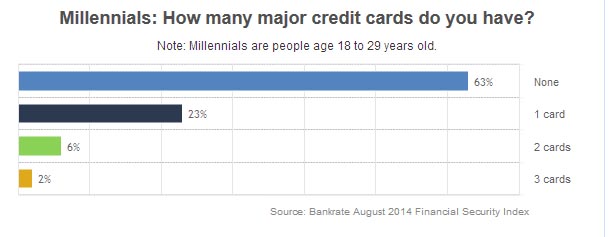
    millenials-credit-card-usageWho would ever guess that being without credit cards could be a problem? Too many people know the stress of having to make the payments that credit cards require, but not having any cards can create difficulties of another kind. Borrowing in the future may be hampered if you haven’t built a history of bill-paying.
    The millennials who are now in their working years tend to take on fewer credit cards than did their older peers. But when you apply for a loan, for a car or house, say, the potential creditor will be looking for evidence that they can expect you will pay regularly and on time.

    Avoid becoming part of the “credit invisible” group by looking ahead and planning when and how to use a credit card. Before 2009, when Congress passed the Credit Card Act, college students were sent offers from banks and other financial institutions for credit cards, usually with a glut of “goodies” to sweeten the deal. Under the act, persons under 21 must have a co-signer or be able to prove income to obtain a card.

    The provisions had a dampening effect on applications for cards by young people. NerdWallet did a survey that determined 31 percent of those in the 19-34 age bracket had never applied for a card. Millennials, too, have been deluged with horror stories of the results of uncontrolled debt and may be more wary of taking on cards than those who preceded them. Those born at the turn of the century were becoming job-eligible after a serious recession had turned the country’s economy topsy-turvy. The increasing costs of student loans also have had an effect on the overall financial thinking of the millennials.

    But the reality comes home to roost when credit is a sensible part of personal finances. Not being able to get loans – or even to set up a cellphone plan – brings the role of credit into stark reality. Sometimes, even a large down payment on a big-ticket item may not offset the creditor’s inability to verify a customer’s credit standing.

    Delaying too long also may complicate your ability to obtain a card when you want one. A disproportionate number of those in the millennial age group were denied credit cards on their first application, according to Fair Isaac Corp. research. Because they haven’t built a credit record, they end up with low scores, the average being 628 – not enough to impress the card issuers. Banks often require a good to excellent rating to issue a card. Being denied a card multiplies the problems, as the denial becomes part of the credit rating.

    Being persuaded to apply for a card because of the flashy perks such as cash-back rewards, airline miles, etc., may look good at first glance, but the institutions that offer such incentives often charge more interest, or even an annual fee. Don’t jump too fast.

    Piggy-backing, or adding your name to the card owned by a parent or other relative may be an option. But be certain that the individual has a good credit rating, or it may ultimately affect your own rating. Likewise, you are more likely to have your feet held to the fire so that your lapses in payment don’t affect the card owner’s credit.

    A secured card may be the answer for your first-time foray into credit. These cards require money in a security deposit account as collateral. Income and ability to pay also must be proved. This type of card helps to build a credit history that may lead to other cards after time. Prepaid cards do not build a credit record, simply tapping into deposited funds.

    Consider the options and go for the one that fits your needs. But some sort of credit card will ultimately work to your benefit as you get into the serious business of life as an adult.

    Related Articles


    Millenials Say No To Credit Cards

    Filed Under: Credit Cards Tagged With: credit cards, credit score, Debt, Millennials

    New Credit Cards Cause Hassles For Some

    October 28, 2015 By Twila Van Leer

    EMV credit cards are being accepted at over 78,000 merchants.
    EMV credit cards are being accepted at over 78,000 merchants.
    The rapid spread of new credit and debit cards containing new chip technology is causing all kinds of problems for companies that charge cards on a subscription basis.

    Subscription based companies such as video and music streaming companies, dating services, gyms and many others, are facing serious challenges as millions of the new chip-embedded cards go into use across the country.

    Netflix, for instance, reported recently that it lost a large number of accounts during the three-month period that ended in September. Many of the customers who cancelled were not aware that with the new replacement cards, they must update their information to allow the merchant to automatically withdraw payments.

    As the new cards go into service, in many instances the card number is changed. Or the number is okay, but the expiration date has been changed. That all wreaks havoc for the companies that have benefited from automatic withdrawals in the past. Payments often won’t go through if the card’s expiration date has changed.

    A San Francisco company that manages bill collection for more than 1,900 subscription businesses reports that it has seen an increase in the number of transactions declined recently.

    Bumps in the financial services that deal with these businesses are caused by any irregularities in the marketplace. The data breaches in big retailers, such as the recent Home Depot debacle, for instance, threw them into disarray because thousands of those who shop the home improvement store had to get new cars.

    Dating websites such as Match.com and OkCupid also felt the effect of credit cards that were not updated. IAC/InterActive Corp, parent company for the dating services, lost some $5 million in earnings because of the problems.

    Although the new chip technology is expected in time to make huge dents in the costly fraud that has plagued the card services, there are obvious downsides to the switch that will require resolution as the technology becomes widespread.

    Related articles across the web

    • New credit card chips help prevent fraud
    • 4 Ways Chip Credit Cards Make Life Easier
    • Should You Upgrade Your Credit Card Processing? Three Questions To Ask About EMV Ugprades.
    • Six out of 10 U.S. Consumers With Credit Cards Are Not Ready For EMV, New Survey Finds
    • Why the Pending U.S. EMV Liability Shift Deadline is Almost Meaningless

      Filed Under: EMV Cards Tagged With: credit cards, debit cards, EMV Technology

      Stay Wary Of Fraud As Chip Cards Become Common

      October 26, 2015 By Twila Van Leer

      credit-card-fraudThe race to protect American consumers from fraud and identity theft by the advent of cards with chips embedded in them is expected to work – to a degree. But the fraudsters are on the job, too, looking for ways to get around the new technology.

      The new “smart cards” feature a chip that encrypts every transaction, making it much more difficult for people looking for information that aids them in their fraudulent aims. Americans are receiving the new cards from the companies that issue their credit and debit cards. The switch is going more slowly than economists had hoped, but the number of chip cards in use is expanding. Part of the problem lies in the fact that merchants have not put the necessary card-reading technology in place. Over time, however, the chipped cards will become the norm.

      But in case you have new chip cards and are feeling invulnerable to fraud, hold on. Those who would like to steal your information are already in action. They are sending out emails or text messages that purport to be from the financial institution sponsoring the cards. The messages say the consumer needs to provide information through a link or by responding to the message in anticipation of receiving a new card.

      If you receive such a communication addressed to “Dear Cardholder,” recognize it as an attempt to steal your information. Contact your credit card company or bank and confirm that the message is legitimate before you provide any information.

      The smart card technology is expected to greatly reduce credit card fraud, but there are chinks in the system. In the United Kingdom, which initiated the chip approach in 2004, credit card theft has decreased by 75 percent, but the fraudsters have moved more aggressively into online purchases and ATM card skimming.

      Be sure you are using a secure website for online payments, keep a paper record of transactions and be alert for any suspicious activity, the experts advise. An informed consumer is definitely the fraud perpetrator’s worst enemy. No matter how sophisticated the efforts to protect consumers, there will always be a need for caution.

      Related articles across the web

      • 4 Ways Chip Credit Cards Make Life Easier
      • What you need to know about new computer chip credit, debit cards
      • How the October 1 change in credit card technology will make your money safer

      Filed Under: EMV Cards Tagged With: EMV Cards

      How Wise Are Lengthy Auto Loans?

      October 24, 2015 By Twila Van Leer

      car-loansWhen you buy a new car with terms stretching five years or even more, what are the financial consequences?

      Obviously, you’ll pay more interest. But in the meantime, your earnings likely will grow and the monthly payments will be more affordable. You might be able to increase your payments, erasing the effects of the interest.

      Car buyers are increasingly using this tactic to pay for vehicles, which are becoming more expensive all the time. Experian Automotive reports that 30 percent of all new vehicles purchased in the first three months of this year were financed over six to seven years. Sixteen percent of used vehicles, ditto.

      Lower interest rates, more extensive manufacturer warranties and the better durability of today’s vehicles make the longer pay-off periods acceptable to many buyers. People today tend to keep a vehicle longer as well, on average about eight years, according to automotive sources.

      Before diving into a long-term loan for a car, consider these factors:

      Look at overall costs, not just the monthly payment. The salesman on the lot will try to focus your attention on monthly element, but consider total price, down-playing sticker total and interest. Keep in mind that the interest on an auto, unlike mortgage interest, is not tax deductible.

      If you can come to the lot with a preapproved financial guarantee in hand, you can negotiate based on total cost and consider the details later. Compare the preapproved amount with the dealer’s offer and then make a decision. An Edmund’s interest rate calculator will provide an honest appraisal of how much you will pay over the term of a six or seven year loan. The calculator can be accessed at http://www.edmunds.com/calculators/simplified-pricing.html

      How long do you estimate you will have the vehicle? If you expect that you will have it for some time after it is paid off, you can look forward to a period free of car payments. The trade-off may be more costs for car repairs and upkeep. The amount you can expect for trade-in value also will have declined.

      Most experts in the field discourage using a long-term loan to purchase a used vehicle. Suppose your choice of a used vehicle is three years old. If you are still paying on it seven years later, it is 10 years old and for many vehicles, that is approaching the end of its usefulness.

      Depreciation is a factor. In the case automobiles, it begins the moment you drive it off the dealer’s lot. If you choose to sell the car in the first few years, you are looking at a loss if depreciation has outstripped the value. And the potential for accidents may enter into the picture. If you total your vehicle when it is three years old, for instance, it’s likely you still owe more on the loan than the vehicle’s current worth. That’s known in the trade as being upside down on the loan.

      A long-term loan may be the answer to your desire for a newer, safer car, but don’t leap until you are sure of all the financial facts.

      Related articles across the web

      • The Best Time to Buy a Car
      • Financing vs. Paying Cash For a Car
      • Types of car finance : a quick guide

        Filed Under: Automobiles, Banking, Loans Tagged With: Automobiles, Cars, Loans

        • « Go to Previous Page
        • Page 1
        • Interim pages omitted …
        • Page 4
        • Page 5
        • Page 6
        • Page 7
        • Page 8
        • Interim pages omitted …
        • Page 13
        • Go to Next Page »

        Primary Sidebar

        Personal Finance Articles

        • Make Saving A Priority
        • Review Your Home-Insurance Risks
        • Lowest Air Fare? Try August 28
        • Hackers Targeting Bitcoins
        • Keep Your Emergency Fund Intact

        Save At Walmart

        Search

        Personal Finance Education

        Investing Education from Morningstar.

        As Seen On Intuit

        Intuit.com has ranked Coolchecks.net #4 out of 10 of the best blogs to help you save money. We hope to help you become more aware of your own financial situation and strive to improve it.

        Featured On Mint.com – July 2014

        Mint Interview

        Categories

        • Banking
          • Check Writing
          • Checking Accounts
          • Credit Cards
          • EMV Cards
          • Fees
          • Fraud
          • History
          • Student Loans
        • Best Of The Web
        • Budgets
          • Emergency Fund
          • Grocery Shopping
          • Saving Money
          • Spending Habits
        • Business
          • 3D Printing
          • Bankruptcy
          • Business Advertising
          • Business Development
          • Business Plans
          • Corportate Lessons
          • Data Mining
          • Legal Issues
          • Merchants
          • SEC
          • Security
          • Small Business Startups
        • Consumer Alerts
        • Cryptocurrency
        • Cutting Costs
        • Employment
          • best places to work
          • Careers
          • Interviews
          • Job Search
          • Top CEOs
          • Wages
        • Entrepreneurs
          • Attitudes
          • Entrepreneur Interviews
        • Featured
        • Finance
          • Automobiles
          • Credit Ratings
          • Education
          • Financial Planners
          • Foreclosures
          • Homes
          • Insurance
          • Investing
          • Mortgages
          • Personal Finance
          • Renting
          • Term Deposits
          • Travel
          • Work
        • Fraud
        • Government
        • Holidays
          • Christmas
          • Halloween
        • Internet
          • Bitcoin
          • Blogging Tips
          • Blogs, RSS and Podcasting
          • Databases
          • Facebook
          • Influence
          • marketing
          • Twitter
          • Website Reviews
          • WordPress
            • Key Words
        • Investing Basics
          • Hedge Funds
          • Investing
          • Mutual Funds
        • Life
          • Aging
          • Just For Fun
            • Punahou Alumni Corner
          • Millennials
          • Personal Health
        • Money Making Ideas
          • Affiliate Programs
          • Craigslist
          • Ebay
        • Money Management
          • Bankruptcies
          • Building Wealth
          • Child Care Costs
          • Christmas Shopping
          • Credit
            • Free Credit Report
          • Debit Cards
          • Debt
          • Debt Reduction
          • Health Insurance
          • Income
          • Inheritance
          • Interest Rates
          • Loans
          • Mortgages
          • New Years Resolutions
          • Retirement
          • Shopping Tips
          • Tax Strategies
          • Your Stories
        • Retirement
        • Self Improvement
          • Time Management
          • Work Habits
        • Shopping
          • Coupons
          • Online Shopping
        • Social Security
        • Tax Tips
        • Taxes
        • Technology
        • Trade
        • Uncategorized
        • Wealth

        Best of Personal Finance Blogs

        Best of BuyerZone Business Finance Blog Recipient

        Personal Finance Sites We Recommend

        Get personal finance advice from the people behind the top money blogs, including Wise Bread, The Simple Dollar, Mint and Nerd Wallet.

        Copyright © 2026 ·Metro Pro · Genesis Framework by StudioPress · WordPress · Log in