• Skip to primary navigation
  • Skip to main content
  • Skip to primary sidebar
  • Money Management
    • Debt Reduction
    • Credit
    • Mortgages
    • Mutual Funds
    • Tax Strategies
    • Loans
  • Budgets
    • Saving Money
    • Income
  • Banking
    • Checking Accounts
    • Check Writing
    • Fraud
    • History
  • Entrepreneurs
    • Entrepreneur Interviews
    • Money Making Ideas
    • 3D Printing
  • Resources
  • Retirement
  • About
    • Privacy Policy

Personal Finance Blog

Tips And Stories To Help You With Managing Money

  • Privacy Policy
  • Saving Money In 2018
You are here: Home / Archives for Banking

Banking

Credit Card Or Debit Card? It All Depends

April 7, 2016 By Twila Van Leer

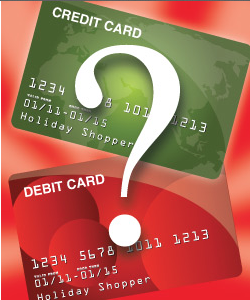
Which card is better to use between credit and debit?

It’s one of the questions that enters into discussion whenever issues of personal finance come up. And the answer is not as easy as it would appear on the surface. Purchases with both cards are subject to processing that makes a difference. Before you decide how to handle your card-shopping, consider these factors.

Debit Card

When you use a debit card, the transaction usually requires a personal identification number or PIN. The transaction is completed in real time, with the money coming immediately out of your bank account and transferring to the merchant.

Credit Card

A credit card does not require a PIN and is an offline transaction. The funds remain in your account until the merchant settles the purchase. It generally takes two to three days for the transaction to be apparent in your account.

Fees

Before the Dodd-Frank Wall Street Reform and Consumer Protection Act was passed by Congress, card issuers could charge different fees for credit card purchases than for debit card transactions. Initially, interchange fees of 12 cents per transaction were set. They rose to a 21-cent cap before the bill was signed into law, but that was still significantly lower than the previous 45-cent fee that had been in effect.

Credit Unions

The law, however, does not apply to thousands of community banks and credit unions that issue cards. It is in effect for financial institutions with $10 billion or more in assets.

The caps tended to dry up the debit card rewards and free banking provisions that had been offered with cards.

Difference

With the regulatory changes it makes less difference if you use a debit card or charge card for your purchases. The major difference now is that a debit card does not help you build credit, while a credit card does. Many debit cards now will run transactions without the use of a PIN, which minimizes the prospects for fraud.

Personal Decision

If you pay off credit card purchases in a timely manner, avoiding the interest charges, the distinction between debit and credit is further neutralized. Most Americans are likely to have one or more of both types of cards in their wallets. How they use them as they shop is a personal decision.
Filed Under: Credit Cards, Debit Cards Tagged With: credit cards, debit cards

Be Wary of Fake Debt Scams

March 28, 2016 By Twila Van Leer

Be wary of bill collectors claiming you owe them money.
When a thief gets your credit card info and runs up a huge debt, who is responsible for paying? Some scammers are making an art out of trying to get the money from the card holder and there are steps you can take to protect yourself. The elderly are particularly vulnerable since they tend to be less savvy about electronic finance issues.

One unfortunate retirement-age woman found herself being dunned for $8,500 after someone named “David” used her credit information illegally. She received more than 60 calls over a three-week period, often late at night, as she was hassled to pay the debt. The harassment didn’t end until she hired a lawyer.

The Consumer Financial Protection Bureau (CFPB) reports that 8,700 similar complaints were filed with the agency over a 15-month period, half from elderly persons who reported unrelenting attempts to collect money they didn’t owe.

In the period from July 2013 to December 2014, the agency received overall 110,000 complaints regarding debt collection. The Federal Trade Commission lists such complaints as its most consistent industry problem.

The debt collectors report they are trying to collect some $756 billion in debt. It isn’t possible to estimate how much of that staggering total involves “false debt” claims. But based on complaints by those 62 and older, there are several identifiable tactics that collectors use to weasel money not owed from the elderly, according to an AARP magazine article. They include:

Common debt collector scams:

Threats to garnish Social Security or veterans’ benefits if the person doesn’t pay the claimed “debt.” CFPB experts say this is not possible. Garnishees from these government sources are only possible for delinquent state or federal debt such as unpaid taxes, student loans or government-backed mortgages. Alimony or child support payments also can be withheld from Social Security payments, but Supplemental Security Income benefits cannot be garnished due to any debt.

Pressure to pay medical bills that supposedly were generated by a late spouse. Widows are the frequent victims of this particular scam, which are purposely imposed on them when they are emotionally frail, just learning to cope with their loss. Or the scammers may make repeated attempts to collect debts that they falsely allege were owed by deceased family members.

Frequently repeated calls, offensive language and threats of public shame are among the scammers’ arsenal to intimidate so-called debtors into paying. The experts stress that persons being subjected to these annoying tactics should not respond under pressure simply to be rid of the annoyance. Verify the debt before even considering payment. Be aware that collectors cannot collect on debt that has expired under statute of limitations provisions. The period ranges from two to 10 years, depending on state laws.

There are instances of mistaken identity in which legitimate collectors simply have their information wrong. In some instances, they are able to collect from the wrong party because those being dunned are reluctant to provide identifying information over the phone for fear of identity theft. But if you think you may have wrongfully paid a debt under such circumstances, contact the CFPB and your state’s attorney general to report your concerns.

To protect yourself against fake collectors, follow these steps:

Ask for specific information about the alleged debt. If the collector fails to respond, you can assume it is a scam. Visit go.usa.gov/Fsge for information about bogus collectors.

Keep close tabs on your credit transactions. You are entitled to three annual free reports from the three major credit reporting firms. Visit AnnualCreditReport.com for information on obtaining these reports. Look for unrecognized debt in your name and report discrepancies immediately.

Visit go.usa.gov/FsY3 to get information about alleged debt. Dispute claims that are not correct. You can obtain sample letters from that address that you can use as patterns to report your disputes. Send the information by certified mail and with a “return receipt” to the collector and to the creditor. Copy to the CFPB, the Federal Trade Commission and your state attorney general.

If you are being dunned for alleged credit card debt, insist on written proof, such as statements detailing unpaid charges. If the collector claims medical debt, ask for documents detailing services, dates and names of providers. Cross-check with Medicare and private insurers.

Trending Today

  • Help  For Seniors Fighting Against FraudSeniors Not Alone
  • You have the right to someone in your financial cornerYou have the right to someone in your financial corner
  • Common Fraud SchemesCommon Fraud Schemes

Filed Under: Credit Cards, Debt, Fraud, Free Credit Report Tagged With: credit cards, debit card fraud, Debt, Fraud Prevention

Check Up On Your Personal Finance Planning

March 11, 2016 By Twila Van Leer

The Great Recession that plagued personal finances from 1993 to 2008 had a significant impact on the amount of money Americans were saving. Savings figures for the period were at the lowest levels in recent history.

But by May of 2009, the household savings rate had climbed to 6.9 percent, the highest level since 1993. It took a major financial jolt to get people back on the right track. The effect of the recession, coming on the heels of a period of high borrowing, was a disaster for many. Bankruptcy filings had nearly doubled by the end of 2008.
If you have lingering concerns about the state of your own finances, check your data against these indicators. Make adjustments if necessary.

5 Steps To Financial Health

Credit Scores

1. Check your credit score. In a range of 300 to 850, the higher your score, the better your financial health. Lenders use this score to determine if they want to do business with you. To get a credit score without cost, contact one of the three primary credit bureaus, TransUnion, Equifax or Experian. If your score is below 600, try to improve it by paying down debt, satisfying outstanding judgments or curb your use of credit cards.

Savings

2. If you are saving less than 5 percent of your income, it isn’t enough. In 1993, the rate, at 7 percent, was the highest it had been. Since then, too many earners began dipping into savings to see them through the recession, rather than adding to their savings cushion. The trend now is up and if you haven’t joined the savers, now is the time. Don’t look at it as an immediate thing, but as part of the retirement you hope to have. If your savings backup is niggardly, it may disappear entirely in the event of a medical emergency or any other of the many financial challenges that can bite when you aren’t prepared. Make savings of 10 percent of income a goal.

Credit Cards

3. You can be pretty sure you are in over your head if you carry credit card balances from month to month or if you are paying only a small amount to the principal. This is a major cause of financial stress for many people. Ideally, you use a credit card only in emergencies, or charge only what you can pay off in a month. Then you start whittling away at the total, paying whatever you can over the expected monthly payment. Only $5,000 in credit card debt requires a minimum $200 a month and can ultimately cost $8,000, taking up to 13 years to pay off.

Mortgages

4. If housing consumes more than 28 percent of your income, you are in trouble. Almost certainly you will have to cut back in other areas of your budget to handle that load. When the housing market was thriving, the mortgage lenders were allowing people to buy homes that absorbed up to 35 percent of their income, but with the country just coming out of the housing slump, they are edging back to the 28 percent figure. Give some serious thought to downsizing if possible.

Cut Back

5. If your non-housing bills are going crazy, you can assume you need to do something to restore balance. Succumbing to the temptation to buy items on time, you end up paying what seem to be relatively small amounts on a dozen or more products or services. Then relative small quickly becomes over-large and you’re suddenly in the category in which the required outgo is larger than the income. Assess your situation by putting all the bills on the table and seriously discussing them. Identify what you can trim or do without and then do without it. Just one for-instance: Do you really need a 500-channel cable TV package if you are using only a few of the channels? Do you really need a land line if you have cell phones? Etc. etc. etc. An honest look may help your family regain control of its resources without any really painful sacrifices.

Do what you can to avoid become part of the dismal foreclosure and bankruptcy statistics. Keep tabs on your finances and move toward a better distribution of what you have for the sake of the future as well as the present.

Filed Under: Credit, Credit Cards, Cutting Costs, Mortgages, Saving Money Tagged With: budget, credit cards, credit score, money management, Mortgages

Identity Theft Hits 15 Million U.S. Residents

February 29, 2016 By Twila Van Leer

Identity theft is a more rampant than ever.
15 million United States residents have their identities used fraudulently each year.
Identity theft hits 15 million residents. It seems that no matter what steps people take today to protect their identity against fraud, those who do the fraud have a quick way to get around them.

Jean Chatsky, an American financial journalist, author and motivational speaker, has made a list of the most recent methods identity thieves use to deprive you of your identity. Read them and then act accordingly to be sure you aren’t the next victim.

Approximately 15 million United States residents have their identities used fraudulently each year with financial losses totaling upwards of $50 billion.

Identity Theft Through E-Mail

The conman sends you a message saying it is from a retailer, the U.S. Postal Service or other common deliverer regarding a package that can’t be delivered. The message includes a fake email address that you are supposed to use to resolve the problem. It asks for details about your identity. Or it may ask you to fill out a form and take it to your post office. That download may install malware onto your computer that feeds more information to the bad guys.

Email Attachments

Never click on a link or attachment you receive in an email unless you know the sender. If, in fact, you have a delivery that couldn’t be made, you will receive written notice on your door or in the mailbox from the sender. Contact the shipper.

Smishing

Smishing is a new coined word that is first cousin to phishing. But instead of trying to get you to take their bait via email, the fraudsters use text messages. Usually it involves a message about a great deal, a deep discount. To take advantage of the “bargain,” you divulge your personal information, and set your self up to become a victim. Don’t pay attention to any text from someone you are not familiar with. Legitimate deals come directly from the company. Sometimes they come as a text, but you have to sign up to receive them.

Social Media Messages

The crooks pay attention to your social media messages to figure out how to steal your identity. If you post on Facebook or Twitter that you just had a great experience at a restaurant or retailer, they may call, text or email you pretending to be from the business with whom you were pleased. They may tell you your credit card didn’t go through and ask for the information. Then they have the means to set up a false account in your name. Bye-bye security.

Bogus Charities

Using fake addresses and websites to appeal to you to support a “good cause,” they weasel pertinent information from you. These scams often follow a highly-publicized disaster to take advantage or your empathy for those who have been negatively affected. Hurricane Katrina spawned thousands of fake “charities.” If you want to support good works, give via well-known and reputable websites. Or write a check. If you are solicited by email or text, never click on a link. Consider making your donation to a large, well-recognized entity such as Red Cross, Doctors Without Borders or others that you know to be bona fide organizations.

The people who would use electronics means to cheat you make it a full-time job. Stay informed so you’re always a step ahead of them.

Filed Under: Consumer Alerts, Fraud Tagged With: Fraud, internet business, security

EMV Cardholders Face Challenges

January 3, 2016 By Twila Van Leer

http://i.zemanta.com/363507042_150_150.jpg
If you don’t yet know what EMV means, you need to find out. As of Oct. 1, there were big changes in the world of credit and debit card use, and shopping as you knew it is becoming a thing of the past.

EMV is the new acronym incorporating Europay, MasterCard and Visa. It designates a new type of credit or debit card, one that has a small chip embedded that takes the place of a magnetic strip for identifying the cardholder. Credit card data is stored on an integrated circuit through the chip. A purchaser must put his card in a reader, which applies a one-time code to the transaction. The process is expected to help stymie would-be fraudsters.

The chip is a response to the gigantic card breaches that occurred in some of the country’s largest merchants in recent years. Billions of dollars in losses are plenty of impetus for trying to curb unhealthy fraud.

The chip has been in use in many other countries for some time and it is deemed very efficient in preventing counterfeit fraud, which accounts for about two-thirds of fraud that occurs in stores. It isn’t the silver bullet that will bring an end to all fraud that takes place in the commercial world, but it is one powerful weapon in the battle. Experts are hard at work on other measures, such as tokenization, that will be applied as they become practical.

But despite the fact that the Oct. 1 deadline shifts blame for fraud to the banks and merchants who failed to incorporate the EMV technology by that date, the transition is proving more difficult than was expected. Just over half of American cardholders had received the new chip-embedded cards by the deadline. Relatively few of them have been educated about how the new technology works. According to surveys, 68 percent of those who have received new cards have no idea what it’s all about.

On the other side of the counter, thousands of merchants lack the equipment needed to read the new cards. Clerks and others expected to use the equipment are not all trained in the technology.

EMV is a giant step forward toward reducing fraud, but only if consumers, card issuers and merchants all get on board to make the new chipped cards effective.

As a consumer, what can you do? If your financial institution hasn’t issued you new chipped cards, ask why. And pay attention to the information you are receiving that will make you a part of the new shopping mode. Pressure the merchants with whom you deal to step up to the new technology and then be patient as it comes on line. (Keep in mind that getting the new equipment hasn’t always been easy for merchants. Small businessmen, in particular, have faced challenges in preparing to make the changes the chipped cards require. This is new territory for everyone involved. It changes the way clerks and managers interact with customers, according to those on the selling side of things.) But making it work is to everyone’s advantage.

Of course, the proof will be in the pudding. If the expectation that chips will make a big dent in fraud doesn’t pan out, expect other approaches.

Related articles across the web

  • ‘Smart chip’ debit cards transition going slowly

    Filed Under: Banking, EMV Cards Tagged With: credit cards

    • « Go to Previous Page
    • Page 1
    • Interim pages omitted …
    • Page 3
    • Page 4
    • Page 5
    • Page 6
    • Page 7
    • Interim pages omitted …
    • Page 13
    • Go to Next Page »

    Primary Sidebar

    Personal Finance Articles

    • Make Saving A Priority
    • Review Your Home-Insurance Risks
    • Lowest Air Fare? Try August 28
    • Hackers Targeting Bitcoins
    • Keep Your Emergency Fund Intact

    Save At Walmart

    Search

    Personal Finance Education

    Investing Education from Morningstar.

    As Seen On Intuit

    Intuit.com has ranked Coolchecks.net #4 out of 10 of the best blogs to help you save money. We hope to help you become more aware of your own financial situation and strive to improve it.

    Featured On Mint.com – July 2014

    Mint Interview

    Categories

    • Banking
      • Check Writing
      • Checking Accounts
      • Credit Cards
      • EMV Cards
      • Fees
      • Fraud
      • History
      • Student Loans
    • Best Of The Web
    • Budgets
      • Emergency Fund
      • Grocery Shopping
      • Saving Money
      • Spending Habits
    • Business
      • 3D Printing
      • Bankruptcy
      • Business Advertising
      • Business Development
      • Business Plans
      • Corportate Lessons
      • Data Mining
      • Legal Issues
      • Merchants
      • SEC
      • Security
      • Small Business Startups
    • Consumer Alerts
    • Cryptocurrency
    • Cutting Costs
    • Employment
      • best places to work
      • Careers
      • Interviews
      • Job Search
      • Top CEOs
      • Wages
    • Entrepreneurs
      • Attitudes
      • Entrepreneur Interviews
    • Featured
    • Finance
      • Automobiles
      • Credit Ratings
      • Education
      • Financial Planners
      • Foreclosures
      • Homes
      • Insurance
      • Investing
      • Mortgages
      • Personal Finance
      • Renting
      • Term Deposits
      • Travel
      • Work
    • Fraud
    • Government
    • Holidays
      • Christmas
      • Halloween
    • Internet
      • Bitcoin
      • Blogging Tips
      • Blogs, RSS and Podcasting
      • Databases
      • Facebook
      • Influence
      • marketing
      • Twitter
      • Website Reviews
      • WordPress
        • Key Words
    • Investing Basics
      • Hedge Funds
      • Investing
      • Mutual Funds
    • Life
      • Aging
      • Just For Fun
        • Punahou Alumni Corner
      • Millennials
      • Personal Health
    • Money Making Ideas
      • Affiliate Programs
      • Craigslist
      • Ebay
    • Money Management
      • Bankruptcies
      • Building Wealth
      • Child Care Costs
      • Christmas Shopping
      • Credit
        • Free Credit Report
      • Debit Cards
      • Debt
      • Debt Reduction
      • Health Insurance
      • Income
      • Inheritance
      • Interest Rates
      • Loans
      • Mortgages
      • New Years Resolutions
      • Retirement
      • Shopping Tips
      • Tax Strategies
      • Your Stories
    • Retirement
    • Self Improvement
      • Time Management
      • Work Habits
    • Shopping
      • Coupons
      • Online Shopping
    • Social Security
    • Tax Tips
    • Taxes
    • Technology
    • Trade
    • Uncategorized
    • Wealth

    Best of Personal Finance Blogs

    Best of BuyerZone Business Finance Blog Recipient

    Personal Finance Sites We Recommend

    Get personal finance advice from the people behind the top money blogs, including Wise Bread, The Simple Dollar, Mint and Nerd Wallet.

    Copyright © 2026 ·Metro Pro · Genesis Framework by StudioPress · WordPress · Log in