• Skip to primary navigation
  • Skip to main content
  • Skip to primary sidebar
  • Money Management
    • Debt Reduction
    • Credit
    • Mortgages
    • Mutual Funds
    • Tax Strategies
    • Loans
  • Budgets
    • Saving Money
    • Income
  • Banking
    • Checking Accounts
    • Check Writing
    • Fraud
    • History
  • Entrepreneurs
    • Entrepreneur Interviews
    • Money Making Ideas
    • 3D Printing
  • Resources
  • Retirement
  • About
    • Privacy Policy

Personal Finance Blog

Tips And Stories To Help You With Managing Money

  • Privacy Policy
  • Saving Money In 2018
You are here: Home / Archives for Banking

Banking

Building A Good Credit Score

October 8, 2016 By Twila Van Leer

Use card responsibly and pay each month's bill on time.
Use card responsibly and pay each month’s bill on time.
Building a good credit score doesn’t happen overnight. There are steps you can take to assure good credit from the outset and establish yourself on a positive note. They include:

Credit Reports

Check to see if you have a credit report. You could have established credit without being aware of it. For instance, if you have been authorized to use a family member’s credit, you might have a credit report. It is also possible that you have been a victim of identity theft, and that definitely needs to be cleared up before you start building credit in earnest. WalletHub is one site that offers credit reports and scores that are updated daily. If you find a report under your Social Security number, analyze it and if necessary, dispute errors, fraudulent accounts and negative records related to unauthorized use.

Get A Credit Card

Starting with a clean slate, open a starting credit card. It is usually pretty easy. There are some that don’t charge an annual fee or require you to incur debt as loans do. They report to the major credit bureaus on a monthly basis.

Three options for a starter card include student credit cards, general use cards for people with limited credit and secured credit cards. You have to have an active college or university email address to get a student credit card. A secured card offers the best opportunity to get guaranteed approval without the risk of overspending. The alternative to a starter card is a loan, usually for home, car, student use or other need that requires debt with interest.

Use Your Credit Card For 6 Months

Use the card responsibly for at least six months. That will generate a credit report and score. The score could range from bad to well above average, depending on what you did with the card and how well you paid. This first report is critical, because it puts you under the credit score microscope. Mistakes will be magnified beyond what they would be if you were a seasoned credit user.

Pay Bills On Time

Pay each month’s bill on time and keep your utilization of the card below 30 percent – 10 percent for the best result. Never use all the credit they extend to you. Setting up automatic payments from a deposit account is helpful in meeting these standards. Responsible handling of the initial card will help when you are ready to apply for a higher credit limit.

Study Your Credit Report

When you have a sense of how your initial foray into credit card use went, continue to study your credit report regularly. By looking at all of the components of the report, you can gain a sense of how the system works and be prepared for long-term credit use. You can learn to adjust course if any element of your report seems out of sync.

A responsible journey into the world of credit can set you up for life in what is an important element in ongoing personal finance.
Filed Under: Credit Cards, Free Credit Report, Spending Habits Tagged With: credit cards, credit score, money management

The Credit Elite Have Savvy Habits

June 23, 2016 By Twila Van Leer

Payment history most important factor used to determine overall score.
Ever yearned to be part of the “Credit Elite,” those whose credit ratings are up the 800-850 range as determined by the rating agencies? That kind of credit almost assures that you will be approved for loans and likely enjoy lower interest rates.

Those in the 800-plus range know that it doesn’t happen by chance. They make particular credit habits part of their regular personal finance strategies. Here are some of their suggestions:

Pay On Time

Without exception, pay on time. The payment history is the single most important factor that the agencies use to determine your overall score, being some 35 percent of the total. If you miss a payment or make one late, it has a negative effect.

Keep Balances Low Or Paid Off

Keep a rein on credit card balances. The size of the balance relative to the card limit is a factor. The best credit is generated by using less than 10 percent of the allowable limit.

Low Number of Credit Cards

Limit your credit accounts. Applying often for new credit can affect your bottom line. That activity represents 10 percent of the credit agency’s total. If you make frequent inquiries about new cards, for instance, trying to find the best mix of perks, it could have a negative effect. Try to get the right mix into place, then stand pat. A mix of debt, including credit cards, auto loans, mortgages, student loans, etc., all deftly managed, will impress the rating companies.

Don’t Spend More Than You Make

Live within your means. Overextending yourself financially will come home to roost. Don’t use credit to overspend. A solid, long-term credit history will keep your score in the range you want. The older your accounts become without serious lapses, the more they count. Stability is a factor when you’re looking at the 800 rankings.

Staying on course is important. Consistency is key to a good credit score. A small lapse can have a reverse effect. Make good credit a habit and stay on course. Check your credit score periodically and monitor your progress toward the elite standing.

Filed Under: Credit, Credit Cards, Debt, Money Management, Spending Habits Tagged With: credit cards, credit score, Debt, money management

Wells Fargo Launches Payment App For Android Phones

June 17, 2016 By Twila Van Leer

This summer Wells Fargo comes out with mobile payment app for Android OS 4.4 or newer phones.
This summer Wells Fargo comes out with a mobile payment app for Android OS 4.4 or newer phones.
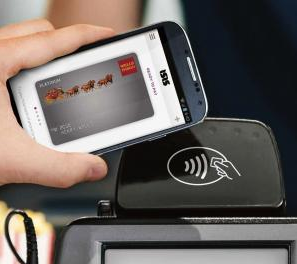
Wells Fargo, the second largest debit card issuer and fifth largest credit card issuer, comes out with a mobile payment app for Android OS 4.4 or newer phones. The app will enable Near Field Communications (NFC) transactions for the millions of smartphones and tablets that use the app.

Wells Fargo Wallet will be added to the company’s existing mobile banking applications. Automatic refresh opportunities incorporating the WFW feature will be sent to Android users. Visa consumers and small business card customers also will be able to register.

Wells Fargo Payment App For Android Phones

Wells Fargo customers will be able to make purchases by tapping their Android phones at NFC-enabled payment terminals worldwide, including more than 1.4 million U.S. merchant locations. All transactions will be host card emulation-type, using the Visa Token Service.

Easy Sign Up Process

Wells Fargo supports Apple Pay, Samsung Pay and Android Pay, apps that require a download and enrollment process for cards. WF believes some of its customers may prefer the new Wallet because of the easy sign-up process and other services offered with the mobile banking option.

Chase and Capitol One preceded WF in offering proprietary mobile payment apps. Chase Pay is QR-code-based and Capital One Wallet, like WFW, is NFC-based. WF chose NFC to allow all of its card users to have the same experience, according to Steve Ellis, head of Innovation Group at WF in Fan Francisco.

Access Debit Card Balances

Cardholders will have access to their debit card account balance or credit card line of credit within the WFW app before and immediately after a purchase. Customers will be able to use the app for ATM transactions as well, without using a physical debit or ATM card. WF ATMs will be NFC-enabled by the end of this year, Ellis said. Apple Pay, Android Pay and Samsung Pay customers also will have the ATM service.

Filed Under: Banking Tagged With: banking, credit cards, debit cards

Watch For Fraud At The ATM

June 11, 2016 By Twila Van Leer

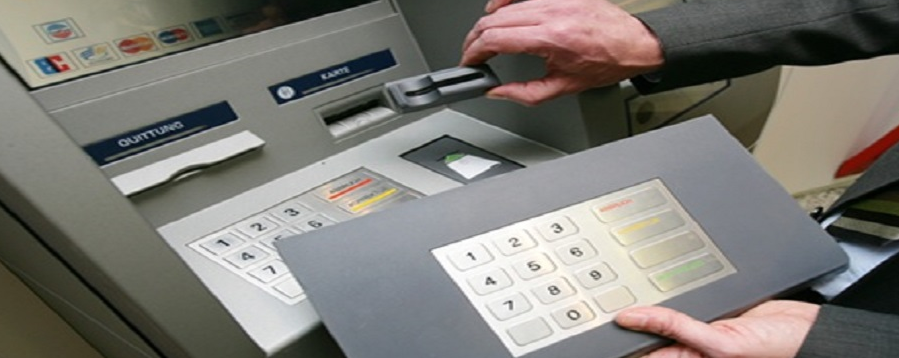
Fraudsters take $650 from each person they successfully skim.
You’d think, wouldn’t you, that you could transact business at an ATM without worrying about fraud. But the crooks are always on the alert, according to an article in the June AARP Bulletin.

Thieves Focusing On ATMs

In fact, automated teller machines have become a focus for some of those determined to benefit at your cost. The introduction of chip-enabled credit and debit cards has made it tougher for thieves to steal your information at the cash register, so they have turned more attention to the ATMs, experts warn.

Increase In Compromised ATMS

FICO Card Alert Service keeps tabs on three in five debit cards used in the U.S. and they have reported a 500-plus percent increase in the number of ATMs compromised by thieves since 2014. The proliferation of inexpensive skimming technology has been used by fraudsters to fuel the increase.

Card-Reading Devices

On average, fraudsters take $650 from each person they successfully skim, according to the ATM Industry Association. They do it by illegally installing card-reading devices at ATMs, gas pumps and other debit-processing machines located in public places. When you insert your card, their device “skims” the pertinent data from the magnetic strip. A nearby hidden camera records your PIN number. The information is then used to make duplicate cards or sold on the black market.

Skimming Technology Constantly Upgraded

The skimming technology is constantly being upgraded, giving the crooks the advantage, the article reports. Banks can’t react fast enough to stay ahead of such tricks as the “shimmers” that crooks implant inside ATM slots to read your card, or the Bluetooth processes they use to transmit your stolen data to other bad guys.

What to do?

  1. Go inside the bank. They aren’t perfectly immune to fraud, but better than the ATM and are usually protected by cameras. The most susceptible ATMS are at convenience stores and other non-bank locations.
  2. Inspect ATM before using it. Be wary of those with card slots that are different colors than the rest of the machine. If there is unusual-looking equipment on the slot, keypad or overhead, avoid using it. If it is difficult to insert your card, stop the transaction. Newer ATMs have a flashing or steady light at the card slot. If it is obscured, don’t use it.
  3. Put your hand over the keypad when punching PIN numbers.
  4. Keep close tabs on cards. Most banks offer real-time alerts via text message or email if there are suspicious transactions.
  5. Create a separate account, smaller than normal and use it only for debit card transactions. That will cut your losses if you are illegally skimmed.
  6. Lower the limit on daily ATM withdrawals to a reasonable amount, say $100 per day so a crook cannot make multiple withdrawals within a short time.

Filed Under: Banking, Credit Cards, Fraud Tagged With: banking, credit cards, debit cards, Fraud Prevention

You Write The Check and Then What?

June 7, 2016 By Twila Van Leer

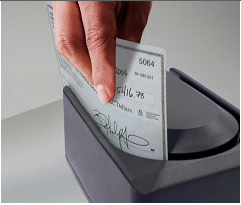
Checks are electronically scanned as part of the process.
Americans are writing fewer checks than ever as more of them handle their money matters electronically. Even so, some 18.3 billion checks were processed in a single year in 2012. Many people still feel checks give them more control over their personal finances.

Ever wonder what happens to a check after you pass it on to a merchant, family member, utility or whatever?

What happens depends to a large extent on who receives it, with different routes if it is handed to an individual vs. a business. Though some businesses and individuals still deposit checks with a financial institution in person, most are processed electronically, economic experts report.

Electronically Processed Through Scanning Devices

The checks are fed through a scanning device that takes pictures front and back. The image, along with metadata and account number, is then forwarded to the paying bank. Today’s scanners are designed with optical character recognition that reads the information on the bottom of the check and the handwritten or printed amount of the payment. Even small scanners can process about 45 checks per minute. Larger ones handle hundreds or even thousands in the same time frame.

For such a small piece of paper, a check contains a significant amount of information, at least nine pieces of data in most cases. They include the date on which it is written, the recipient, the amount of payment in both figures and words, a memo to specify what it is intended for, which is optional, your signature, the routing number, checking account number and the number of this single check.

The line of information at the bottom of the check includes numbers and symbols that give the bank routing and transit numbers, the customer account information and individual check numbers. In the business, it is known as the MICR line, an acronym for “magnetic ink character readable.”

Smart Phone Apps

Many smartphones have apps that can turn a paper check into an electronic image. They take pictures, via the phone camera, front and back of the check, and transmit the pictures to the bank when the check is deposited.

When a bank receives the image, the check can be processed or cleared, through the Federal Reserve Bank’s national clearinghouse, a regional clearinghouse or a direct connection between two financial institutions.

The number of checks processed in this manner has increased significantly. In 2006, 43 percent of them were scanned and electronically handled. By 2012, the figure was almost 100 percent.

What If You Lack Sufficient Funds To Back The Check?

It will be processed, again electronically, and returned to the back on which it was written. More than 127 million “bouncers” were returned to the bank of origin in 2006. Again, by 2012, the number had fallen by almost half, with just 66.4 million returned unpaid.

Although electronic banking will likely continue to make inroads into check transactions, it’s still a great way to handle your money affairs.

Filed Under: Banking, Check Writing Tagged With: banking, Checking Accounts

  • « Go to Previous Page
  • Page 1
  • Page 2
  • Page 3
  • Page 4
  • Page 5
  • Page 6
  • Interim pages omitted …
  • Page 13
  • Go to Next Page »

Primary Sidebar

Personal Finance Articles

  • Make Saving A Priority
  • Review Your Home-Insurance Risks
  • Lowest Air Fare? Try August 28
  • Hackers Targeting Bitcoins
  • Keep Your Emergency Fund Intact

Save At Walmart

Search

Personal Finance Education

Investing Education from Morningstar.

As Seen On Intuit

Intuit.com has ranked Coolchecks.net #4 out of 10 of the best blogs to help you save money. We hope to help you become more aware of your own financial situation and strive to improve it.

Featured On Mint.com – July 2014

Mint Interview

Categories

  • Banking
    • Check Writing
    • Checking Accounts
    • Credit Cards
    • EMV Cards
    • Fees
    • Fraud
    • History
    • Student Loans
  • Best Of The Web
  • Budgets
    • Emergency Fund
    • Grocery Shopping
    • Saving Money
    • Spending Habits
  • Business
    • 3D Printing
    • Bankruptcy
    • Business Advertising
    • Business Development
    • Business Plans
    • Corportate Lessons
    • Data Mining
    • Legal Issues
    • Merchants
    • SEC
    • Security
    • Small Business Startups
  • Consumer Alerts
  • Cryptocurrency
  • Cutting Costs
  • Employment
    • best places to work
    • Careers
    • Interviews
    • Job Search
    • Top CEOs
    • Wages
  • Entrepreneurs
    • Attitudes
    • Entrepreneur Interviews
  • Featured
  • Finance
    • Automobiles
    • Credit Ratings
    • Education
    • Financial Planners
    • Foreclosures
    • Homes
    • Insurance
    • Investing
    • Mortgages
    • Personal Finance
    • Renting
    • Term Deposits
    • Travel
    • Work
  • Fraud
  • Government
  • Holidays
    • Christmas
    • Halloween
  • Internet
    • Bitcoin
    • Blogging Tips
    • Blogs, RSS and Podcasting
    • Databases
    • Facebook
    • Influence
    • marketing
    • Twitter
    • Website Reviews
    • WordPress
      • Key Words
  • Investing Basics
    • Hedge Funds
    • Investing
    • Mutual Funds
  • Life
    • Aging
    • Just For Fun
      • Punahou Alumni Corner
    • Millennials
    • Personal Health
  • Money Making Ideas
    • Affiliate Programs
    • Craigslist
    • Ebay
  • Money Management
    • Bankruptcies
    • Building Wealth
    • Child Care Costs
    • Christmas Shopping
    • Credit
      • Free Credit Report
    • Debit Cards
    • Debt
    • Debt Reduction
    • Health Insurance
    • Income
    • Inheritance
    • Interest Rates
    • Loans
    • Mortgages
    • New Years Resolutions
    • Retirement
    • Shopping Tips
    • Tax Strategies
    • Your Stories
  • Retirement
  • Self Improvement
    • Time Management
    • Work Habits
  • Shopping
    • Coupons
    • Online Shopping
  • Social Security
  • Tax Tips
  • Taxes
  • Technology
  • Trade
  • Uncategorized
  • Wealth

Best of Personal Finance Blogs

Best of BuyerZone Business Finance Blog Recipient

Personal Finance Sites We Recommend

Get personal finance advice from the people behind the top money blogs, including Wise Bread, The Simple Dollar, Mint and Nerd Wallet.

Copyright © 2026 ·Metro Pro · Genesis Framework by StudioPress · WordPress · Log in