• Skip to primary navigation
  • Skip to main content
  • Skip to primary sidebar
  • Money Management
    • Debt Reduction
    • Credit
    • Mortgages
    • Mutual Funds
    • Tax Strategies
    • Loans
  • Budgets
    • Saving Money
    • Income
  • Banking
    • Checking Accounts
    • Check Writing
    • Fraud
    • History
  • Entrepreneurs
    • Entrepreneur Interviews
    • Money Making Ideas
    • 3D Printing
  • Resources
  • Retirement
  • About
    • Privacy Policy

Personal Finance Blog

Tips And Stories To Help You With Managing Money

  • Privacy Policy
  • Saving Money In 2018
You are here: Home / Archives for Banking

Banking

Congress Reluctant To Fix Data Leaks

October 25, 2017 By Twila Van Leer

Data Leaks
Data leaks, breaches of security can hurt consumers and businesses.
With the country reeling from the effects of the Equifax data breach, which gave hackers access to personal information of an estimated 43 million Americans, Congress still seems wary of regulations to try to prevent further episodes of the sort.

In fact, under the leadership of President Trump, Congress has been repealing the new bank laws passed after the 2008 recession that resulted in an economic crisis. More than a dozen of the Obama-era laws, designed to prevent future meltdowns have been repealed.

Very serious hacking incidents at businesses such as Target, Yahoo, Neiman Marcus and Home Depot also have failed to move Congress to action. The argument is that too much regulation in the business arena could stifle economic growth.

Consumer watchdogs such as Consumer Reports have said they can’t imagine what would have to happen to have the federal lawmakers take steps that might impose tougher data security regulations. The advocacy groups are lobbying for such measures. They hope for higher standards for companies that store personal information of customers and for immediate notification to those customers when breaches occur.

Republicans in both houses of Congress say they are gathering facts and that the issues will be on their agendas in October. Democrats are watching to see what will happen and some are calling for measures that will protect Americans from further thievery of their private information.

Among proposals being tossed about is a bill that would require a credit reporting company to immediately inform all affected consumers in the event of a data breach and to freeze the affected accounts without charge. A freeze is the most effective move a consumer can make to prevent the illegal use of the information that has been hacked, but it complicates personal financial decisions.
Filed Under: Banking, Fraud, Government

ATM Fees at Record Highs

October 24, 2017 By Twila Van Leer

ATM Fees
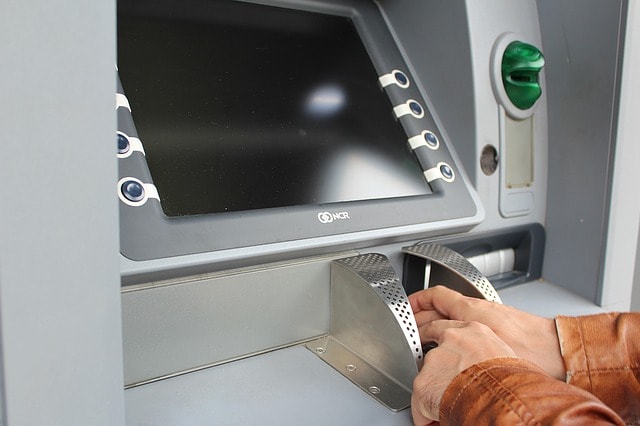
You can avoid fees by being proactive about your money.
Makes you wonder, doesn’t it? Why should you pay a fee to access your own money. But the fact is that fees for withdrawing money from an out-of-network ATM are now 55 percent higher than they were 10 years ago – and rising.

The average cost now is a record $4.69 per transaction, according to Bankrate.com, which did a survey to reach its conclusions. And the fees are likely to continue rising, Bankrate officials say, as fewer people use cash and make fewer withdrawals from the automatic tellers.

Banks that have ATMs on the premises are charging more to non-customers who use the machines to make up the difference.

The five cities that have the highest charges for out-of-network ATM transactions are : Pittsburgh, $5.19; New York, $5.14; Washington D.C. and Cleveland, tied at $5.11; and Atlanta, $5.05.

Rises in overdraft fees also are costing consumers more to handle their money. The average fee hit a new high this year of $33.38 per bounce. Philadelphians pay the heftiest fee at $35.30, while in San Francisco, the fee is $31.44 on average.

You can avoid fees by being proactive about your money, Plan ahead if you need to make an ATM withdrawal and avoid machines that are not in your bank’s network. Be aware of where you can make free withdrawals or get change when you make purchases with your card. Use your phone to find out where the ATMs in your network are available. Make a habit of carrying a small amount of cash. Find a bank that doesn’t charge ATM fees.

Avoid overdrafts by keeping close tabs on your balances. It’s as easy as making a smartphone check.

Getting signed up for email or text alerts that let you know you are approaching the level where your balance is chancy is smart. Fees are a waste of your money, so avoid them every chance you get.

Filed Under: Fees, Money Management, Personal Finance

What the Founding Fathers Said About Budgeting

October 8, 2017 By Twila Van Leer

Founding Fathers
“In this world, nothing can be said to be certain, except death and taxes.”
This time of year, Americans look back to the beginnings of the country and honor those who sacrificed to make it happen. The Founding Fathers not only set the scene for a new nation, they also had cogent things to say about money and personal finances.
Here are a few of their bits of advice:

John Adams: “All the perplexities, confusion and distress in America arise not from the defects of the Constitution, not from want of honor or virtue, so much as from downright ignorance of the nature of coin, credit and circulation.” (Letter to Thomas Jefferson, 1787.)

Thomas Jefferson: “But I know nothing more important to inculcate into the minds of young people than the wisdom, the honor and the blessed comfort of living within their income, to calculate in good time how much less pain will cost them the plainest style of living which keeps them out of debt, than after a few years of splendor above their income, to have their property taken away for debt when they have a family growing up to maintain and provide for.” (Letter to Martha Jefferson Randolph, 1808.)

Benjamin Franklin: “It is a singular advantage of taxes on articles of consumption that they contain in their own nature a security against excess. They prescribe their own limit, which cannot be exceeded without defeating the end purpose, that is, an extension of the revenue.” (Federalist No. 21)

“In this world, nothing can be said to be certain, except death and taxes.” (Letter to French scientist Jean-Baptiste Leroy, 1798.)

“A penny saved is a penny earned.” (Poor Richard’s Almanac.)

Alexander Hamilton (as described in the currently-popular musical): “The ten-dollar founding father without a father got a lot farther by working a lot harder, by being a lot smarter, by being a self-starter. By fourteen, they placed him in charge of a trading charter.”

Abigail Adams: “Learning is not attained by chance, it must be sought for with ardor and attended to with diligence” (Letter to her son, John Quincy, 1780.)

George Washington: He was a man of few words, but a stickler for keeping track of his personal finances. Appointed commander-in-chief of the Continental Army in 1775, he did not accept a salary, but asked only for reimbursement of his expenses after the war. He then recorded everything from brooms to mutton to payment for his soldiers, meticulously keeping track of every penny in expenditures. He never went into debt, as some of his contemporaries did and died a rich man.

Marquis de Lafayette: “I read, I study, I examine, I listen, I think and out of all that I try to form an idea into which I put as much common sense as I can.” (Letter to his father, 1776) Though not officially a “founding father,” he was a trusted confidant of Washington and played a pivotal role in the colonists’ struggle for independence. He was the point man for the colonists’ relations with France and showed a great example of thrift and carefully money management.

Filed Under: History, Money Management, Personal Finance

Helping Small Businesses Go Cashless

September 18, 2017 By Twila Van Leer

Small Business Cashless
“We’re declaring a war on cash”
There are advantages to small businesses, particularly restaurants and food sellers in going cashless. Visa has undertaken a project to help them in the process, providing $10,000 each of 50 American businesses that are willing to commit to converting to digital payment technology.

“We’re declaring war on cash,” said Visa spokesman Andy Gerit.

After assessing the results of the first year of the program, Visa representatives said the company expects to expand the program into other industries and countries.

Cash is still king in many industries around the world, despite the proliferation of credit and debit cards. To make the transition to cashless, it is necessary to upgrade their current point-of-sale systems, which hampers some small businesses that want to make the change.

That’s where Visa’s offer of assistance steps in. The businesses that are considering the shift to a cashless environment have to assess how they currently use cash, what effect a change would have on customers and how workers would be trained to make the transition.

Visa’ contribution could be used to upgrade point-of-sale equipment or toward marketing and other efforts to promote their small businesses.

Obviously, Visa stands to benefit over the long haul. The company already is the world’s largest processor of credit and debit cards. It charges a small fee from every payment it processes. The more companies that convert to cashless business practices, the more Visa stands to profit.

Visa’s promotion is based on information from a study conducted recently that calculated the effects if the businesses in100 American cities converted to cashless. The prediction was that the net benefit to those cities would total some $312 billion per year. The benefits would come through savings in labor costs. New York City alone could save more than 186 million hours in labor, the study suggested.

Later this year Visa says it will release a report titled “Cashless Cities: Realizing the Benefits of Digital Payments” to summarize the effects of the project.

Filed Under: Business, Credit Cards

Beware Of Holiday Fraud

December 21, 2016 By Twila Van Leer

Find out how you can become more aware of protecting yourself against fraud.
The happiest time of the year also is the most opportune for those who wreak fraud on the rest of us. With people spending more, traveling more and donating more to charities, they are looking for ways to dip into your holiday spending money, warns the Better Business Bureau.

The bureau advises extra caution. Don’t get so caught up in the season’s frenzy that you make yourself vulnerable to the predators. Here are some tips from the experts to help you negotiate the holidays without being victimized:

Online Shopping Issues

Online shopping has become popular because of the convenience, but it also can be the route to fraud if you aren’t careful. The U.S. Computer Emergency Readiness Team, an arm of the Department of Homeland Security, warns of the most common ways in which criminals can steal your vital information or relieve you of your cash through fraudulent means. They create phony sites and email messages, intercept insecure transactions and target vulnerable computers.

Verify Good Deals

You can best foil them by using the good sense you apply to shopping year-round. Deal with vendors you are sure you can trust. Don’t be misled into error in your search for a good deal. Be careful of sites that mimic the reputable dealers by offering a brand that is slightly off. Avoid clicking on emails and links from unfamiliar senders. If you find deals that are too fantastic to be real, they probably are not. The most frequent complaints to the National Consumers League involve such come-ons that prove to be dishonest. Popular items such as electronics and clothing tend to be the most frequently offered in fraudulent online “deals.”

Charity Donations

The holidays bring out the generosity in many people. Charities tend to use that fact to reline their coffers. Give, but back your generosity with some solid research. The Federal Trade Commission suggests looking at the BBB’s Wise Giving Alliance, Charity Navigator, Charity Watch and/or GuideStar before making your donation. Avoid any purported charity that won’t share pertinent information about its identity, mission and costs. Also beware of those that use a name that closely resembles a well-known charity in an attempt to misguide you. Never send cash or wire money. Pay be check made out to the charity or by credit card.

Travel Deals

Travel is an important item on the Christmas lists of many people. Keep the memories pleasant by avoiding hokey come-ons online offering hotel booking sites at a bargain. Stick with those whose reputations are firmly established. Use a good broker or make reservations yourself. Use only licensed taxi or ride services. Protect the details about sky miles and loyalty points as you would any other personal information. Using “free” Wi-Fi spots in the airport may make you vulnerable to exposure of the personal information on your phone, computer or other device.

Email Warnings

Some scammers even use Santa’s good name to do their damage. Be sure that the charming and personalized message you get from the North Pole is legitimate. Take the same precautions with electronic greeting cards. Gift exchanges online are just another variation on the old pyramid schemes and are illegal.

Keep your Christmas merry by thwarting the fraudsters who would make hash of your holidays.

Filed Under: Christmas, Fraud Tagged With: Christmas shopping, Fraud Prevention

  • « Go to Previous Page
  • Page 1
  • Page 2
  • Page 3
  • Page 4
  • Page 5
  • Interim pages omitted …
  • Page 13
  • Go to Next Page »

Primary Sidebar

Personal Finance Articles

  • Make Saving A Priority
  • Review Your Home-Insurance Risks
  • Lowest Air Fare? Try August 28
  • Hackers Targeting Bitcoins
  • Keep Your Emergency Fund Intact

Save At Walmart

Search

Personal Finance Education

Investing Education from Morningstar.

As Seen On Intuit

Intuit.com has ranked Coolchecks.net #4 out of 10 of the best blogs to help you save money. We hope to help you become more aware of your own financial situation and strive to improve it.

Featured On Mint.com – July 2014

Mint Interview

Categories

  • Banking
    • Check Writing
    • Checking Accounts
    • Credit Cards
    • EMV Cards
    • Fees
    • Fraud
    • History
    • Student Loans
  • Best Of The Web
  • Budgets
    • Emergency Fund
    • Grocery Shopping
    • Saving Money
    • Spending Habits
  • Business
    • 3D Printing
    • Bankruptcy
    • Business Advertising
    • Business Development
    • Business Plans
    • Corportate Lessons
    • Data Mining
    • Legal Issues
    • Merchants
    • SEC
    • Security
    • Small Business Startups
  • Consumer Alerts
  • Cryptocurrency
  • Cutting Costs
  • Employment
    • best places to work
    • Careers
    • Interviews
    • Job Search
    • Top CEOs
    • Wages
  • Entrepreneurs
    • Attitudes
    • Entrepreneur Interviews
  • Featured
  • Finance
    • Automobiles
    • Credit Ratings
    • Education
    • Financial Planners
    • Foreclosures
    • Homes
    • Insurance
    • Investing
    • Mortgages
    • Personal Finance
    • Renting
    • Term Deposits
    • Travel
    • Work
  • Fraud
  • Government
  • Holidays
    • Christmas
    • Halloween
  • Internet
    • Bitcoin
    • Blogging Tips
    • Blogs, RSS and Podcasting
    • Databases
    • Facebook
    • Influence
    • marketing
    • Twitter
    • Website Reviews
    • WordPress
      • Key Words
  • Investing Basics
    • Hedge Funds
    • Investing
    • Mutual Funds
  • Life
    • Aging
    • Just For Fun
      • Punahou Alumni Corner
    • Millennials
    • Personal Health
  • Money Making Ideas
    • Affiliate Programs
    • Craigslist
    • Ebay
  • Money Management
    • Bankruptcies
    • Building Wealth
    • Child Care Costs
    • Christmas Shopping
    • Credit
      • Free Credit Report
    • Debit Cards
    • Debt
    • Debt Reduction
    • Health Insurance
    • Income
    • Inheritance
    • Interest Rates
    • Loans
    • Mortgages
    • New Years Resolutions
    • Retirement
    • Shopping Tips
    • Tax Strategies
    • Your Stories
  • Retirement
  • Self Improvement
    • Time Management
    • Work Habits
  • Shopping
    • Coupons
    • Online Shopping
  • Social Security
  • Tax Tips
  • Taxes
  • Technology
  • Trade
  • Uncategorized
  • Wealth

Best of Personal Finance Blogs

Best of BuyerZone Business Finance Blog Recipient

Personal Finance Sites We Recommend

Get personal finance advice from the people behind the top money blogs, including Wise Bread, The Simple Dollar, Mint and Nerd Wallet.

Copyright © 2026 ·Metro Pro · Genesis Framework by StudioPress · WordPress · Log in