• Skip to primary navigation
  • Skip to main content
  • Skip to primary sidebar
  • Money Management
    • Debt Reduction
    • Credit
    • Mortgages
    • Mutual Funds
    • Tax Strategies
    • Loans
  • Budgets
    • Saving Money
    • Income
  • Banking
    • Checking Accounts
    • Check Writing
    • Fraud
    • History
  • Entrepreneurs
    • Entrepreneur Interviews
    • Money Making Ideas
    • 3D Printing
  • Resources
  • Retirement
  • About
    • Privacy Policy

Personal Finance Blog

Tips And Stories To Help You With Managing Money

  • Privacy Policy
  • Saving Money In 2018
You are here: Home / Archives for Banking

Banking

Overdraft Bank Fees Limited

March 23, 2010 By Sherry Tingley

Overdraft bank fees are frustrating, annoying and can make you feel like you’ve been robbed. In one incident, a New Hampshire man, Josh Muszynski bought a pack of cigarettes from a local gas station. Later that day, he logged on to his bank account and was shocked to see a 23 quadrillion dollar overdraft ($23,148,855,308,184,500)! Josh thought that his account had been comprised and that someone had bought Europe with his card! He didn’t know what could cause that to happen. The bank, unable to account for the error, fortunately reversed the huge charge within 24 hours.
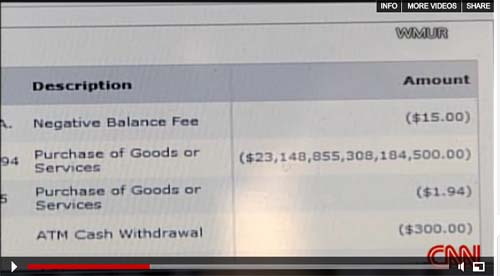
Josh Muszynki's Statement

During 2009,  abusive overdraft and insufficient-funds fees brought banks more than $38 billion dollars. The new credit card regulations have been helping to bring that number down. The new law protects consumers from abusive fees, penalties, interest rate increases.

With statements sent out in March of 2010, you might see additional information printed on your credit card statements. The new credit card statements include an easy to see LATE PAYMENT WARNING which tells you what your late fee is going to be if you don’t make a payment by the date printed. This is easy to see and is not buried in fine print on the back of your statement.

Then you’ll see the sobering statistics that will come to reality if you continue making the minimum payments. If you continue on your merry way, it may take you 20 years, 25 years or 30 years to get rid of this debt.

Followed by that horrifying news, it tells you how long it would take you to pay off your debt if you just made a larger payment every month.

Then you are asked if you would like  an aspirin or a drink. Not really, but it does offer you credit counseling services and gives you a number to call besides 1-800-IAM-DUMB.

In early March, 2010, Bank of America came to our financial rescue by deciding to help us avoid overdraft fees. Now they are actually going to decline your debit transaction at the point of sale if there are insufficient funds, instead of letting it go through and charging you fees.

Although there are new protections for consumers to avoid overdraft fees, you can still be charged fees if you are late on your payments. Do yourself a favor and keep your payments current if you have any credit card debt.

The best way for you to manage your money is to buy things that you can pay for with the money you have. Sounds pretty simple. Why has credit card debt quadrupled between 1992 and 2008 to $853 billion dollars? –  Because many don’t follow this advice.

Joshua Kennon, a person who saved 90% of his income for a very long time, reminds us that “there are tens of millions of Americans who live free from the burden of credit card debt and there is absolutely no reason you can’t be one of them. ”

If you have suffered from overdraft fees  and it has negatively affected your finances, you will most likely be very happy that the credit card rules and regulations will help you end this destructive force.
Filed Under: Banking Tagged With: Bank of America, money management, Overdraft, Personal Finance, Point of sale

Banking with an FDIC-Insured Bank

March 1, 2010 By Sherry Tingley

It is hard to trust anyone these days especially when it comes to money. Money talk is always serious talk which means that people are very stringent when it comes to where they will be putting their money. In these hard times, this is already the norm since money is so hard to earn that it’s almost impossible for someone to just put money anywhere. But what if you want to put your savings in the bank? Would putting your money in the bank be a much safer choice rather than just leaving it home in your closet?

Established in 1933, the FDIC or the Federal Deposit Insurance Corporation has served as a safety net for bank depositors. Ever since its inception, no depositor has lost a single dime from their FDIC-insured funds. The independent agency of the US government does not only insure US citizens, they insure other citizens from other countries as well as long as the banks they bank with are insured by FDIC.

An FDIC-insured account means that your bank account is backed by the US government in full credit and full faith. This reputation is something that other insurers cannot offer. Operating for over 70 years now, the FDIC is the people’s support system when or if their banks close. The insurance limit for every account you open in an insured bank is $250,000.  The agency however does not insure money invested in mutual funds, stocks, bonds, life insurance policies, municipal securities, and annuities even if the said investments are made in insured banks. The other types of accounts that the FDIC does not cover are safe deposit boxes and their contents. US treasury bills, notes or bonds are not insured by the FDIC as well but they are backed by the US government.

But what does this deposit insurance cover?

FDIC-insured accounts range from checking, savings, money market deposit, to time deposits and negotiable order of withdrawal (NOW). The depositors given this insurance are those who bank with insured banks. Banking with an FDIC-insured bank means your money is protected dollar for dollar. If you own two accounts in two different banks and these banks are FDIC-insured, it means that your two accounts also have the FDIC protection. This means that if these two banks close, you will have an insurance of $250, 000 for each account. If you have two accounts in one bank, you will not get two FDIC insurance, just one.

The standard maximum deposit insurance amount also known as the SMDIA allocates $250, 000 per depositor in every insured bank. This insurance will run through until December 13, 2013. By 2014, the said allocation per depositor will go back to $100,000 except for certain retirement accounts which will retain their $250, 000 per depositor insurance in every insured bank.

Banking with an FDIC-insured bank means that you as the depositor will receive insurance if the bank closes all of a sudden. Although this is something that most of us never imagine to happen, it is better to be safe than sorry.

Filed Under: Checking Accounts Tagged With: Deposit insurance, FDIC, Federal Deposit Insurance Corporation, Saving Money

Managing Your Checking Account

December 1, 2009 By Sherry Tingley

Managing your checking account can be summarized into five simple steps. These steps are essential to master so that you can properly manage your household expenses and your budget as well.

The first step is to choose a bank that you like. Go to the various banks and credit unions and ask them about the different kinds of checking accounts that they offer to their clients. The most important question you might ask is about all the fees that go with the account such as the ATM fees, cost of check, monthly fees, overdraft protection and overdraft charge. You should also ask if the account in question would be available for online banking transactions. Free checking is always a good bonus but do not base your decision solely upon it.

The second step has to do with recording your transactions. It is a tedious and boring job but you really need to put all transactions into writing. Put down in writing every monetary transaction, all deposits and even ATM withdrawals. This process will help you keep accurate bank records.

The third step is to balance your checking account transactions every month. When you get your monthly statement from the bank, reconcile it with the data you input in your check register. When you do this, you can often find mistakes and most often it is your mistake. Sometimes it is a true banking error or it could even be fraudulent activity. It is always helpful to be able to find these mistakes and keep all your records straight. In case there are errors and discrepancies, contact the bank immediately in order to correct it as soon as possible. If you cannot go personally to the bank and you use the telephone instead, be ready to discuss the situation in detail to the service representative.

Documentation is the key to money management. It is the proof of all your financial transactions so it is essential that you keep a copy of them for your future reference. Not just any copy but you need a written records so print them out. Even your online banking transactions should be printed out. When it is time to throw your records out, shred the documents first for they contain vital information you would not want other people to have.

Step number four is to keep a close eye on all automatic payments and deposits so you can be assured of its accuracy. Even if the system is in automatic already, you should not assume anything. You should have a general idea of what your normal transactions look like so you can spot things that are out of the ordinary.

Step number five is to avoid a zero balance like the plague. Do not totally deplete your checking account. You should always keep a cushion of a few hundred dollars in your account so you can use this money as a hedge against emergencies and overdrafts. If you are smart, you’ll have set up an overdraft protection account so you don’t get charged excessive fees if you do make a mistake in your records that causes you to go below zero.

Following these five suggestions will help you on your way to good money management skills and help you live life more comfortably.

Save money by ordering personal checks online.

Filed Under: Checking Accounts Tagged With: budget, checking account, money management, Personal Finance

How Seniors Can Protect Themselves From Financial Scams

November 16, 2009 By Sherry Tingley

Although Mary, a grandmother of four no longer owns a home, she still gets calls from refinancing agencies and so called finance managers even pester her not only with phone calls but through mail as well.  With the economic downturn, many illegitimate agencies try to offer bogus financing plans preying on the older generation in hopes of making money the easiest possible way.

Financial literacy is taught to teenagers and many young urban professionals. Older folks however are not updated with what is going on in the financial world –making them an easy target for those who profess to be “lenders”.

For seniors to protect themselves from these finance issues, here are a few tips to take into consideration:

1. Budget and List Your Expenses

Saving enough money is key to a much more comfortable life ahead. Think about things you really do not need to spend on and cut the spending from there. For example, there is no more need for you to maintain that four bedroom house if all the kids now have their own families and their own homes. You can sell the house for a profit and get a smaller apartment –it is easier and cheaper to maintain.

Having enough income will relieve seniors from stressing out because of finances even if a crisis hits. Budgeting and saving enough for retirement is a good thing.

2. Investments

When it comes to investments, seniors should be more careful. As much as possible, do not invest in the stock market if you are not an expert. The stock market goes down faster than it is supposed to go up.  Invest in something that does not fluctuate along with the market.

3. Power of Attorney

Before making any decisions, it is highly recommended that older Americans find someone they can trust to manage finances and other legalities. A son or a daughter is a good choice so that seniors can have peace of mind when it comes to their money. As much as possible, do not give anybody else control over finances except your own children because if you do not have enough control over your money, you might find that one day your money is gone.

4. Charities

If you want to help out in your own way with regards to a certain cause, be very careful because even legitimate charities can obtain the right to withdraw from your bank account. Help out in cash, give it to them and do not sign any agreements whatsoever nor should you give out your bank account number.

5. Beware of Phone Scammers

Do not give any personal information to anyone who calls you pretending to be from a legitimate company. These scammers usually call through the relay service – a service that is supposedly for the service of deaf people which allows them to make a regular phone call. The relay service is a legitimate company but somehow, through the advancement of technology, Nigerian scammers have hacked into their system and they pretend that they are deaf people trying to call relatives. The interpreters do not have the power to end the call since it is against federal laws to meddle in the call. The best thing you can do is report this call as soon as possible and never to entertain them anymore especially if you do not know someone who actually uses the service.

6. Retirement

For those who are still planning to retire. Delay your retirement. Figure out first how much money you have in your pension plan and if your retirement income is sufficient,  then go right ahead and enjoy your retirement benefits.

Filed Under: Fraud Tagged With: financial scams, Personal Finance, Retirement

Designer Checks of Well Known Artists

October 7, 2009 By Sherry Tingley

Designer checks are becoming more popular this year. Some people may wonder what designer checks are?  It’s really no mystery. They are just really fun checks with designs on them that make them stand out from the regular and plain checks people are used to.

Check printing companies have the ability to print anything they want for the  background image on the checks that people order. So they have just jazzed up the scene and added some stylish, artistic styles of checks.

The background designs that you can enjoy include marbelized designs, tie dye themes, floral images, graphic designs in circles, triangles and any other shapes you can imagine. Gone are the days where your only choices where the safety blue background or the boring green safety backgrounds.

designer-checks-mary-engelbreit
Kathy Davis Designer Check

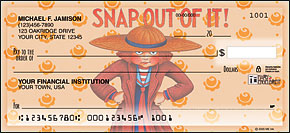
One special artist that has her designs on checks is Mary Engelbreit. She began her career as an artist at a very early age. When she was 10 years old she had a special place in her home that was deemed, the studio. She loved drawing and eventually began her first successful publications through a greeting card company.  She now has her own company called the Mary Engelbreit Studios. Her illustrations are available on personal checks, checkbook covers, debit card covers, address labels and bill organizers. They have a playful, childlike theme and give you that unique designer theme.

Kathy Davis designer checks
Kathy Davis Designer Check

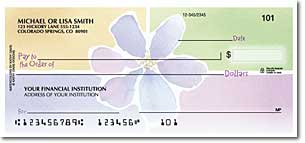
Another artist that has her artwork on designer checks is Kathy Davis. A world renown, respected designer, Kathy has created more than 15,000 designs. Coming from a career in teaching, her new artistic designs have helped her to succeed in these tough economic times.  In 2007, she was so successful that she was making $15 million dollars in annual revenue.

Her mission is to “scatter joy.” She is well known for helping people to create their most abundant life. Her illustrations can be found on greeting cards, personal checks, checkbook covers, stamps and a variety of other mediums. She is best know for her work in watercolors and her subjects are floral presentations and nature. The designs she creates are cheerful, using bright colors and a playful brush strokes. She has made a great contribution to the designer checks available now for you to enjoy.

Thomas Kinkade Designer Check

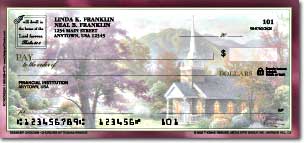
Our last artist to discuss is Thomas Kinkade. His work is well known for the conservative old American themes. He often paints pictures of quaint homes, gardens, churches and has Christian based ideologies throughout his works. He often hides the letter N in his pictures in honor of his wife, Nanette. He sells his mass reproduced work throughout America and has earned as much as $53 million dollars for his artwork. In the line of printed designer checks, you’ll find some of his most famous church paintings with scripture verses on them as well as his garden designs. The designs are also found on address labels and checkbook covers.

With the large variety of designer checks available to the public now, there is no reason to not enjoy using them to brighten up your personal image and give you pleasure each and every time you write a check.

Filed Under: Checking Accounts Tagged With: Checking Accounts, Mary Engelbreit

  • « Go to Previous Page
  • Page 1
  • Interim pages omitted …
  • Page 9
  • Page 10
  • Page 11
  • Page 12
  • Page 13
  • Go to Next Page »

Primary Sidebar

Personal Finance Articles

  • Make Saving A Priority
  • Review Your Home-Insurance Risks
  • Lowest Air Fare? Try August 28
  • Hackers Targeting Bitcoins
  • Keep Your Emergency Fund Intact

Save At Walmart

Search

Personal Finance Education

Investing Education from Morningstar.

As Seen On Intuit

Intuit.com has ranked Coolchecks.net #4 out of 10 of the best blogs to help you save money. We hope to help you become more aware of your own financial situation and strive to improve it.

Featured On Mint.com – July 2014

Mint Interview

Categories

  • Banking
    • Check Writing
    • Checking Accounts
    • Credit Cards
    • EMV Cards
    • Fees
    • Fraud
    • History
    • Student Loans
  • Best Of The Web
  • Budgets
    • Emergency Fund
    • Grocery Shopping
    • Saving Money
    • Spending Habits
  • Business
    • 3D Printing
    • Bankruptcy
    • Business Advertising
    • Business Development
    • Business Plans
    • Corportate Lessons
    • Data Mining
    • Legal Issues
    • Merchants
    • SEC
    • Security
    • Small Business Startups
  • Consumer Alerts
  • Cryptocurrency
  • Cutting Costs
  • Employment
    • best places to work
    • Careers
    • Interviews
    • Job Search
    • Top CEOs
    • Wages
  • Entrepreneurs
    • Attitudes
    • Entrepreneur Interviews
  • Featured
  • Finance
    • Automobiles
    • Credit Ratings
    • Education
    • Financial Planners
    • Foreclosures
    • Homes
    • Insurance
    • Investing
    • Mortgages
    • Personal Finance
    • Renting
    • Term Deposits
    • Travel
    • Work
  • Fraud
  • Government
  • Holidays
    • Christmas
    • Halloween
  • Internet
    • Bitcoin
    • Blogging Tips
    • Blogs, RSS and Podcasting
    • Databases
    • Facebook
    • Influence
    • marketing
    • Twitter
    • Website Reviews
    • WordPress
      • Key Words
  • Investing Basics
    • Hedge Funds
    • Investing
    • Mutual Funds
  • Life
    • Aging
    • Just For Fun
      • Punahou Alumni Corner
    • Millennials
    • Personal Health
  • Money Making Ideas
    • Affiliate Programs
    • Craigslist
    • Ebay
  • Money Management
    • Bankruptcies
    • Building Wealth
    • Child Care Costs
    • Christmas Shopping
    • Credit
      • Free Credit Report
    • Debit Cards
    • Debt
    • Debt Reduction
    • Health Insurance
    • Income
    • Inheritance
    • Interest Rates
    • Loans
    • Mortgages
    • New Years Resolutions
    • Retirement
    • Shopping Tips
    • Tax Strategies
    • Your Stories
  • Retirement
  • Self Improvement
    • Time Management
    • Work Habits
  • Shopping
    • Coupons
    • Online Shopping
  • Social Security
  • Tax Tips
  • Taxes
  • Technology
  • Trade
  • Uncategorized
  • Wealth

Best of Personal Finance Blogs

Best of BuyerZone Business Finance Blog Recipient

Personal Finance Sites We Recommend

Get personal finance advice from the people behind the top money blogs, including Wise Bread, The Simple Dollar, Mint and Nerd Wallet.

Copyright © 2026 ·Metro Pro · Genesis Framework by StudioPress · WordPress · Log in