• Skip to primary navigation
  • Skip to main content
  • Skip to primary sidebar
  • Money Management
    • Debt Reduction
    • Credit
    • Mortgages
    • Mutual Funds
    • Tax Strategies
    • Loans
  • Budgets
    • Saving Money
    • Income
  • Banking
    • Checking Accounts
    • Check Writing
    • Fraud
    • History
  • Entrepreneurs
    • Entrepreneur Interviews
    • Money Making Ideas
    • 3D Printing
  • Resources
  • Retirement
  • About
    • Privacy Policy

Personal Finance Blog

Tips And Stories To Help You With Managing Money

  • Privacy Policy
  • Saving Money In 2018
You are here: Home / Archives for 2009

Archives for 2009

How to make WordPress an Ecommerce Store

July 3, 2009 By Sherry Tingley

wordpress-ecommerce-pluginsEcommerce Plugin For WordPress
WordPress is continuing to improve it’s functionality. For those of you who have WordPress blogs and want to sell a few items directly from your blog and you don’t want to worry about logging into PayPal and creating a PayPal button for every item you have, this Ecommerce plugin is the answer for you.

I have worked with a lot of people getting their WordPress websites ready for launching and so many of them would have been thrilled to know about this Ecommerce plugin that is now available for use. There is even a full video tutorial on how to turn WordPress blogs into Ecommerce sites. You can easily learn how to use this plugin by watching this video. You download the plugin and then basically fill in a form that allows you to add your products and your PayPal information.

Download the plug-in and turn your WordPress site into an ecommerce site.

Reflections
I recently discovered how how enjoyable it is to watch www.wordpress.tv. I like to work on the computer and listen to something in the background other than television so I feel I’m learning something new. I was delighted to listen to Tim Ferriss talk about all his well researched analytics on what works best on blogs and had a great time laughing at his funny video on how to peel a hard-boiled egg without peeling it the traditional way.

Matt Mullenweg WordCamp 2009

I also can’t get over how the young people in this world are the ones who are shaping everything on the Internet. Matt Mullenweg, a co-founder of WordPress, was only 19 years old when he and Mike Little developed the software for WordPress.  He  posted  programming questions on his blog and was contacted by Mike Little in England who offered to partner with him to work on his vision of WordPress. WordPress has become so popular that there are people who have WordPress tattoos!

MySpace, Facebook, Twitter…they are all being developed by people who were toddlers when computers were being perfected. Matt Mullenweg was listed by PC World as one of the top 50 most influential people on the Internet.

WordPress is my favorite platform to use. I’m not getting a tattoo, but I certainly enjoy using this software.  Thank you Matt!

Filed Under: WordPress Tagged With: Ecommerce, Ecommerce WordPress plugin, Matt Mullenweg, Tim Ferriss

Dreaming comes naturally in nature

July 2, 2009 By Sherry Tingley

dreaming
Why does this picture inspire people? Notice there is no recognizable landmarks. It could be any beach in any country. This could be the beach you last went to or the beach you want to go to.

Are you letting yourself dream about things that make you happy or about the life you want to have?

Dreaming is the precursor of reality, so dream on.

Our lives can become so wrapped up in schedules and routines, that we sometimes get bored with life. Vacations have a definite purpose in our psyches. When you are on vacation, you let yourself dream about how things could be different in your life. That dreaming is the basis of actual change.

Change something in your life today that you never thought of before. Do something different. Picture yourself in a different life costume and see how it fits.

Filed Under: Life Tagged With: dreaming, dreams

Dealing With Trial Periods

June 8, 2009 By Guest Posts

Let’s face it, we live busy lives. I’m pretty sure that most companies are aware of this. I’m also pretty sure that that’s why many companies entice customers with trial periods. Think about it. How many times have you signed up for a service because it was free for 3 months, with the real intention of canceling said service at the end of the trial period, only to forget to call and actually cancel the service? Having figured out that many customers will forget to call and cancel, companies can afford these trial periods, banking on the busyness of the average consumer.

Personally, I’m very busy. So, when I’m offered a trial period, especially one that requires a phone call in order to cancel a service, I’m vary wary. In most cases, I simply decline the service. This is by far the easiest way to deal with most of these types of offers.

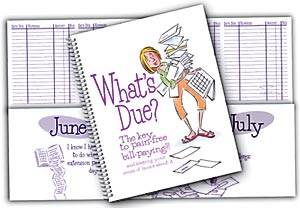
Bill Organizer - Reminders Tell You When Your Bills are Due

Once in a while, however, I’ll actually get an offer to try a service that I’m actually wanting to check out. For instance, I recently switched satellite television providers, and enjoyed three months of free premium movie channels. Just last night, I called my provider, just as the free trial period ran out, and canceled the channels. It was fun to have the channels, but I really do not need them.

If, like me, you struggle to stay organized, but you still want to take advantage of these trial periods, consider setting up a reminder system. Personally, I use the iCal program on my computer, and make a simple note, reminding myself of when to call and cancel a particular service. I also know folks who use websites like FutureMe, a website that will allow you to schedule a reminder email, and send it to yourself at a specific time in the future. Pretty rad.

Remember, before signing up for any free trial period, be sure that you know exactly how to cancel the service. This is especially true for services offered by credit card companies and credit reporting services. Taking the time once a month to take care of these pesky little phone calls can, in the long-term, save you a lot of money.

Follow me via Twitter

Filed Under: Finance Tagged With: Saving Money

Buying Something to Force Yourself Into a New Behavior Doesn’t Work: New Rules for a New Routine

June 6, 2009 By Guest Posts

[ad]Routine- Golgatha I. Photo by h.koppdelaney.Several people I know have a treadmill in the garage or basement of their home. They bought it with great visions in their head of walking every day, but after the newness wore off, the treadmill began to gather dust – then it was folded up and put into storage.

One reader of The Simple Dollar invested almost $1,000 in pans for her kitchen. Six months later, she’s still mostly using the microwave and the pans are gathering dust.

One of my friends bought a netbook recently, thinking she’d use it all the time to keep up with her email better for her online business. It’s still in her purse, but she claims to have only used it three times in the last month. Instead, she still uses her cell phone.

I myself have done this. Take Wii Fit, for example. When I bought it, I thought it’d be great for establishing a simple cardio exercise routine. I do use it, but instead it just comes out once a week to play mini-games on.

Each of these purchases is essentially the same story. You have a behavior you want – a fitness routine, cooking good food at home, keeping more up-to-date with email – but you’re having some difficulty establishing it. So you make a big, splashy purchase in order to kick-start things – and then you find that didn’t do the trick either, and you’re left with a lot of money sunk into something you don’t really need.

Many people have stories like this (in fact, share yours in the comments!). Why is it so prevalent? I think there are at least three reasons.

First, we have the best of intentions. Most of us do actually strive to improve ourselves, but lives are complicated. Almost every moment is a balance of different things – the things we want to do, the things we should be doing, and so on. It’s often hard, even with the best of intentions, to push another routine in there, especially a time-intensive one.

Second, advertising appeals to those intentions. We see ads for exercise equipment, think about our goals, decide that “we could do that for twenty minutes a day,” and order the equipment. A good ad is designed to do that – prey on a notion already in our head and transform it into a purchase.

Third, a new routine is perilously hard to establish. You have to make yourself do it every day, at least for the first month or two. It doesn’t come naturally.

Add these all up, and buying a piece of equipment in order to jump-start a new routine is almost always a complete waste of money.

Instead, I propose some new rules for a new routine.

First, figure out a very simple routine – don’t dive in with a complex one. Walk for fifteen minutes a day. Practice the guitar for fifteen minutes. Cook one meal a day – and keep it a fairly simple one. Check your email three times a day. Check Twitter three times a day.

Second, try establishing the routine with minimal equipment. Don’t go buy a treadmill or new running shoes. Instead, go outside and walk every day for fifteen minutes – go around the block three times or so. Don’t go buy a netbook – instead, try checking your email on the equipment you already have. Don’t go buy $1,000 worth of pans – instead, buy one low-end pot and one low-end skillet and try making some very simple dishes every day. Don’t go spend $3,000 on an electric guitar – get an old acoustic one to practice on and see if it sticks.

Third, make room for the new routine. In other words, find an unhealthy routine and minimize it. Cut your television viewing down to an hour a day – or less. Trim down your internet usage if you use it excessively. Stop going out to eat so often – cut it down to once a week. All of these choices free up time – and that free time can easily be filled by your new routine.

Finally, make reminders. Leave your equipment out where you can’t miss it. Put your guitar in your favorite chair. Sit your jogging shoes there. Keep your pans right out on the stove. Leave recipes out where you can find them. In short, make your new routine screamingly obvious at all times, giving you the best chance possible to make the leap to maintain it.

Good luck on the new routines in your life.

Filed Under: Finance Tagged With: Saving Money

Living and Saving in the Moment

June 5, 2009 By Guest Posts

My three year old son loves to go to the grocery store with Mom and Dad. He wanders around with us, listening to our discussions about which products to buy, and quite often expresses his own opinions. He’ll remind us that he loves V8 Fusion (our preferred fruit juice, since it’s 100% and also is half vegetable juice) and often dallies for a long time near the Pepperidge Farm goldfish crackers, as I noted two years ago (and depicted as well):

Joe wants goldfish

As we shop, we make tons and tons of little decisions along the way. Those decisions, on their own, seem inconsequential.

Should we buy the bulk can of diced tomatoes or the smaller can?

These tortillas feel softer, but they’re way more expensive – is it worth it?

The free range whole chickens are on sale! Should we stock up?

A choice one way or another here might save us a dollar or cause us to spend a dollar more. In the eyes of many people, it’s an inconsequential decision – just make it and keep going. One dollar doesn’t make a huge difference, right?

The problem is that each little buying decision you make is deeply tied to other buying decisions, whether consciously or not.

How so, you might ask?

All of our buying decisions are based on a set of principles in our head, ones that are often so well-grounded that they don’t even pop up in conscious thought.

Here’s a thought experiment to help you see what I mean. Imagine a product you would never buy in a grocery store – pork rinds, maybe, or perhaps insanely potent hot sauce. Now, what about that product would cause you to not buy it? You’re likely to pop up an immediate simple answer – I don’t like the taste or it’s unhealthy – but on other purchases, you’re quite willing to overlook that principle for other reasons.

In truth, when we make a decision to buy in the grocery store, we’re trying to reduce a big set of principles and inputs down to one split-second decision. And often we feel we’re completely justified in that decision – and we move on with life.

It is very easy to tease apart each little buying decision, tell yourself that it doesn’t really matter that much and that it’s okay to splurge, and then essentially ignore your final tally when you get to the checkout because each decision was justified in your mind. Doing that, though, is a game that will, time and time again, put your wallet in the hurt locker.

So, what can you do to overcome this problem?

The easy methods are the shopping list and the meal plan. Making a shopping list in advance of your visit to the grocery store simply serves to reduce the number of decisions you have to make. This, of course, leads you to making fewer bad decisions.

But that’s just the start. Once you’re in the store with your shopping list in hand, commit to three more things.

First, simply do not put anything in your cart that’s not on your list. Your list, if it’s thought out at all, should have everything you need for your meals for the next week. If you see something you feel like you need or deserve, jot it on the back of the list for next time.

Second, mark any items that you’re not simply searching for the cheapest version of. On our list, I like to put a little X by any item that I don’t intend to just buy the cheapest version of. For example, with diced tomatoes, the various brands and cans are identical in terms of ingredients, so we usually just get the cheapest version. This, again, reduces the number of opportunities for poor impulse decisions in the store.

Third, if you have specific brands in mind (because of coupons or because of previous buying experiences), put those on your list, too, along with the size. For example, we usually have a big stack of coupons for V8 Fusion (100% juice, half fruit and half vegetable). So, instead of just writing “fruit juice x 3,” I’ll write “46 oz. V8 Fusion x 3? on the list. In other words, if you make the list more specific, you further reduce the number of potential impulse decisions in the store.

Using all of these techniques, you’ll end up making just a handful of in-the-moment choices in the grocery store – and with fewer potential decisions, you have fewer chances to make poor ones. The end result? A cart full of items that you actually want and a much smaller grocery bill.

By The Simple Dollar

Filed Under: Budgets

  • « Go to Previous Page
  • Page 1
  • Interim pages omitted …
  • Page 10
  • Page 11
  • Page 12
  • Page 13
  • Page 14
  • Interim pages omitted …
  • Page 18
  • Go to Next Page »

Primary Sidebar

Personal Finance Articles

  • Make Saving A Priority
  • Review Your Home-Insurance Risks
  • Lowest Air Fare? Try August 28
  • Hackers Targeting Bitcoins
  • Keep Your Emergency Fund Intact

Save At Walmart

Search

Personal Finance Education

Investing Education from Morningstar.

As Seen On Intuit

Intuit.com has ranked Coolchecks.net #4 out of 10 of the best blogs to help you save money. We hope to help you become more aware of your own financial situation and strive to improve it.

Featured On Mint.com – July 2014

Mint Interview

Categories

  • Banking
    • Check Writing
    • Checking Accounts
    • Credit Cards
    • EMV Cards
    • Fees
    • Fraud
    • History
    • Student Loans
  • Best Of The Web
  • Budgets
    • Emergency Fund
    • Grocery Shopping
    • Saving Money
    • Spending Habits
  • Business
    • 3D Printing
    • Bankruptcy
    • Business Advertising
    • Business Development
    • Business Plans
    • Corportate Lessons
    • Data Mining
    • Legal Issues
    • Merchants
    • SEC
    • Security
    • Small Business Startups
  • Consumer Alerts
  • Cryptocurrency
  • Cutting Costs
  • Employment
    • best places to work
    • Careers
    • Interviews
    • Job Search
    • Top CEOs
    • Wages
  • Entrepreneurs
    • Attitudes
    • Entrepreneur Interviews
  • Featured
  • Finance
    • Automobiles
    • Credit Ratings
    • Education
    • Financial Planners
    • Foreclosures
    • Homes
    • Insurance
    • Investing
    • Mortgages
    • Personal Finance
    • Renting
    • Term Deposits
    • Travel
    • Work
  • Fraud
  • Government
  • Holidays
    • Christmas
    • Halloween
  • Internet
    • Bitcoin
    • Blogging Tips
    • Blogs, RSS and Podcasting
    • Databases
    • Facebook
    • Influence
    • marketing
    • Twitter
    • Website Reviews
    • WordPress
      • Key Words
  • Investing Basics
    • Hedge Funds
    • Investing
    • Mutual Funds
  • Life
    • Aging
    • Just For Fun
      • Punahou Alumni Corner
    • Millennials
    • Personal Health
  • Money Making Ideas
    • Affiliate Programs
    • Craigslist
    • Ebay
  • Money Management
    • Bankruptcies
    • Building Wealth
    • Child Care Costs
    • Christmas Shopping
    • Credit
      • Free Credit Report
    • Debit Cards
    • Debt
    • Debt Reduction
    • Health Insurance
    • Income
    • Inheritance
    • Interest Rates
    • Loans
    • Mortgages
    • New Years Resolutions
    • Retirement
    • Shopping Tips
    • Tax Strategies
    • Your Stories
  • Retirement
  • Self Improvement
    • Time Management
    • Work Habits
  • Shopping
    • Coupons
    • Online Shopping
  • Social Security
  • Tax Tips
  • Taxes
  • Technology
  • Trade
  • Uncategorized
  • Wealth

Best of Personal Finance Blogs

Best of BuyerZone Business Finance Blog Recipient

Personal Finance Sites We Recommend

Get personal finance advice from the people behind the top money blogs, including Wise Bread, The Simple Dollar, Mint and Nerd Wallet.

Copyright © 2026 ·Metro Pro · Genesis Framework by StudioPress · WordPress · Log in